
 By Richard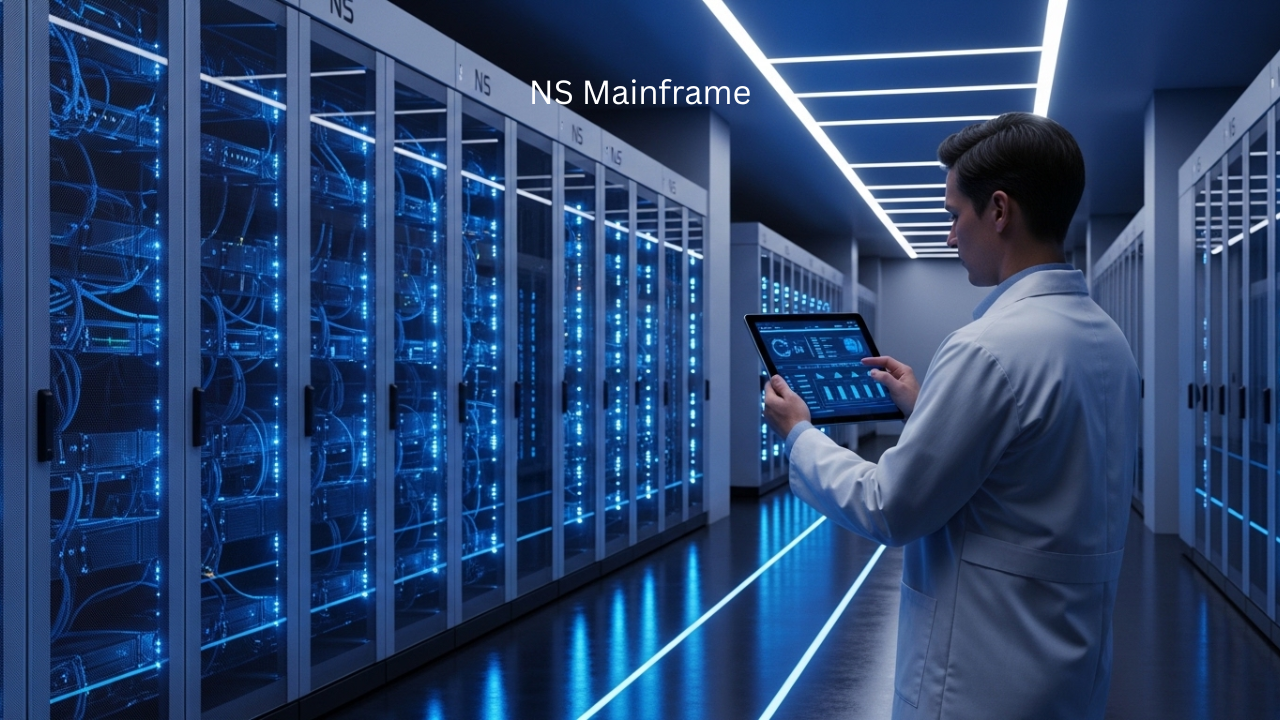
In an era dominated by cloud computing, artificial intelligence, and distributed systems, one technology continues to power the world’s most critical operations quietly and reliably behind the scenes. Financial institutions process millions of transactions daily. Healthcare providers maintain sensitive patient records with ironclad security. Government agencies manage census data for entire populations. And railroads coordinate thousands of miles of track, ensuring goods reach their destinations safely and on time.
At the heart of these mission-critical operations lies the NS mainframe—a powerful computing platform that combines decades of reliability with modern innovation .
But what exactly is an NS mainframe? Why do the world’s largest organizations continue to invest in this technology when cloud solutions dominate headlines? And how is the NS mainframe evolving to meet the demands of 2026 and beyond?
This comprehensive guide answers these questions and more, providing IT professionals, business decision-makers, and technology enthusiasts with everything they need to understand this essential enterprise computing solution.
What is NS Mainframe? Understanding the Foundation
An NS mainframe refers to a class of enterprise-level computing systems engineered to handle large-scale data processing, mission-critical workloads, and secure business transactions with unparalleled reliability . These systems represent the pinnacle of enterprise computing, designed to support millions of transactions per second while maintaining continuous operation.
Unlike standard servers or cloud instances, NS mainframes are built for:
-
High Availability: Achieving 99.999% uptime—equating to just five minutes of downtime per year
-
Massive Scalability: Handling millions of concurrent transactions without performance degradation
-
Enterprise Security: Incorporating multiple layers of protection for sensitive data
-
Legacy Integration: Running decades-old applications alongside modern cloud-native services
The “NS” designation encompasses both a general class of enterprise mainframes and, in specific contexts, refers to systems used by major organizations like Norfolk Southern Railway . This dual meaning reflects the technology’s versatility across industries.
The Evolution of Mainframe Technology
To understand the NS mainframe’s current significance, it helps to trace its evolution. Mainframe computers emerged in the 1950s as room-filling machines designed for complex calculations and massive data processing .
The 1960s brought transistors, reducing size while increasing reliability. IBM’s System/360 line established standards that influence mainframe design to this day. Through the 1980s and 1990s, mainframes adapted to distributed computing, integrating networking capabilities and improving performance metrics .
Today’s NS mainframe represents decades of refinement—combining proven, stable architecture with modern features like cloud connectivity, AI integration, and advanced virtualization . This evolutionary path explains why mainframes remain irreplaceable for specific workloads: they embody accumulated expertise and reliability that newer technologies cannot replicate overnight.
Why Enterprises Still Rely on NS Mainframes in 2026
Despite the proliferation of cloud platforms and distributed systems, NS mainframes continue to power critical operations across industries. Understanding why reveals much about the technology’s enduring value.
Performance at Unmatched Scale
NS mainframes handle massive workloads with consistent speed and efficiency. A single system can process millions of financial transactions, thousands of airline reservations, or real-time railway coordination across an entire network . This processing power isn’t just about volume—it’s about doing so with predictable performance even during peak demand.
Security and Compliance Built In
For industries governed by strict regulations—banking (PCI DSS), healthcare (HIPAA), government (FedRAMP)—security isn’t optional. NS mainframes incorporate advanced encryption, access controls, and monitoring tools as fundamental design features, not afterthoughts . Organizations handling sensitive data find that mainframe security exceeds what they can achieve with distributed systems.
Unmatched Reliability
The 99.999% uptime figure often cited for NS mainframes translates to real-world impact . For critical applications—ATM networks, emergency services, air traffic control—downtime isn’t an inconvenience; it’s a crisis. NS mainframes deliver the reliability these applications demand.
Cost Efficiency at Scale
While initial investment in mainframe technology is substantial, total cost of ownership often proves economical for large-scale operations . A single NS mainframe can consolidate workloads that would require hundreds of commodity servers, reducing:
-
Hardware costs (40% savings typical)
-
Energy consumption (42% reduction)
-
Maintenance expenses (44% decrease)
-
IT overhead (45% lower)
Integration with Modern Technologies
Contrary to perceptions of mainframes as isolated legacy systems, NS mainframes integrate seamlessly with modern IT environments. They connect with cloud platforms, expose APIs for microservices, and support hybrid deployment models . This integration capability ensures mainframes work alongside, not instead of, newer technologies.
Key Features of NS Mainframe Systems
NS mainframes incorporate features that distinguish them from conventional computing platforms. Understanding these characteristics helps explain their unique position in enterprise IT.
Processing Power and Transaction Handling
At their core, NS mainframes excel at processing enormous volumes of transactions simultaneously. Banking systems process millions of daily ATM withdrawals, credit card authorizations, and mobile payments . Airline reservation systems handle countless booking requests, seat assignments, and loyalty program updates. This transaction processing capability defines the mainframe’s primary value.
Virtualization and Workload Isolation
Modern NS mainframes run multiple isolated environments on single hardware, maximizing utilization while maintaining security boundaries . Different applications, departments, or even customers can operate on the same physical system without interfering with each other—a capability essential for service providers and large enterprises.
Advanced Security Architecture
NS mainframe security operates at multiple levels :
-
Access Control (35% of security framework): Role-based permissions and authentication
-
Encryption (25%): Data protection at rest and in transit
-
Continuous Monitoring (25%): Real-time threat detection
-
Compliance Automation (15%): Built-in regulatory reporting
This comprehensive approach creates defense-in-depth that protects against both external threats and internal vulnerabilities.
Disaster Recovery and Fault Tolerance
NS mainframes incorporate redundancy at every level—power supplies, processors, storage, network connections . If any component fails, others take over instantly, often without users noticing. This fault tolerance extends to geographic redundancy, with systems capable of synchronizing across data centers for disaster recovery.
Scalability Without Disruption
When organizations grow, NS mainframes grow with them. Vertical scaling adds processing power to existing systems. Horizontal scaling connects multiple systems for expanded capacity. Both happen without taking applications offline—critical for 24/7 operations .
Real-World Applications: NS Mainframe in Action
NS mainframes power daily operations across industries, often invisibly. These real-world applications demonstrate their versatility and importance.
Banking and Financial Services
Financial institutions represent the quintessential mainframe use case. NS mainframes process ATM withdrawals, credit card transactions, wire transfers, and mobile payments with speed and accuracy . They run fraud detection algorithms in real-time, analyze risk for trading desks, and maintain complete audit trails for regulatory compliance.
A typical large bank processes millions of daily transactions—a volume that would overwhelm distributed systems but matches the mainframe’s design parameters perfectly .
Healthcare Systems
Hospitals and healthcare networks rely on NS mainframes for electronic health records (EHRs), patient data management, and insurance claims processing . The combination of massive data volumes, strict privacy requirements (HIPAA), and need for real-time access makes mainframes ideal for healthcare IT.
When a doctor needs a patient’s history during an emergency, the mainframe delivers—quickly, securely, reliably .
Government and Public Sector
Government agencies use NS mainframes for census data management, tax collection, social security programs, and defense applications . These workloads combine enormous scale with stringent security and long-term retention requirements—exactly what mainframes provide.
Transportation and Logistics
Norfolk Southern Railway exemplifies mainframe use in transportation. The company’s NS mainframe coordinates train movements across 19,000 miles of track in 22 states, handling scheduling, safety monitoring, crew management, and cargo tracking in real-time .
The system performs critical functions :
| Function | Description |
|---|---|
| Vehicle Tracking | Monitoring trains and equipment positions continuously |
| Route Optimization | Adjusting routes automatically for weather, accidents, maintenance |
| Safety Monitoring | Watching signals, detecting hazards, triggering alerts |
| Resource Management | Balancing demand during peak periods |
| Crew Coordination | Managing assignments, schedules, and communications |
Without this mainframe, delays would cascade across the network, costs would rise, and safety would be harder to maintain .
Retail and Supply Chain
Large retailers use NS mainframes for inventory tracking, point-of-sale processing, and supply chain analytics . When you buy something at a major chain, a mainframe likely updates inventory counts, triggers reordering, and records the transaction—all in seconds.
Telecommunications
Communication providers implement NS mainframes for network administration, customer billing, and service management . Millions of subscribers, billions of call records, and complex rating algorithms—these workloads match mainframe capabilities precisely.
NS Mainframe Deployment Options and Pricing
Organizations considering NS mainframe technology have multiple deployment options, each suited to different requirements and budgets.
Deployment Models
On-Premises Standard: Traditional deployment where organizations own and operate mainframe hardware in their data centers. This model offers maximum control and is common in highly regulated industries .
Hybrid Cloud: Combines on-premises mainframe resources with cloud services for specific workloads. Organizations maintain critical operations on mainframes while leveraging cloud scalability for analytics, development, or variable workloads .
Cloud-Based: Some NS mainframe capabilities are available as cloud services, with organizations paying for capacity as needed. This model reduces upfront investment and is attractive for organizations testing mainframe adoption .
2026 Pricing Estimates
NS mainframe pricing varies based on configuration, capacity, and deployment model. Current estimates for the U.S. market include :
-
Standard Edition: $50,000–$150,000 annually
-
Suitable for medium banks, regional government, manufacturing
-
Includes core transaction processing, moderate scalability
-
-
Advanced Edition: $150,000–$500,000 annually
-
Designed for large financial institutions, cross-border logistics
-
Adds AI integration, advanced analytics, multi-cloud support
-
-
Cloud Edition: From $10,000 monthly (usage-based)
-
Consumption-based pricing for flexible workloads
-
Includes SaaS and PaaS integration
-
These figures represent software and support costs; hardware, facilities, and personnel add to total investment. However, organizations typically achieve 40-45% savings compared to distributed alternatives when accounting for workload consolidation and operational efficiency .
Access and Management: How Organizations Use NS Mainframes
NS mainframe access varies by user role and organizational needs. Understanding these patterns illuminates how mainframes integrate into daily operations.
Employee Access and Authentication
Security begins with controlled access. Employees typically log in through company portals using username/password combinations plus two-factor authentication via one-time passwords (OTPs) sent to mobile devices .
For remote access, virtual private networks (VPNs) create encrypted connections, protecting data transmitted between users and mainframe systems .
Device Support
NS mainframes support access from multiple device types :
-
Workstations and Control Rooms: Dispatchers and managers use fixed computers with full access to routing, freight data, and safety logs. Large screens and fast connections support complex decision-making.
-
Mobile Devices: Field staff access key data via smartphones and tablets. Crew members receive assignments, alerts, and updates without returning to offices, reducing delays and improving response times.
Specialized Applications
Organizations develop specialized interfaces for specific functions :
-
CrewCall Mainframe: Notifies railway crew members about schedules and assignments
-
Horse Mainframe: Manages employee records, cargo details, and operational logistics
-
NS OWP Mainframe: Handles daily workflows and task management
-
NS Horse Screen: Provides equipment safety updates and maintenance alerts
These applications demonstrate how mainframes support diverse operational needs through purpose-built interfaces.
Challenges and Considerations
NS mainframe adoption isn’t without challenges. Organizations must navigate several considerations when implementing or maintaining these systems.
High Initial Investment
Procurement and setup require significant capital . Hardware, software licenses, facilities preparation, and initial configuration represent substantial upfront costs. Organizations must evaluate long-term value against short-term budget constraints.
Skilled Workforce Shortage
Fewer professionals are trained in mainframe technologies today, creating talent gaps . Skills like COBOL, JCL, REXX, and mainframe-specific DevOps practices are increasingly rare. Organizations must invest in training or compete for limited expertise.
Integration Complexity
Connecting mainframes with modern platforms—cloud services, microservices, modern APIs—requires careful planning and specialized knowledge . While integration is certainly possible, it’s not always simple.
Legacy Code Maintenance
Many mainframes run code developed decades ago. Changing this code carries risk, as small errors can disrupt critical operations . Organizations balance the need for updates against the stability requirements of production systems.
Perception and Investment
Some businesses mistakenly consider mainframes outdated, hindering investment decisions . This perception can lead to underinvestment in mainframe capabilities even when they offer the best solution for specific workloads.
Cybersecurity Pressure
As rail and other critical infrastructure become prime cyberattack targets, mainframes must defend against evolving threats . Constant patching, monitoring, and security updates are essential.
The Future of NS Mainframe: AI, Hybrid Integration, and Beyond
Far from fading away, NS mainframes are evolving to meet future demands. Several trends will shape their development in coming years.
AI and Machine Learning Integration
Artificial intelligence is transforming mainframe operations . Predictive analytics optimize performance and anticipate maintenance needs. Machine learning algorithms detect anomalies that might indicate security threats or system issues. AI assistants help administrators manage complex environments.
Future NS mainframes will function as “active decision engines” rather than passive record-keepers, shaping operations in real-time based on intelligent analysis .
Enhanced Hybrid Cloud Capabilities
The future lies in seamless hybrid integration. NS mainframes will connect more deeply with public cloud platforms—AWS, Azure, GCP—enabling organizations to leverage both mainframe reliability and cloud agility . This hybrid approach allows:
-
Bursting variable workloads to cloud
-
Cloud-based analytics on mainframe data
-
Disaster recovery across environments
-
Development and testing in cloud before mainframe deployment
Modernization Without Replacement
Rather than replacing mainframes, organizations are modernizing them . APIs expose mainframe functions to modern applications. Containerization runs alongside traditional workloads. DevOps practices adapt to mainframe environments. This evolution ensures mainframes remain relevant while preserving their core strengths.
Sustainability Improvements
Energy efficiency is becoming a priority. NS mainframes already offer advantages through workload consolidation—one mainframe replacing hundreds of servers. Future improvements will further reduce energy consumption and environmental impact .
Expanded Mobile and Remote Access
As work becomes more distributed, mainframe access will evolve . Improved mobile applications, better remote access tools, and enhanced user experiences will make mainframe capabilities available wherever work happens.
Making the Decision: Is NS Mainframe Right for Your Organization?
Determining whether NS mainframe technology fits your organization requires structured evaluation. Consider this decision framework :
Step 1: Assess Workload Criticality and Volume
Do you process millions of transactions requiring 99.999% uptime? Are your workloads mission-critical with zero tolerance for interruption?
Step 2: Review Compliance Requirements
Do regulations like PCI DSS, HIPAA, or GDPR apply to your data? Would built-in compliance automation reduce audit burden?
Step 3: Evaluate Total Cost of Ownership
Consider five-year costs across hardware, software, facilities, personnel, and potential downtime. Compare against distributed alternatives at equivalent scale.
Step 4: Select Deployment Model
On-premises, hybrid, or cloud? Your requirements, budget, and timeline will guide this choice.
Step 5: Assess Integration Requirements
How will mainframe systems connect with existing applications and future cloud services? What APIs, middleware, or connectors are needed?
Step 6: Plan for Skills and Support
Do you have mainframe expertise internally, or will you need training, hiring, or consulting support?
Frequently Asked Questions About NS Mainframe
What does NS mainframe stand for?
NS mainframe refers to enterprise-grade mainframe systems for high-volume data processing, security, and reliability. In specific contexts, it also refers to Norfolk Southern Railway’s mainframe system .
Are mainframes still used in 2026?
Yes. Mainframes power global industries including banking, healthcare, government, transportation, and retail. Their reliability, security, and processing power remain unmatched for mission-critical workloads .
How do NS mainframes integrate with cloud platforms?
NS mainframes use APIs, middleware, and cloud connectors to integrate with AWS, Azure, GCP, and other platforms. Hybrid deployments combine on-premises mainframe resources with cloud services .
What skills are needed to manage NS mainframes?
Professionals typically need knowledge of COBOL, JCL, REXX, mainframe operating systems, and modern DevOps practices adapted for mainframe environments .
How much does an NS mainframe cost?
Pricing varies by configuration. Standard editions range from $50,000–$150,000 annually; advanced editions from $150,000–$500,000 annually; cloud editions from $10,000 monthly (usage-based) .
What’s the difference between NS mainframe and cloud servers?
NS mainframes offer higher reliability (99.999% uptime), stronger security frameworks, and better support for massive transaction volumes. Cloud servers provide greater flexibility for variable workloads. Many organizations use both in hybrid configurations .
Can employees access NS mainframes from mobile devices?
Yes. Organizations provide mobile applications that connect securely to mainframe systems, enabling field staff to access schedules, alerts, and assignments from smartphones and tablets .
What industries benefit most from NS mainframes?
Banking, healthcare, government, transportation, logistics, retail, telecommunications, and manufacturing derive significant value from mainframe capabilities .
Conclusion: The Enduring Power of NS Mainframe
The NS mainframe represents a remarkable achievement in enterprise computing—a technology that has evolved for decades while maintaining its core strengths. In 2026, it remains indispensable for organizations requiring:
-
Unmatched reliability for mission-critical operations
-
Enterprise-grade security for sensitive data
-
Massive scalability for growing workloads
-
Efficient consolidation of computing resources
-
Seamless integration with modern cloud environments
Far from being replaced by cloud or distributed systems, NS mainframes are becoming more valuable through hybrid integration. They provide the stable foundation upon which organizations build their digital futures—processing transactions, protecting data, and powering operations with quiet, consistent reliability .
For IT decision-makers evaluating enterprise computing options, understanding NS mainframe technology is essential. It represents not a legacy to be replaced but a strategic asset to be leveraged—a platform that combines decades of proven performance with continuous innovation.
Whether managing financial transactions, coordinating railway networks, protecting patient records, or serving citizens, NS mainframes will continue doing what they’ve always done: powering the world’s most critical operations, reliably and securely, day after day.