
 By Richard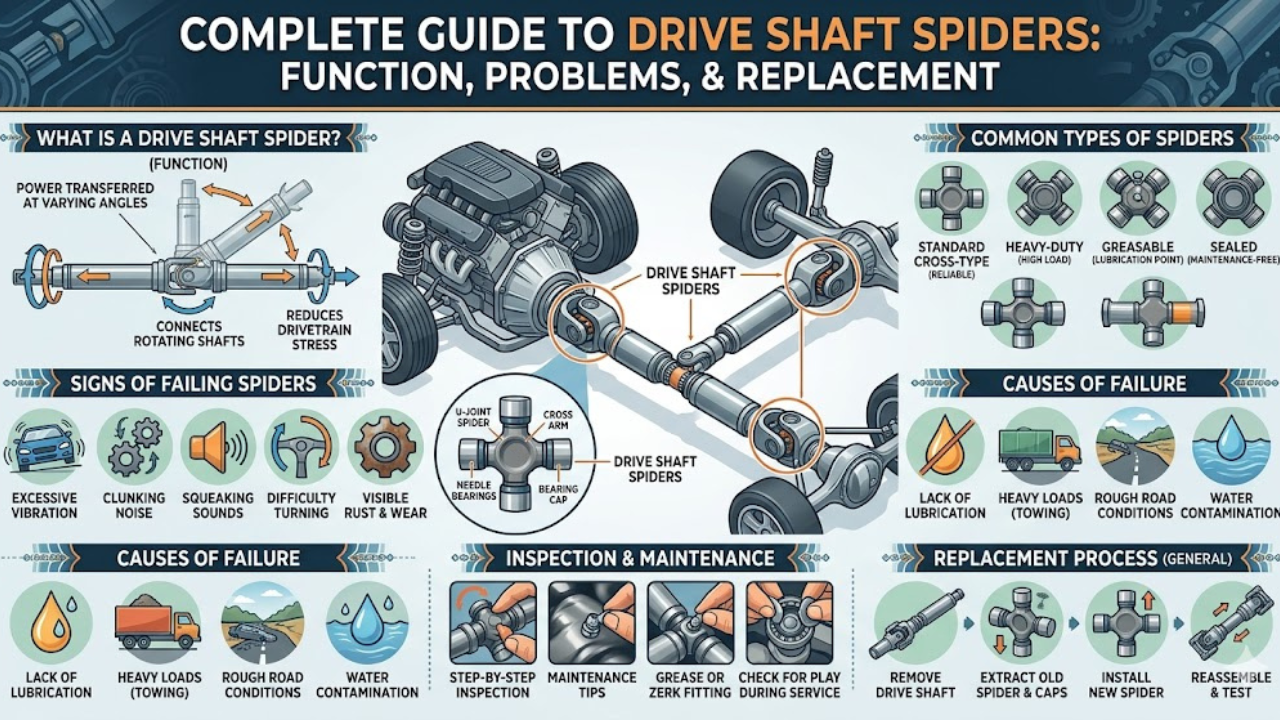
Vehicles rely on dozens of interconnected components to deliver smooth and reliable performance. Among these important yet often overlooked parts are drive shaft spiders. Although small compared to major drivetrain components, they play a crucial role in transmitting power efficiently from the transmission to the wheels.
If you have noticed unusual vibrations, clicking sounds, or drivetrain issues, understanding how drive shaft spiders work can help you identify problems early and prevent expensive repairs.
This guide explains everything you need to know about drive shaft spiders, including their function, signs of failure, maintenance tips, replacement considerations, and how to extend their lifespan.
What Are Drive Shaft Spiders?
Drive shaft spiders are mechanical components located inside a vehicle’s universal joint (U-joint). They are commonly called spider bearings or U-joint spiders because of their cross-shaped design.
Their main function is to connect rotating shafts while allowing movement at varying angles. This flexibility ensures that engine power continues transferring smoothly even as suspension movement and road conditions change.
Without properly functioning drive shaft spiders, a vehicle’s drivetrain would struggle to deliver consistent torque and performance.
How Drive Shaft Spiders Work
To understand drive shaft spiders, it helps to understand the drivetrain system.
Power generated by the engine travels through:
- Engine
- Transmission
- Drive shaft
- Differential
- Wheels
The drive shaft rotates continuously while accommodating movement between connected components.
The spider sits at the center of the universal joint and allows connected shafts to rotate while flexing through different angles.
Each arm of the spider contains bearing caps that reduce friction and support smooth movement.
Key Functions Include:
- Transferring rotational force
- Allowing angular movement
- Reducing drivetrain stress
- Supporting suspension motion
- Improving overall driving smoothness
Even slight wear in these components can impact vehicle performance.
Why Drive Shaft Spiders Are Important
Many drivers focus on engines and transmissions while ignoring the drivetrain’s supporting components.
Drive shaft spiders contribute directly to:
Smooth Power Delivery
A healthy spider assembly ensures consistent power reaches the wheels.
Reduced Vibration
Balanced movement minimizes shaking during acceleration.
Better Drivetrain Durability
Proper joint operation lowers stress on surrounding parts.
Improved Driving Comfort
Drivers experience smoother acceleration and more controlled handling.
Ignoring maintenance may eventually lead to complete drivetrain failure.
Common Types of Drive Shaft Spiders
Different vehicles use different spider configurations depending on performance requirements.
Standard Cross-Type Spider
The most common design used in passenger vehicles and light trucks.
Characteristics:
- Cost-effective
- Reliable
- Easy to service
Heavy-Duty Spider
Designed for commercial vehicles and demanding applications.
Characteristics:
- Higher load capacity
- Increased durability
- Enhanced bearing strength
Greasable Spider
Features lubrication points for ongoing maintenance.
Benefits:
- Longer service life
- Reduced wear
- Easier preventative maintenance
Sealed Spider
Pre-lubricated and maintenance-free.
Advantages:
- Cleaner operation
- Minimal servicing requirements
Choosing the correct type depends on vehicle specifications and driving conditions.
Signs of Failing Drive Shaft Spiders
Early detection can prevent expensive drivetrain repairs.
Watch for these warning signs.
Excessive Vibrations
One of the most noticeable symptoms.
Vibrations may appear:
- During acceleration
- At highway speeds
- Under load
Clunking Noise
Loose spider bearings often create a clunk when shifting gears.
Squeaking Sounds
Dry or damaged bearings can produce squeaks during movement.
Difficulty Turning
Poor joint flexibility may affect drivetrain response.
Visible Rust or Wear
Inspect for:
- Corrosion
- Broken seals
- Bearing damage
- Loose components
Ignoring these symptoms may lead to total U-joint failure.
Causes of Drive Shaft Spider Failure
Several factors contribute to wear and premature failure.
Lack of Lubrication
Insufficient grease increases friction and heat.
Heavy Loads
Towing and carrying excess weight accelerate wear.
Road Conditions
Rough roads create repeated stress on drivetrain components.
Water Contamination
Moisture can damage bearings and promote corrosion.
Improper Installation
Incorrect alignment shortens component life.
Routine inspections significantly reduce failure risk.
How to Inspect Drive Shaft Spiders
Basic inspection can reveal developing problems.
Step 1: Secure the Vehicle
Park on level ground and engage safety measures.
Step 2: Examine the Drive Shaft
Look for:
- Cracks
- Corrosion
- Missing clips
Step 3: Check Joint Movement
Rotate and move the shaft gently.
Excess play may indicate wear.
Step 4: Listen During Driving
Pay attention to:
- Clicking
- Vibration
- Metallic sounds
If symptoms persist, professional inspection is recommended.
When Should Drive Shaft Spiders Be Replaced?
Replacement intervals vary depending on vehicle use.
Typical conditions requiring replacement include:
- Noticeable looseness
- Bearing damage
- Severe corrosion
- Persistent vibration
- High mileage wear
Many mechanics inspect universal joints during routine drivetrain servicing.
Preventative replacement is often cheaper than repairing secondary damage.
Drive Shaft Spider Replacement Process
Replacement generally involves:
Remove the Drive Shaft
Disconnect mounting points carefully.
Extract Bearing Caps
Special tools may be required.
Remove the Old Spider
Separate damaged components.
Install the New Spider
Position accurately and secure bearings.
Reassemble and Test
Verify smooth operation before driving.
Although experienced DIY owners may attempt replacement, professional installation ensures proper alignment.
Maintenance Tips to Extend Lifespan
Simple maintenance can significantly increase component longevity.
Lubricate Regularly
Follow manufacturer service intervals.
Avoid Overloading
Operate within recommended limits.
Inspect Periodically
Check joints during oil changes.
Address Vibrations Immediately
Small problems become expensive quickly.
Keep Components Clean
Reduce exposure to moisture and contaminants.
Consistent maintenance improves reliability and lowers long-term repair costs.
Drive Shaft Spiders for Different Vehicle Types
Drive shaft spider requirements vary across vehicle categories.
Passenger Cars
Focus on comfort and efficiency.
SUVs
Require stronger components due to heavier loads.
Pickup Trucks
Often use reinforced spiders for towing.
Commercial Vehicles
Need heavy-duty solutions for continuous operation.
Selecting compatible parts improves safety and performance.
OEM vs Aftermarket Drive Shaft Spiders
Vehicle owners often compare original equipment and aftermarket options.
OEM Components
Pros:
- Exact fit
- Reliable quality
- Manufacturer standards
Cons:
- Higher cost
Aftermarket Components
Pros:
- Competitive pricing
- Wider selection
Cons:
- Quality varies
Choose reputable manufacturers and verify compatibility before purchasing.
Frequently Asked Questions
Are drive shaft spiders and U-joints the same?
Not exactly. The spider is the central cross-shaped component inside the universal joint assembly.
Can I drive with a bad drive shaft spider?
Driving with a damaged spider increases the risk of drivetrain failure and should be addressed promptly.
How long do drive shaft spiders last?
Lifespan varies depending on maintenance, load conditions, and driving habits.
Can vibrations damage other components?
Yes. Extended vibration may affect the transmission, differential, and surrounding drivetrain parts.
Is lubrication always required?
Some sealed designs require little maintenance, while greasable versions need regular servicing.
Final Thoughts
Drive shaft spiders may not receive much attention, but they are essential to smooth vehicle operation. These compact drivetrain components help transfer power efficiently while allowing flexibility during movement.
Understanding how they work, recognizing early warning signs, and maintaining them properly can prevent costly repairs and improve vehicle reliability.
Whether you drive a daily commuter, SUV, truck, or commercial vehicle, regular drivetrain inspections make a noticeable difference in long-term performance.