 By Richard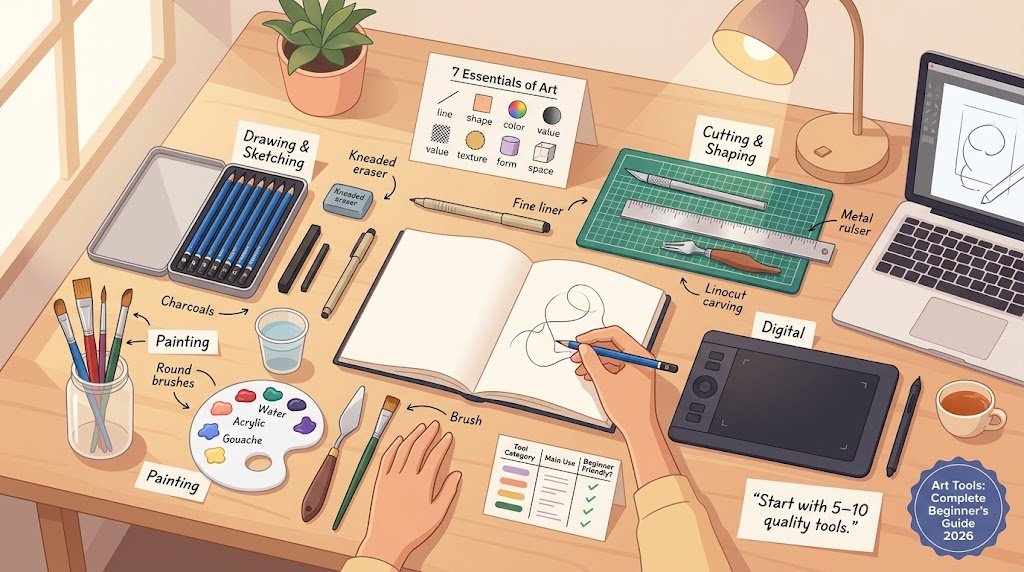
Art Tools: A Simple Guide to What You Really Need
Did you know that most professional artists rely on fewer than ten core tools for their daily work? Walk into any art store and the shelves can feel overwhelming, with hundreds of brushes, pencils, and gadgets. Knowing which art tools actually matter saves you money and frustration.
This guide breaks down the essential art tools, explains what each one does, and shows you how to use them. You will learn the main categories of art tools, the benefits of a well-chosen kit, a simple process for building your collection, common mistakes to skip, and expert tips for getting better results in 2026.
Table of Contents
- What Are Art Tools?
- Why Do Art Tools Matter? Key Benefits
- Types of Art Tools and How They Work
- How to Build Your Art Tools Kit
- Common Mistakes and Myths About Art Tools
- Expert Tips for Best Art Tool Results
- Frequently Asked Questions
What Are Art Tools?
Art tools are the instruments and materials that help you turn an idea into a visible piece of work. They include anything you hold, mark with, or use to shape a surface, from a simple pencil to a digital stylus. Think of them like kitchen utensils. A whisk, a spatula, and a knife each do a different job, and a good cook knows which one to reach for. Art tools work the same way: each one creates a specific texture, line, or effect.
For example, a soft graphite pencil lets you shade a cloud with smooth, gentle gradients, while a hard pencil gives you crisp, precise lines for architectural sketches. Your choice of tool shapes the final result before you even start.
Why Do Art Tools Matter? Key Benefits
The right tools do more than make your work look nicer. They also make the creative process easier and more enjoyable. Here is how quality art tools help you:
- Improve control: Good brushes and pencils respond predictably, so your strokes match what you intend.
- Save money over time: Durable tools last for years, which often costs less than replacing cheap ones every few months.
- Build confidence: When your tools cooperate, you feel more willing to experiment and try new techniques.
- Support different styles: A focused set of tools lets you explore painting, drawing, or mixed media without buying everything at once.
- Speed up your workflow: Tools like a sharpener, a blending stump, or a cutting mat reduce the time spent on setup and cleanup.
- Protect your creative time: Reliable materials prevent frustrating moments, like paint drying in a broken brush, that break your focus.
According to the National Endowment for the Arts, arts participation is linked to stronger engagement and wellbeing, which shows why having the right tools helps you enjoy making art more often.
Types of Art Tools and How They Work
Art tools fall into several families, and each family serves a distinct purpose. Start by learning these categories so you know what to look for.
Drawing and Sketching Tools
These tools create lines, shading, and outlines. Common examples include graphite pencils, charcoal sticks, fineliner pens, and erasers. Graphite pencils range from soft (B grades) to hard (H grades), and softer leads produce darker marks. A kneaded eraser lifts graphite without damaging the paper, which makes it perfect for highlights.
Painting Tools
Painting tools apply color to a surface. Brushes come in shapes such as round, flat, filbert, and fan, and each shape creates a different mark. Acrylic, watercolor, and oil paints need different brushes, so match the brush to the paint. Palette knives also let you mix colors and create thick, textured effects.
Cutting and Shaping Tools
Printmaking, collage, and sculpture rely on tools that cut or shape materials. A craft knife, a cutting mat, and a metal ruler keep your edges clean and your measurements accurate. For linocut printing, carving tools give you control over fine details.
Digital Art Tools
Digital creators use a pen tablet or stylus with drawing software. Pressure-sensitive pens respond to how hard you press, which mimics traditional media. A tablet with a clear screen lets you draw directly on the display, so your hand and eye stay in sync.
Here is a quick summary to help you compare categories:
| Tool Category | Common Examples | Main Use | Beginner Friendly? |
|---|---|---|---|
| Drawing | Graphite pencils, charcoal, erasers | Lines, shading, sketches | Yes |
| Painting | Brushes, palette knives, paint | Color, texture, washes | Yes |
| Cutting and Shaping | Craft knife, cutting mat, ruler | Clean edges, precise shapes | Moderate |
| Digital | Pen tablet, stylus | Digital drawing and editing | Moderate |
How to Build Your Art Tools Kit
Building a kit does not require a large budget. Follow these steps to assemble a set that fits your goals.
- Decide what you want to create. Choose one main medium, such as drawing, painting, or digital art. Your focus will guide every purchase.
- List the basics for that medium. For drawing, include pencils, an eraser, and sketch paper. For painting, add brushes, paint, and a palette.
- Buy a small, quality starter set. Look for a set of 5 to 10 items from a reputable brand. Quality tools will reward you with better results.
- Practice with each tool for a week. Test how each one feels and what marks it makes. This helps you learn which tools you enjoy most.
- Add tools only when you need them. When you notice a limitation, such as a brush that cannot hold enough paint, add the specific tool that solves it.
- Store everything in one place. Use a box, tin, or portfolio case. Organized tools stay sharp, clean, and easy to grab.
Common Mistakes and Myths About Art Tools
Myth: You need dozens of tools to make good art. Many celebrated artists work with a handful of tools. Skill matters more than quantity, so focus on mastering a few essentials.
Mistake: Buying cheap brushes that shed bristles. Low-cost brushes often lose hairs and lose their shape quickly. Invest in a few quality brushes and clean them after each session to extend their life.
Mistake: Using the wrong paper for the medium. Thin paper buckles under wet paint, and smooth paper resists graphite texture. Match your paper to your tool so your work performs as expected.
Myth: Digital tools make traditional tools useless. Digital art and traditional art both build core skills like composition and color theory. Each medium strengthens the other, so you do not have to choose one forever.
Mistake: Forgetting to clean your tools. Dried paint and graphite buildup ruin brushes and blunt pencils. A quick rinse or wipe after each session keeps your tools working longer.
Expert Tips for Best Art Tool Results
- Test before you buy. Visit an art store and try a sample pencil or brush to feel its weight and response.
- Keep a tool journal. Note which brands and sizes work best for each project so you can repeat good results.
- Sharpen pencils often. A freshly pointed tip gives you cleaner lines and more consistent shading.
- Store brushes upright or flat. Standing them with bristles up in a jar protects their shape.
- Start with one tool per session. Focusing on a single tool builds mastery faster than switching constantly.
Frequently Asked Questions
What are the 7 essentials of art?
The seven essentials of art are often described as line, shape, color, value, texture, form, and space. These elements help you understand how any piece of art communicates. Your art tools produce these elements, so knowing them helps you choose the right tool for each effect. For example, a fine liner creates strong line, while a soft brush builds gentle color transitions. Learning these basics makes every tool more purposeful in your hands.
What are some cool gadgets for art?
Several gadgets can make your creative life easier. A drawing tablet lets you sketch digitally, while a light pad helps you trace and transfer designs. A portable paint palette with a lid keeps your colors fresh on the go. A kneaded eraser and a sharpener with a catch tray also save time and mess. Choose gadgets that solve a real problem in your workflow rather than buying them just because they look interesting.
What are the 20 art materials?
Art materials include items such as graphite, charcoal, colored pencils, pastels, ink, watercolor, acrylic paint, oil paint, gouache, markers, clay, paper, canvas, wood panels, fabric, glue, tape, and wire. Each material suits different projects and skill levels. You do not need all twenty to begin. Start with paper, a drawing tool, and one paint type, then explore other materials as your interests grow.
Conclusion
Strong art work starts with the right tools, and you do not need a massive collection to create something meaningful. Remember these three key points. First, learn the main categories of art tools so you know what each one does. Second, invest in a small set of quality essentials rather than buying everything. Third, care for your tools so they perform well session after session.
Start today by choosing one medium you enjoy and gathering the basic tools for it. Try this now with a single pencil and a sheet of paper, and notice how much you can create. Which art tool do you reach for most often, and what are you making with it?