
 By Richard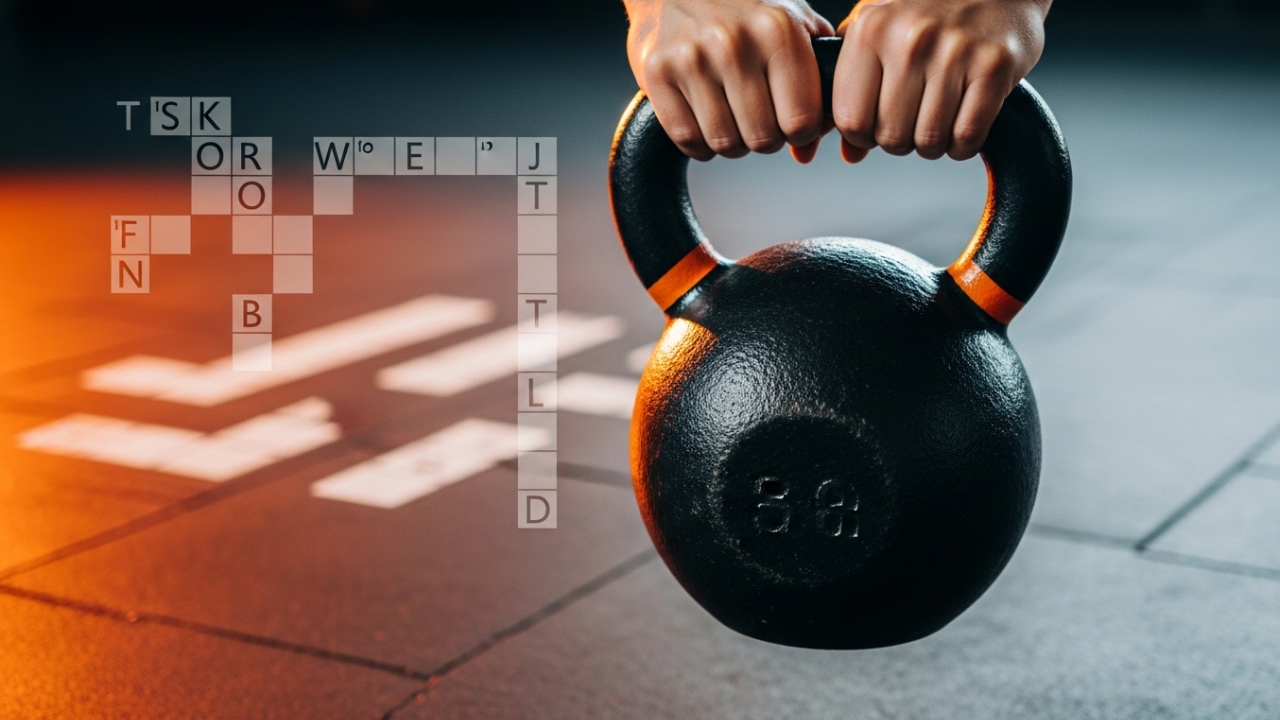
There is a unique kind of frustration that comes with a crossword puzzle. You have the majority of the grid filled in. The theme is becoming clear. And then you hit it: a clue that seems to describe something from two different worlds.
Clue: “Fitness items for swinging.”
Your brain immediately splits in two. The first image is of a sunny park, children laughing, and the creak of metal chains—a playground swing. The second image is of a gym, clanking weights, and the grunt of exertion—fitness equipment.
Which is it? Is the puzzle asking for something you sit on, or something you lift?
If you are a fitness enthusiast who loves word games, or simply a puzzled solver stuck on this very clue, you have come to the right place. This article will decode the answer, explore the fascinating double entendre of the clue, and dive deep into the world of fitness equipment that involves a “swinging” motion.
By the end of this guide, you won’t just have the answer for your puzzle; you’ll have a new perspective on how dynamic “swinging” movements can transform your workout routine.
The Short Answer: Solving the Puzzle
Before we delve into the biomechanics and gym jargon, let’s solve the puzzle at hand.
For the clue “Fitness items for swinging,” the most common answer based on letter count and crossword database history is KETTLEBELLS.
However, depending on the specific crossword puzzle (NYT, LA Times, or a niche publication), the answer could also be:
-
DUMBBELLS (if the clue emphasizes handheld weights).
-
CLUBS (referring to Indian Clubs, a historical swinging fitness tool).
-
ROPES (as in battle ropes, which are swung for exercise).
But for our purposes, KETTLEBELLS is the heavyweight champion of this clue. Let’s explore why these cannonball-shaped weights are synonymous with swinging.
Why Kettlebells? The Anatomy of a Swing
When a fitness instructor says, “Grab a kettlebell,” the first exercise they usually teach is the Kettlebell Swing. This movement is the foundation of kettlebell training. Unlike a dumbbell, which is evenly weighted, the kettlebell has a center of mass that extends beyond the handle. This design makes it inherently unstable and perfect for ballistic (swinging) movements.
So, when a crossword puzzle creator thinks of “fitness items for swinging,” the kettlebell is the most logical answer because:
-
The motion is in the name: The “Kettlebell Swing” is a standardized, world-famous exercise.
-
Function dictates form: You can swing a dumbbell, but it’s awkward and risky for the wrist. Kettlebells are designed to be swung.
-
Cultural recognition: In the last two decades, kettlebells have exploded in popularity, moving from a niche “hardman” tool to a staple in every commercial gym and CrossFit box.
The History of Swinging Fitness Items
Interestingly, the concept of “fitness items for swinging” is not new. While kettlebells are the modern answer, humans have been swinging heavy objects for strength for centuries.
1. The Russian Kettlebell (Girya)
The kettlebell, or girya in Russian, dates back to the 18th century. Originally, they were used as counterweights for goods at markets (much like how farmers carried heavy sacks). Strongmen and circus performers realized that swinging these cast-iron weights was an excellent way to demonstrate and build functional strength. By the mid-20th century, kettlebells became the official training tool of the Soviet Union’s athletic and military programs.
2. Indian Clubs
If the crossword answer calls for a shorter word, or if the puzzle has a vintage theme, the answer might be CLUBS.
Indian clubs (Jori or Mugdar) are a ancient training tool originating in India. They look like bowling pins or elongated bottles. Exercises with Indian clubs involve swinging them in circular patterns to build shoulder mobility, grip strength, and endurance. In the Victorian era, they were a popular “fitness item for swinging” in European and American health clubs.
3. Battle Ropes
A more modern addition to the “swinging” family is ROPES. Heavy battle ropes are anchored to a wall or post, and the user swings them to create undulating waves. While not a “weight” in the traditional sense, they are absolutely a fitness item used for swinging.
Mastering the Kettlebell Swing: A Step-by-Step Guide
Since kettlebells are the star of the show, let’s look at how to actually use them. Understanding the exercise makes the crossword clue even more satisfying.
The Kettlebell Swing is a hinge movement, not a squat. It primarily targets the posterior chain—the glutes, hamstrings, and lower back.
The Setup:
-
Place the kettlebell about a foot in front of you.
-
Stand with your feet slightly wider than shoulder-width apart, toes pointed slightly out.
-
Hinge at your hips, keeping your back flat, and reach for the handle (like you’re trying to show someone your belt buckle).
The Hike Pass:
-
Grab the handle with both hands.
-
“Hike” the kettlebell between your legs and slightly behind you, similar to a football center snapping the ball. Your shins should be vertical.
The Drive:
-
Drive your hips forward explosively. Squeeze your glutes.
-
Do not lift the weight with your arms. Your arms are just “ropes” connecting your body to the bell. The momentum comes from the hip thrust.
-
The kettlebell should float up to about chest height.
The Return:
-
As the bell starts to descend, hinge your hips back to absorb the weight, allowing it to swing back between your legs.
-
Repeat.
Beyond Kettlebells: Other Swinging Fitness Items
If you are a gym enthusiast looking to diversify your routine, or if you are a crossword solver who needs to understand the broader category, here are other “fitness items for swinging” you might encounter.
1. Dumbbells (The Alternative)
While not ideal for ballistic swinging, dumbbells are used in swinging motions like Dumbbell Swings or Dumbbell Snatches. They require more wrist stability because the weight is centered.
2. Macebells
A rising star in the fitness world. A macebell looks like a medieval weapon—a long lever with a heavy ball at the end. Swinging a macebell (often called “360s” or “10-to-2s”) is exceptional for shoulder health and grip strength. If a puzzle uses “Fitness items for swinging” in a modern context, this might eventually become a standard answer.
3. Suspension Trainers (TRX)
While technically you are swinging your body rather than an item, TRX straps allow you to perform swinging movements like atomic push-ups or mountain climbers. The straps are the “item” that facilitates the swing.
4. Clubbells
A modern hybrid inspired by Indian clubs, clubbells are designed specifically for leverage-based swinging exercises. They are longer than kettlebells and allow for fluid, circular motions.
The Fitness Benefits of Swinging Movements
Why do we care so much about “fitness items for swinging”? Why not just stick to bench presses and leg presses? Swinging movements offer unique benefits that static weight training cannot replicate.
1. Cardiovascular Conditioning
Swinging a kettlebell or battling ropes is metabolically expensive. It spikes your heart rate quickly, blending strength training with high-intensity interval training (HIIT). A study by the American Council on Exercise (ACE) found that a typical kettlebell workout can burn 20 calories per minute—equivalent to running a 6-minute mile.
2. Dynamic Flexibility
Swinging exercises take joints through a full range of motion under load. This improves “dynamic flexibility”—the ability to move freely while under tension—which is crucial for sports and real-life activities.
3. Grip Strength
Holding onto a kettlebell or a thick rope while it tries to fly out of your hand is a phenomenal grip strengthener. Grip strength is a key biomarker for longevity and overall health.
4. Posterior Chain Development
Most modern life (sitting at desks) weakens our glutes and hamstrings. Swinging exercises force these muscles to fire explosively, improving posture, reducing back pain, and boosting athletic performance.
Integrating “Swinging” into Your Routine
If this article has inspired you to look beyond the crossword clue and actually pick up a kettlebell, here is a simple beginner’s workout to try.
The Beginner’s “Swing” Circuit
Perform each exercise for 40 seconds, followed by 20 seconds of rest. Complete 3 rounds.
-
Kettlebell Deadlift: (No swing) Just practice the hinge motion. Set the bell down between your feet, grip it, and stand up tall, squeezing your glutes at the top. Lower with control.
-
Kettlebell Swing: (Two-handed) Focus on the explosive hip drive. Let the bell float.
-
Goblet Squat: Hold the kettlebell by the horns (the sides of the handle) against your chest and squat down.
-
Battle Ropes (or Macebell 360s): If available, finish with upper body swinging to get your heart rate up.
Safety First:
-
Wrist Protection: Kettlebells can bang your forearms. Learn the “hook grip” and keep your wrist straight.
-
Footwear: Avoid overly cushioned running shoes. You want a flat, stable sole (like Converse or barefoot shoes) to plant your feet firmly.
-
Form Over Weight: Start lighter than you think you need. The “swing” is a skill, not just a strength test.
Conclusion: The Answer is Just the Beginning
So, the next time you see the clue “Fitness items for swinging” staring at you from the newspaper or your phone screen, you can confidently pencil in KETTLEBELLS. If the letters don’t fit, you now have a backup vocabulary: DUMBBELLS, CLUBS, or ROPES.
But more importantly, you now understand why those items exist. They aren’t just random gym clutter; they are tools designed to harness the power of momentum, gravity, and human biomechanics. They connect us to ancient training methods from Russia and India while keeping us fit for the modern world.
Crossword puzzles often serve as a bridge between trivia and knowledge. This clue, in particular, bridges the gap between sedentary wordplay and active, dynamic movement. So, put down the pencil, pick up a kettlebell, and experience the “swing” for yourself.