
 By Richard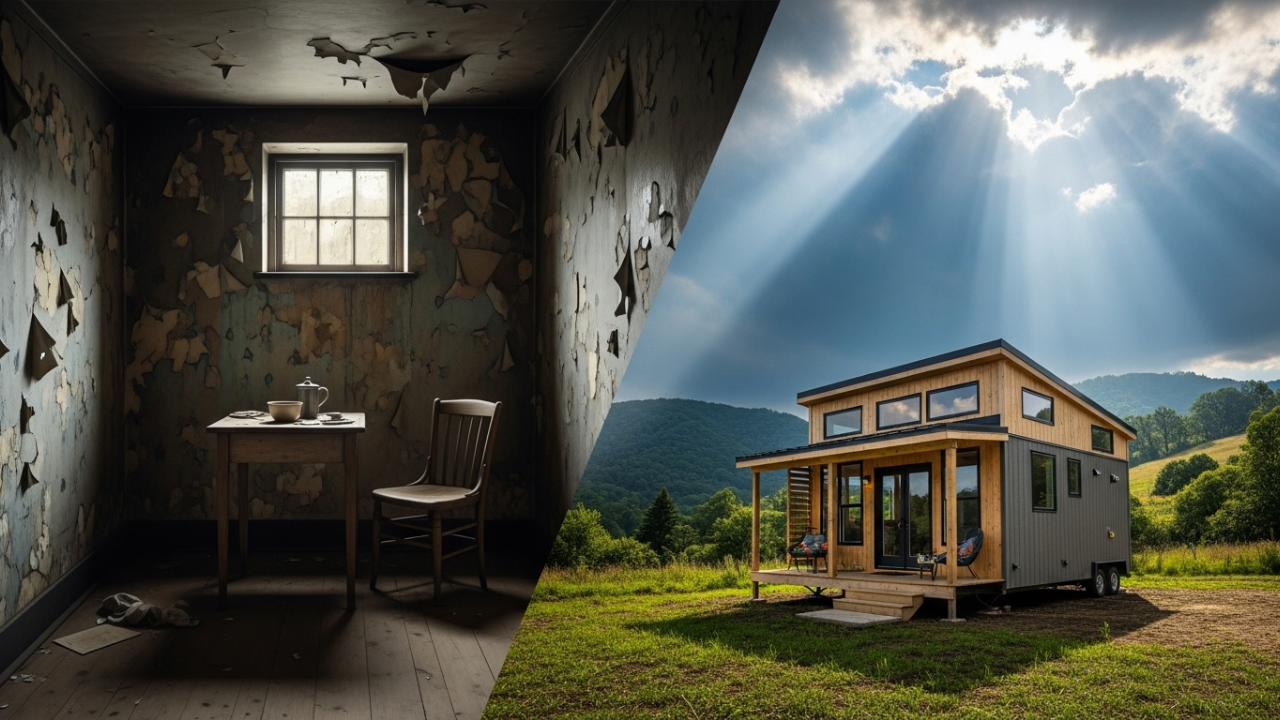
When we hear the phrase “mean dwellings,” it often conjures images that are far from the glossy, curated homes we see in magazines. In modern slang, “mean” can signify something excellent or cool (as in “he plays a mean guitar”). However, when paired with “dwellings,” the word reverts to its older, more traditional definition: shabby, impoverished, unkind, or inferior in quality.
The term “mean dwellings” is a powerful descriptor used in literature, historical texts, and sociology to describe housing that is inadequate, squalid, or lacking in basic comforts. But what exactly defines a dwelling as “mean”? And how does this concept translate into the types of housing we see in history versus today?
In this article, we will explore the definition of a dwelling, the characteristics that make one “mean,” the different types of dwellings that can fall into this category, and why understanding this term helps us appreciate the progress in housing standards across the globe.
What is the Meaning of Dwellings?
Before we dive into what makes a dwelling “mean,” we must first establish the baseline. What is the meaning of dwellings?
At its core, a dwelling is a permanent or semi-permanent place of residence. It is a structure—or part of a structure—where a person or a group of people live, eat, and sleep.
The term is broader than “house.” While a house is a specific type of building, a dwelling can be:
-
An apartment
-
A condominium
-
A mobile home
-
A cabin
-
A hut
Essentially, if four walls and a roof provide shelter for a household, it qualifies as a dwelling.
What is a Dwelling Called?
Depending on the context, a dwelling can be called many things. In legal terms, it might be referred to as a “residence” or “domicile.” In urban planning, it is a “housing unit.” Colloquially, we call it a “home,” a “place,” or a “pad.”
However, when we add the modifier “mean,” the vocabulary shifts. A “mean dwelling” is often called a hovel, a shack, a slum, or a tenement. These words carry the weight of the “mean” definition, implying not just a place to live, but a place that is barely fit for the purpose.
Why Does “Dwelling” Mean?
Understanding the etymology helps us grasp the emotional weight of the word. The word “dwell” comes from the Old English dwellan, which originally meant to “lead astray” or “hinder.” Over time, it evolved through Old Norse influence (dveljast) to mean “to delay” or “to tarry.” Eventually, by the Middle Ages, if you “tarried” in a place, you lived there.
So, when we ask, “Why does dwelling mean?” we are really asking why the word evolved to signify a permanent residence. The answer lies in human behavior: to dwell is to pause, to remain, to inhabit. A dwelling is the physical manifestation of that pause—the place where you stop moving and settle.
Deconstructing “Mean Dwellings”
Now, let’s combine the concepts. A “mean dwelling” is a habitation that is characterized by poverty, neglect, or poor construction.
Historically, “mean dwellings” were the homes of the lower classes. In Charles Dickens’ London, these were the cramped, dirty apartments where families lived in abject poverty. In the American West, a “mean dwelling” might have been a sod house or a crude log cabin that barely kept out the elements.
Characteristics of a Mean Dwelling
What specific features make a dwelling “mean” rather than just “modest”?
-
Structural Deficiency: The roof leaks, the walls have holes, or the foundation is crumbling. It fails to provide adequate shelter.
-
Lack of Utilities: Modern “mean dwellings” often lack access to clean running water, sanitation, electricity, or heating. In historical contexts, this was the norm for the poor.
-
Overcrowding: A single small room housing an entire family of six or seven people is a hallmark of a mean dwelling. The lack of personal space contributes to the “meanness” of the environment.
-
Poor Materials: Dwellings made of scavenged wood, corrugated metal, or mud bricks that are deteriorating can be classified as mean.
-
Location: Often situated in undesirable areas—flood plains, next to industrial waste, or on contaminated land—these dwellings expose inhabitants to health risks.
What are the Two Types of Dwelling?
In the broadest classification, dwellings are generally split into two main categories. Understanding this dichotomy helps us see where “mean dwellings” typically fall.
1. Single-Family Dwellings (SFD)
This is a standalone structure designed to house one household. It is independent, not sharing walls with neighbors. In the context of “mean dwellings,” a single-family dwelling could be a remote shack in the woods or a dilapidated farmhouse that has fallen into disrepair.
2. Multi-Family Dwellings (MFD)
This is a structure designed to house multiple separate households. This includes apartments, duplexes, and condominiums.
-
Historically Mean: The “tenement” buildings of the Industrial Revolution are prime examples of mean multi-family dwellings.
-
Modern Mean: In many urban centers today, “mean” multi-family dwellings exist as neglected public housing projects or illegal basement apartments that lack proper egress and safety features.
It is important to note that not all single-family or multi-family dwellings are mean. The classification refers to the structure; the “meanness” refers to the condition.
The Evolution of Housing: From Mean to Mainstream
Housing standards have risen dramatically over the last century. What was considered a standard dwelling in 1850 would likely be considered a “mean dwelling” today.
In the early 1900s, housing reforms in cities like New York and London began to crack down on the worst of the “mean dwellings.” The goal was to eradicate the slums and provide “decent” dwellings for the working class.
However, the problem persists globally. In developing nations, “mean dwellings” still house a significant portion of the population in the form of shantytowns and favelas. These are the modern equivalents of the historical slums, built from scrap materials without legal recognition or basic services.
The Psychological Impact of Living in a Mean Dwelling
The phrase “mean dwellings” isn’t just a description of physical space; it is a description of the human experience within that space. Living in substandard housing has profound psychological effects:
-
Stress and Anxiety: The constant worry about the roof collapsing, the rent being due, or the children getting sick from mold creates chronic stress.
-
Stigma: Residents of “mean dwellings” often feel a deep sense of shame. The state of their home is visible proof of their economic status, leading to social isolation.
-
Health Outcomes: Poor dwellings lead to poor health. Dampness causes respiratory issues; lack of sanitation spreads disease. This creates a cycle where sickness prevents work, which prevents the ability to improve the dwelling.
“Mean Dwellings” in Literature and Pop Culture
The term has been romanticized and scrutinized in art. In Thomas Hardy’s novels, the rural cottages of the poor are often described with a sense of pastoral beauty, yet their “meanness” is evident in the struggle of the characters to survive the winter.
In film, “mean dwellings” are used as a shorthand for a character’s desperation. Think of the tiny, grimy apartment of the protagonist in Taxi Driver or the ramshackle homes in Winter’s Bone. The setting becomes a character itself, oppressing the people who live inside it.
The Future of Dwellings: Affordable and Decent
As we look toward the future, the challenge of eradicating “mean dwellings” remains. The result is often the rapid construction of “informal” dwellings.
Architects and urban planners are now focusing on “minimum viable housing”—designs that are cost-effective but meet the basic standards of decency. The goal is to ensure that no human being has to live in a dwelling that is “mean” in the sense of being cruel or shabby.
Innovations include:
-
Tiny Homes: While some are luxurious, the tiny home movement offers a blueprint for affordable, efficient dwellings that are small but not mean.
-
Prefabricated Housing: Factory-built homes can be constructed quickly and cheaply without sacrificing quality.
-
Modular Slum Upgrades: Instead of demolishing slums, some NGOs are working with residents to improve existing structures, adding concrete floors, metal roofs, and solar lighting to transform mean dwellings into safe homes.
Conclusion: More Than Just Four Walls
A dwelling is our sanctuary. When we describe something as a “mean dwelling,” we are acknowledging a failure of society to provide that sanctuary to everyone.
Whether we are discussing the historical tenements of the past or the informal settlements of the present, the phrase forces us to confront inequality. It reminds us that while a dwelling is simply a place to live, the quality of that place determines the quality of life.
By understanding what makes a dwelling “mean”—the lack of space, the poor materials, the absence of light and air—we can better advocate for housing that is not only affordable but also worthy of the people who call it home.
Frequently Asked Questions (FAQs)
What is the meaning of dwellings?
A dwelling is a permanent or semi-permanent place of residence intended for human habitation. It can refer to any structure where people live, including houses, apartments, mobile homes, or even houseboats, as long as it provides shelter and space for sleeping, eating, and living.
What is a dwelling called?
A dwelling can be called by many names depending on its form and context. Common synonyms include residence, home, house, abode, domicile, and lodging. In legal or technical contexts, it is often referred to as a housing unit. For more informal or specific types, terms like flat (UK), apartment (US), cottage, or bungalow are used.
Why does dwelling mean?
The verb “to dwell” comes from the Old English dwellan, meaning “to lead astray” or “to hinder.” It evolved to mean “to tarry” or “to stay.” Therefore, a dwelling is the physical place where one “stays” or resides. It means a place of residence because it is where you pause your journey and remain.
What are the two types of dwelling?
The two primary classifications of dwellings are:
-
Single-Family Dwellings: Standalone structures designed to house one household (e.g., a detached house).
-
Multi-Family Dwellings: Structures designed to house multiple separate households (e.g., apartment buildings, duplexes, condominiums).