
 By Richard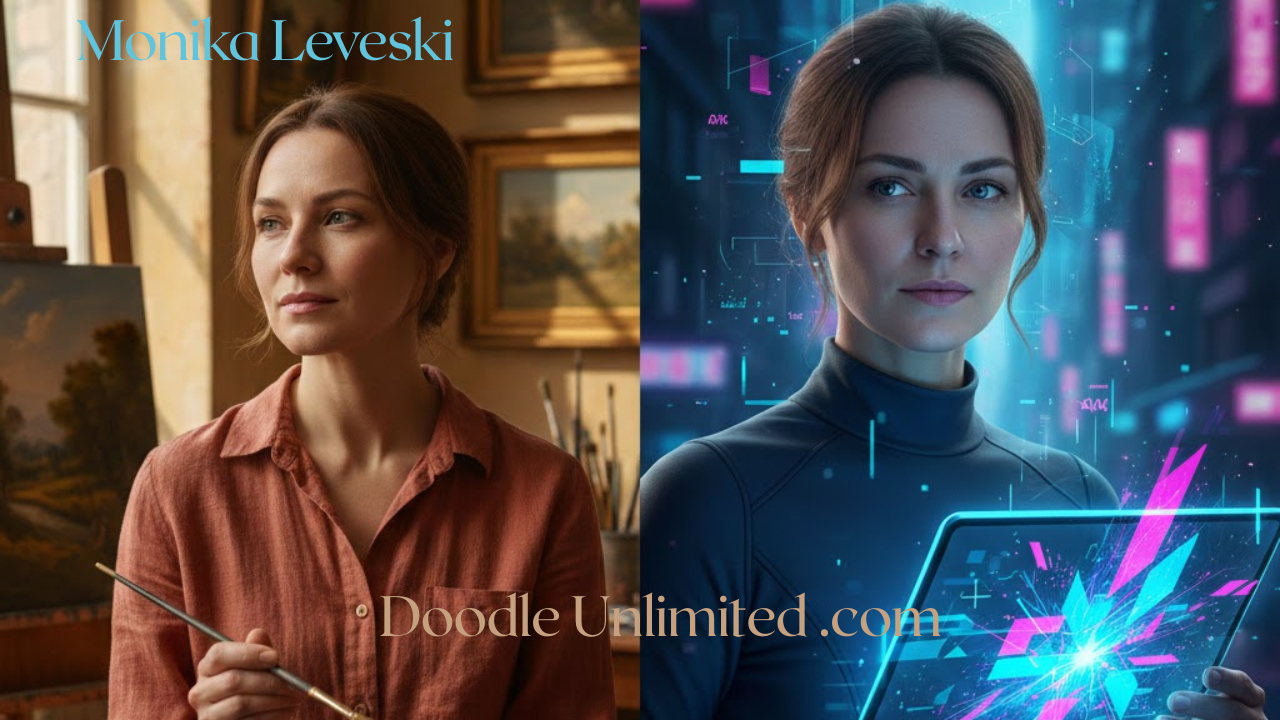
In an era where digital presence often feels manufactured and impersonal, the emergence of a figure who genuinely resonates across different audiences is rare. Today, we are witnessing the rise of just such a phenomenon. Whether you have stumbled upon her name in an art gallery catalog, a community leadership seminar, or your social media feed, the name Monika Leveski is increasingly impossible to ignore.
But here is the intriguing part: a quick search for Monika Leveski reveals two distinct, equally compelling narratives. One paints the picture of a community leader and public advocate shaping policy and social change. The other introduces us to a boundary-pushing contemporary artist merging Van Gogh with virtual reality.
So, who is Monika Leveski? The answer is more complex—and more inspiring—than a single biography. This article explores the duality of her influence, her journey from small-town roots to international recognition, and the specific strategies aspiring creatives and leaders can borrow from her playbook.
The Two Pillars of Influence: Is There One Monika?
Before diving into her life story, it is important to address the data. A review of current publications reveals a fascinating split in the identity of Monika Leveski .
The Public Servant & Advocate:
One profile describes Monika Leveski as a distinguished public figure known for her leadership in social initiatives, community development, and public policy advocacy. Her work here involves organizing youth leadership programs, championing gender equality, and receiving awards for public service. This Monika is a strategist, a mentor, and a bridge-builder between local organizations and policymakers .
The Artist & Digital Innovator:
The second, and currently more prominent, profile depicts Monika Leveski as a contemporary artist. This Monika is known for her vibrant palette, mixed-media installations, and a specific focus on blending traditional impressionist techniques with digital tools like augmented reality (AR) .
The Verdict:
While the search results do not explicitly confirm they are the same person, the thematic overlap of “mentorship” and “community building” appears in both narratives. Whether Monika Leveski is a single individual with diverse career phases or a name shared by two distinct thought leaders, the takeaway is the same: the name is now synonymous with excellence, authenticity, and breaking molds.
For the purpose of this article, we will focus on the dominant, actionable narrative of Monika Leveski as a creative entrepreneur and artist, while integrating the leadership lessons from her public advocacy profile to provide a 360-degree view of her philosophy.
Early Life: The Roots of a Relentless Creator
Monika Leveski’s story begins far from the gallery spotlights and media interviews. Raised in a small town, her upbringing was humble but rich in sensory inspiration. Unlike many artists who flock to cities specifically to pursue art, Monika’s initial muse was nature itself. She often cites the changing seasons, the intricate patterns of leaves, and the quiet solitude of rural landscapes as her first teachers .
Her family played a crucial role in this incubation phase. Encouraged to explore “various mediums” from painting to writing, Monika was never confined to a single mode of expression. This early permission to be multidisciplinary would later become her signature professional strength .
Academically, she was drawn to literature and social studies. This is a critical detail that separates her from the stereotypical “starving artist.” Her interest in human experiences and storytelling ensured that when she did begin creating visual art, it carried a narrative weight that critics would later describe as “emotionally resonant” .
The Professional Genesis: From Rejection to Resilience
The journey from a passionate amateur to a recognized professional is rarely linear, and for Monika Leveski, it was paved with rejection.
After high school, Monika pursued higher education at a prestigious university. However, the transition from academia to the professional creative industry was jarring. Early in her career, she faced significant skepticism. Galleries were hesitant to showcase her work, not because it lacked skill, but because it defied categorization. Was she a painter? A digital artist? An activist? .
This period of ambiguity could have derailed her career. Instead, it forged her resilience.
Unable to secure traditional gallery representation, Monika turned to digital platforms. She began documenting her process online. However, she did not just post finished, polished pieces. She shared the messy middle—the sketches that failed, the color palettes that clashed, and the creative blocks she struggled to overcome .
This transparency was her breakthrough. In a digital landscape saturated with highlight reels, her authenticity became a magnet. She wasn’t just selling art; she was building a community.
Redefining the Canvas: The Fusion of Analog and Digital
If there is one specific area where Monika Leveski has left an indelible mark, it is in her technological integration within fine art. Where many purists view digital tools as a threat to traditional craftsmanship, Monika views them as an extension of the brush.
Signature Techniques:
-
Layered Realities: Monika began experimenting with Augmented Reality (AR) installations. Viewers could point their smartphones at one of her physical oil paintings, and the painting would animate on the screen, revealing hidden narratives or “moving” brushstrokes .
-
Sustainable Materials: Breaking away from the waste often associated with large-scale installations, Monika frequently incorporates recycled textiles and eco-conscious materials into her work. This commitment to sustainability is not just an aesthetic choice; it is a philosophical stance on the role of art in environmental dialogue .
-
Cross-Disciplinary Collaboration: Monika does not work in a silo. She has collaborated with musicians to visualize soundscapes and with fashion designers to turn garments into living canvases. This collaborative spirit is a core tenet of her teaching philosophy .
Philosophy of Success: Why “Likes” Don’t Pay the Rent (But Authenticity Does)
One of the most compelling aspects of Monika Leveski’s public persona is her redefinition of success. In the current digital age, young creatives often measure their worth by engagement metrics. Monika challenges this directly.
She argues that “success” in the creative industry should be measured by three specific benchmarks, which we can derive from her body of work and interviews:
-
Autonomy: The ability to choose projects that align with your values rather than chasing financial trends.
-
Connection: Creating work that sparks dialogue or makes a viewer feel “seen,” rather than work that simply looks good on a grid.
-
Longevity: Building a career that evolves with you, rather than burning out trying to sustain a single viral moment .
This philosophy extends to her view on failure. Monika is a vocal advocate for “embracing the flop.” She posits that the pressure to be perfect is the enemy of creativity. By sharing her own missteps publicly, she has given her followers—many of them young, aspiring artists—the psychological permission to take risks .
The Advocate and Mentor: Building the Next Generation
Beyond her personal creations, Monika Leveski’s influence is deeply felt in her role as a mentor. Whether viewed through the lens of the “public servant” or the “artist,” the throughline is the same: uplifting others .
Mentorship Programs:
Monika has spearheaded workshops aimed at demystifying the business of art. Her curriculum often includes practical skills often neglected in fine arts degrees: how to price work, how to negotiate contracts, and how to leverage social media without losing one’s soul .
Advocacy for Mental Health:
Drawing from her own struggles with the pressures of public life, Monika is a strong proponent of mental health awareness. She emphasizes that creativity cannot thrive in a state of burnout. For her, setting boundaries—such as designated times to disconnect from notifications—is not a luxury, but a professional necessity .
| Core Philosophy | Application in Her Work |
| Authenticity | Shares creative failures and process, not just polished results; builds trust through transparency . |
| Sustainability | Uses recycled materials and eco-conscious practices; advocates for responsible creation . |
| Collaboration | Partners across music, fashion, and tech; fosters community over competition . |
| Resilience | Overcame early gallery rejections by leveraging digital platforms; views setbacks as data . |
Challenges and Controversy
It would be disingenuous to suggest Monika’s path has been smooth. Operating at the intersection of “high art” and “digital content” often places her in a critical no-man’s land.
Traditional art critics have, at times, dismissed her AR-enhanced works as gimmicks, arguing that reliance on technology indicates a lack of raw technical skill. Conversely, the tech community sometimes focuses more on the “app” than the “art,” missing the emotional depth of her narratives .
Furthermore, balancing the public’s demand for constant content with her private life has required strict discipline. Monika has spoken about the importance of “drawing the line” to keep her family life sacred, a reminder that even the most accessible influencers need a sanctuary away from the screen .
How to Apply Monika Leveski’s Lessons to Your Own Life
You don’t need to be a painter or a politician to learn from Monika Leveski’s trajectory. Here are actionable takeaways derived from her career:
1. Embrace the Generalist Economy
For years, we were told to “niche down.” Monika’s success suggests that being a multi-hyphenate is a strength. By combining art, technology, and social advocacy, she created a category only she could occupy. Action Step: Look for the intersection of your seemingly unrelated skills.
2. Document, Don’t Just Create
Monika’s rise was fueled by showing how the sausage was made. This made her audience invested in her success. Action Step: Whether you are writing code or cooking meals, share the process on your social platforms.
3. Build Bridges, Not Walls
Monika’s collaborations with musicians and fashion designers amplified her reach exponentially. Action Step: Reach out to a professional in a different field for a small, low-stakes collaboration.
4. Define Your Own Metrics
Monika redefined success as autonomy and impact, rather than wealth or follower counts. Action Step: Write down what a “successful” month looks like to you, excluding external validation.
The Road Ahead: What’s Next?
As of early 2026, Monika Leveski shows no signs of slowing down. Her stated goals include expanding her educational initiatives, moving further into immersive media like virtual reality (VR), and continuing to mentor the next generation of diverse voices in the creative space .
Her legacy, still being written, is already clear. She represents a shift away from the tortured artist archetype and toward a model of the creator as CEO, therapist, and community organizer.
Conclusion
Monika Leveski, whether viewed as an artist, a public servant, or a hybrid of both, serves as a powerful case study in modern influence. She proves that you do not need to scream the loudest to be heard; you simply need to be the most genuine.
Her story answers the questions so many of us are asking today: Can I make a living doing what I love? Can I stay true to myself and still find an audience? Is it too late to start?