
 By Richard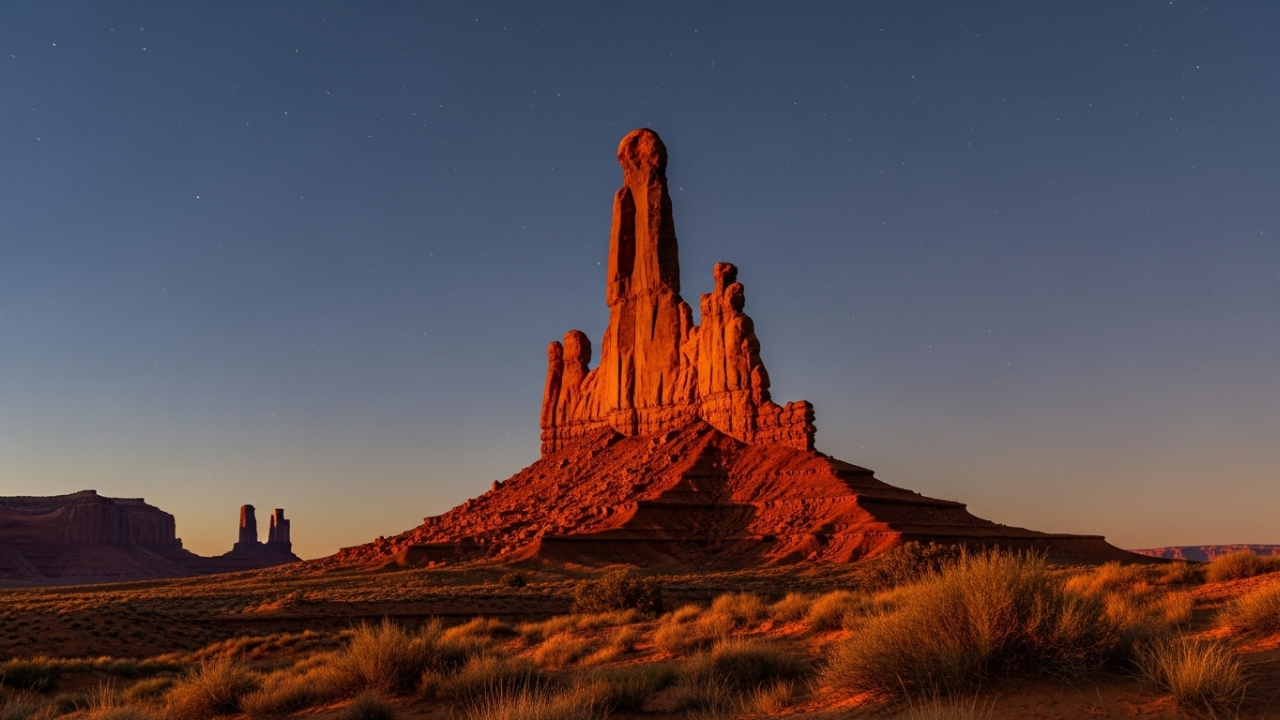
There is something primordial about a rock that juts out defiantly against the sky. Whether it is the sheer face of a cliff, a narrow fin slicing through a desert landscape, or a solitary boulder balanced precariously on a peak, these features capture our imagination. They are monuments to deep time, shaped by forces so powerful and slow that they challenge the limits of human comprehension.
When we search for terms related to “projecting rocks,” we are often looking for the language to describe these features. We might be hikers trying to identify the landscape around us, crossword puzzle enthusiasts stuck on a clue, or simply curious minds wondering how gravity allows such formations to exist.
This article is an exploration of these geological wonders. We will delve into the science of how projecting rock formations are created, the terminology used to describe them, and the incredible forces of erosion and tectonics that sculpt the surface of our planet.
The Architects of Stone: Understanding Geologic Forces
To understand why a rock projects, we must first understand the forces that work to tear it down. The same landscapes that take our breath away are, in a geologic sense, in a constant state of collapse. The story of a projecting rock is a story of a battle between uniformity and resistance.
Uplift: The Beginning of the Story
Most projecting rock features begin their life underground. Tectonic forces—the slow-motion collision of continental plates—push vast slabs of the Earth’s crust upward. This process, called uplift, creates mountains and plateaus. It exposes buried rock layers that were once flat and protected to the destructive power of the atmosphere.
Erosion: The Sculptor
If uplift is the canvas, erosion is the chisel. Wind, water, ice, and chemical weathering work tirelessly to wear down the land. This is where the concept of “differential erosion” becomes critical.
-
Softer rocks (like shale or sandstone with weak cement) erode quickly, wearing away into slopes and valleys.
-
Harder rocks (like granite, quartzite, or basalt) resist erosion. They remain standing while the material around them vanishes.
The result? A projecting rock. It is the “survivor” of an ancient landscape, the skeleton left behind after the flesh of softer stone has been washed away.
Types of Projecting Rock Formations
The world is full of spectacular examples of projecting rocks. Geologists and outdoor enthusiasts have developed a rich vocabulary to describe them. Here are some of the most common and awe-inspiring types.
1. Cliffs and Escarpments
A cliff is perhaps the most basic form of a projecting rock—a vertical or near-vertical face of rock exposed by erosion or faulting. When a cliff is part of a long ridge that separates two relatively level areas, it is often called an escarpment.
-
Formation: Often formed by faulting (where the earth cracks and lifts one side) or by the erosion of a layered rock plateau.
-
Examples: The White Cliffs of Dover, the Niagara Escarpment.
2. Arêtes and Fins
In high mountain terrain, particularly in areas shaped by glaciers, you find arêtes. These are sharp, knife-edge ridges of rock that form when two glaciers carve parallel valleys on either side of a narrow ridge. In desert environments, a similar but larger feature is often called a “fin”—a tall, thin slab of rock that can be dozens of feet high but only a few feet wide.
-
Formation: Glacial erosion (arêtes) or water seeping into vertical cracks in sandstone, widening them over millennia (fins).
-
Examples: The Garden Wall in Glacier National Park, the fins of Arches National Park.
3. Pinnacles, Spires, and Towers
These are isolated, free-standing projections that rise steeply from the ground. They are the “skyline” features of national parks worldwide.
-
Pinnacles/Spires: Tall, slender, pointed columns of rock.
-
Towers/Buttes: Broader, flat-topped features. A butte is technically smaller than a mesa.
-
Formation: These are classic examples of differential erosion. A caprock of hard stone protects the softer rock underneath. As the surrounding landscape erodes, the protected column remains. Eventually, the caprock may fail, leading to the formation’s collapse.
-
Examples: The Totem Pole in Monument Valley, the spires of the Dolomites in Italy.
The Human Connection: Why We Climb and Capture Them
For as long as humans have walked the earth, we have been drawn to projecting rocks. They served as landmarks for ancient travelers, sacred sites for indigenous peoples, and eventually, the ultimate challenge for explorers and climbers.
In the 19th and 20th centuries, the “golden age of alpinism” saw mountaineers risk everything to stand atop the great projecting spires of the Alps and the Himalayas. Today, rock climbers seek out projecting features—overhangs, aretes, and roofs—for the physical and mental challenge they provide. A projecting rock face offers no rests; it demands constant movement and absolute commitment.
Photographers, too, are obsessed. The way light hits a vertical face at sunrise, painting it in shades of orange and red, is a pursuit that drives landscape artists to wake long before dawn. These rocks are not just static objects; they are canvases for light and shadow.
The Temporary Nature of the “Permanent”
One of the most humbling lessons geology teaches us is that nothing is permanent. The massive, projecting rock faces we admire today are destined to crumble. Gravity is patient, but it is relentless.
When we see a projecting rock, particularly an overhang or a balanced rock, we are witnessing a feature that is statistically unlikely to exist. It is a momentary victory of cohesion over collapse.
-
Weathering: Water seeps into cracks. It freezes and expands, prying the rock apart. Roots worm their way into fissures, splitting stone.
-
Gravity: Eventually, the lever action of gravity on a projecting piece of rock becomes too great. The stress exceeds the strength of the stone, and it breaks away in a process called exfoliation or a rockfall.
The debris piles at the base of cliffs, known as talus or scree, are the graveyards of past projections. Every boulder in that pile was once part of the skyline.
Projecting Rocks in Culture and Language
The concept of the projecting rock has permeated our language. We use terms like “buttress,” “ledge,” and “outcrop” to describe them. They appear in parables as symbols of strength (“built on rock”) or stubbornness (“hard as a rock”).
They also frequently appear in word games and puzzles, which brings us to a common reason people search for this topic.
Frequently Asked Questions About Geological Terms
The language of geology and general knowledge often overlaps with the world of crossword puzzles. Here are answers to some common queries related to rocks, projections, and word puzzles.
What is a synonym for projection crossword?
In crossword puzzles, the answer depends heavily on the letter count and the context. Common synonyms for a projecting part include:
-
LEDGE: A narrow projection, especially from a cliff.
-
OUTCR: A shortened version of “outcrop.”
-
SPUR: A projection of land from a mountain.
-
CRAG: A steep, rugged rock.
-
JUT: A small projection (as in “jutting out”).
-
SNAG: A sharp or jagged projecting part.
What is a broken or projecting part of a rock?
This phrase can refer to a few different features depending on how it was formed:
-
Fracture: The general term for how a rock breaks (conchoidal, splintery, etc.).
-
Outcrop: The projecting part of a bedrock that is visible at the surface.
-
Scree/Talus: Broken rock fragments that have fallen and accumulated at the base of a cliff.
-
Fault Scarp: A “broken” step-like projection caused by movement along a geological fault.
What is a 7 letter word for igneous rock?
Igneous rocks are formed from cooled magma or lava. Common 7-letter answers include:
-
GRANITE: A common, coarse-grained, light-colored intrusive igneous rock.
-
BASALTIC: Relating to basalt (though “Basalt” itself is 6 letters).
-
RHYOLITE: A fine-grained volcanic rock of similar composition to granite.
-
GABBRO: A dark, coarse-grained intrusive igneous rock.
What is a 5 letter word for carried?
In the context of geology, “carried” often refers to material transported by ice, water, or wind. In a general crossword context, common 5-letter words for “carried” include:
-
BORNE: Past participle of bear (to carry).
-
LADEN: Heavily loaded or weighed down.
-
CONVEYED: (Though 8 letters, “TOWED” or “LUGGED” are 5-6).
-
Geology Specific: ERRATIC is a 7-letter word for a boulder carried and deposited by a glacier far from its source. For 5 letters, MORNE is not correct; instead, think of DRIFT (glacial drift – material carried by glaciers).
Conclusion: The Silent Storytellers
The next time you stand before a cliff face, gaze up at a distant spire, or run your hand over a rocky ledge, take a moment to appreciate the immense story contained within that projection. You are touching a surface that has waited millions of years to meet the sun. You are witnessing the result of ancient seas, tectonic collisions, and relentless ice.
Projecting rocks are more than just obstacles on a trail or answers in a puzzle. They are the silent storytellers of our planet’s dynamic past. They remind us that the ground beneath our feet is alive with slow, powerful motion. And in their slow erosion, they teach us a profound lesson about resilience, change, and the beauty of things that dare to stand out.