
 By Richard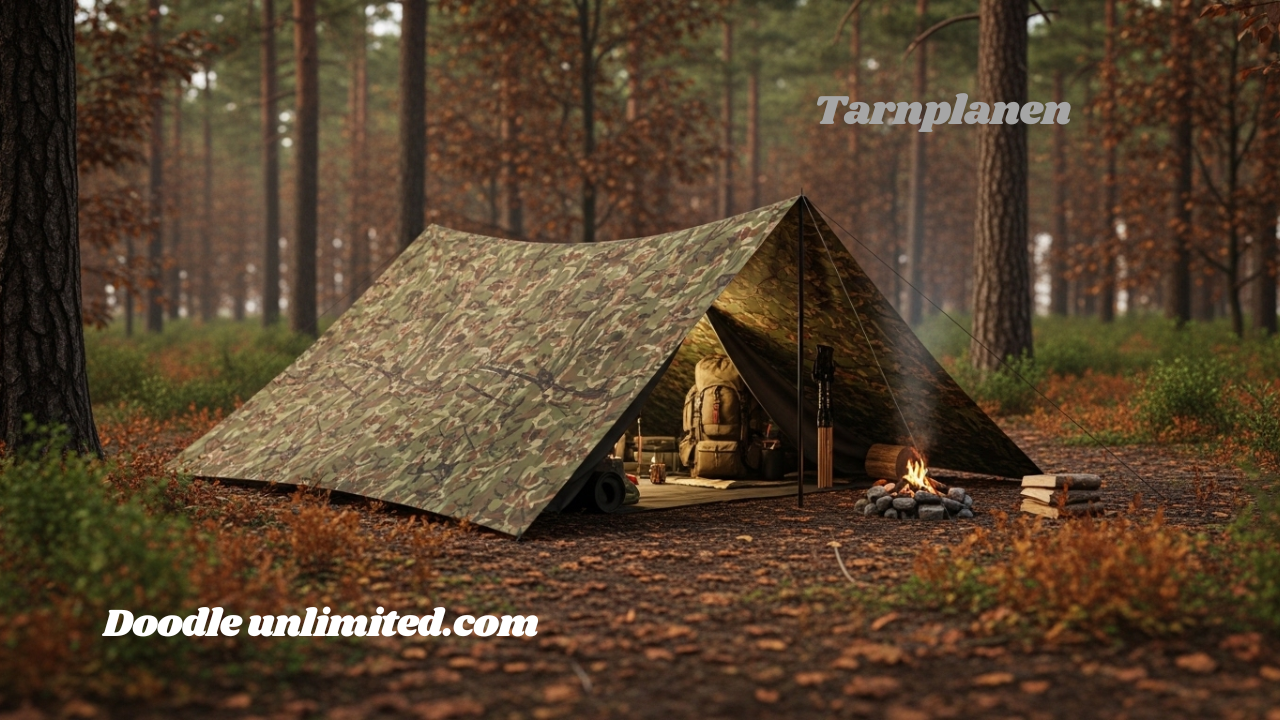
If you spend any time in the European outdoors—whether in the dense forests of Germany, the rugged terrain of Scandinavia, or simply at a military surplus store—you will eventually come across the term Tarnplanen. While it might sound like specialized jargon, the concept is surprisingly simple and incredibly useful.
Translated literally from German, “Tarn” means camouflage or concealment, and “Planen” means tarpaulins or sheets . A Tarnplanen is therefore a camouflage tarp. But calling it just a “tarp” undersells its sophisticated design. Whether you are a survivalist, a hunter, a wildlife photographer, or a prepper, understanding the nuances of Tarnplanen can significantly enhance your outdoor experience.
In this guide, we will explore the history, the technical design, the practical applications, and the key differences that make these tarps an essential piece of kit for anyone looking to blend in with nature while staying protected from the elements.
What Exactly is a Tarnplanen? More Than Just a Tarp
At its core, a Tarnplanen is a heavy-duty, waterproof sheet designed to protect people or equipment while remaining visually unobtrusive. Unlike the bright blue polyethylene tarps commonly found in hardware stores, a Tarnplanen utilizes specific color patterns and shapes to disrupt the outline of the object it covers, helping it “disappear” into the surrounding environment .
These tarps are typically made from robust materials such as ripstop polyester, coated nylon, or heavy-duty PVC. They are built to withstand harsh weather conditions—from torrential rain and snow to intense UV radiation—without tearing or fading .
The German Engineering Behind the Pattern
To truly appreciate a modern Tarnplanen, one must look at the technology behind it. A fascinating deep dive into European patent data reveals that the design of these tarps is a science in itself.
Traditional camouflage relies on organic shapes—blotches and curves that mimic nature. However, German inventors recognized a critical flaw in this approach: the seams. When you try to stitch together multiple traditional tarps to cover a large object like a truck, the straight lines of the seams cut through the curved camouflage pattern, creating a highly visible grid that ruins the concealment effect .
Modern Tarnplanen technology solves this problem through geometric innovation. Patents describe a camouflage pattern consisting of numerous multi-colored patches. A significant number of these patches have edges composed of straight lines. Furthermore, many of these straight edges are aligned parallel to the edges of the tarp itself .
Why does this matter?
When multiple tarps are joined together, the seams blend in with the existing straight lines of the pattern. The human eye is drawn to the repetition of these lines, allowing the tarp to maintain its camouflage effectiveness even over large areas. This allows for “endless” combinations—small, easy-to-handle tarps can be assembled in the field to cover large vehicles or command posts without compromising stealth .
This design philosophy also allows for what is known as “rapport” printing. Manufacturers can print a relatively small, repeating pattern (a rapport) that can be cut and rotated 180 degrees when joined with another section. This prevents the pattern from becoming too repetitive and obvious, mimicking the random variation found in nature .
Tarnplanen vs. Standard Tarps: 7 Key Differences
If you are considering a Tarnplanen for your next adventure, it is essential to understand how it differs from a standard tarp. Here are the critical distinctions every traveler and outdoor enthusiast should know :
1. Camouflage vs. Standard Colors
This is the most obvious difference. While standard tarps scream for attention with blues, greens, or silvers, a Tarnplanen utilizes specific patterns like Flecktarn, Tropentarn (desert), or snow patterns to blend into the specific environment.
2. Noise Reduction
Standard tarps are often “crinkly” and loud in the wind. High-quality Tarnplanen is made from quieter fabrics that won’t flap as loudly, which is crucial for wildlife observation or stealth camping .
3. Durability and Tear Resistance
Standard tarps often tear at the first sign of stress. Tarnplanen usually utilizes a ripstop weave. If the fabric is punctured, the tear is contained and does not spread .
4. Weatherproofing
Beyond just being waterproof, Tarnplanen is engineered for UV stability. The coatings prevent the fabric from becoming brittle after weeks in the sun, and they are often treated to resist mold and mildew .
5. Weight and Packability
Despite their ruggedness, many Tarnplanen are designed to be lightweight and packable. They can be folded down to a compact size suitable for a backpack, whereas a heavy-duty hardware store tarp remains bulky .
6. Versatile Setup Options
Standard tarps might have grommets every few feet. Tarnplanen often features reinforced loops and strong corner patches that allow for countless setup configurations—as a lean-to, an A-frame shelter, a ground blind, or a windbreak .
7. Purpose-Specific Designs
You can buy a Tarnplanen tailored to your specific activity. There are lightweight versions for hikers, heavy-duty versions for vehicle cover, and ultra-quiet versions for photographers .
Practical Uses for Tarnplanen
The versatility of the camouflage tarp makes it a favorite across different communities.
1. Survival and Bushcraft
In a survival situation, shelter is your top priority. A Tarnplanen is arguably the best survival tool you can carry besides a knife and a fire starter.
2. Hunting and Wildlife Photography
Animals have keen eyesight. Setting up a blind with a bright blue tarp is a guaranteed way to spook your target. A Tarnplanen allows hunters and photographers to set up downwind and disappear into the background. The quiet fabric ensures that rustling noises don’t give away your position .
3. Camping and Overlanding
For the eco-conscious camper, a Tarnplanen offers a way to minimize visual impact on the landscape. It can serve as a groundsheet under a tent, a shaded cooking area, or a protective cover for a motorcycle or overlanding gear to keep prying eyes away from expensive equipment .
4. Home and Garden
The utility of Tarnplanen isn’t limited to the wilderness. In a suburban or rural setting, these tarps are excellent for protecting woodpiles, covering lawnmowers or garden tractors, and shielding delicate plants from early frost. The earthy tones look far less obtrusive in a garden than brightly colored plastic sheeting .
How to Choose the Right Tarnplanen
With the popularity of these tarps growing, how do you select the right one?
Consider the Material:
-
Polyethylene: Good for general-purpose use. It is waterproof and durable but can be bulky .
-
Polyester/Nylon: Excellent for backpacking. It is lightweight, packs small, and often features ripstop technology .
-
PVC: The heavy-duty champion. It is incredibly durable and weather-resistant but heavy, making it ideal for stationary use like covering vehicles or equipment .
Match the Pattern to Your Terrain:
-
Woodland/Flecktarn: Ideal for mixed forests in Europe and North America.
-
Tropentarn/Tan: Suitable for arid climates, deserts, and dry grasslands.
-
Multicam: A versatile commercial pattern that works well in a variety of environments.
-
White/Snow: Essential for winter survival and winter camping.
Check the Construction:
Look for reinforced corners, rust-proof grommets, and double-stitched hems. These are the points where tarps usually fail, so reinforcement here is a sign of quality .
Maintenance and Care
To ensure your Tarnplanen lasts for decades (as good gear should), follow these simple tips:
-
Dry Before Storage: Never fold and store your tarp while it is wet. This leads to mildew and rot. Always set it up to dry completely when you get home .
-
Clean Gently: Use mild soap and water to clean off mud and debris. Avoid harsh detergents or solvents that can strip the waterproof coating and fade the camouflage colors .
-
Repair Immediately: If you get a small tear, patch it immediately with repair tape. A small tear caught early is much easier to fix than a giant rip caused by neglect.
-
Store Out of Sunlight: When not in use, store the tarp in a dark, dry place. Prolonged exposure to UV rays, even when not in use, can degrade the fabric over time .
Conclusion
Whether you call it a camouflage tarp or by its German name Tarnplanen, this piece of equipment represents the pinnacle of practical outdoor gear. It combines the rugged protection of a heavy-duty tarpaulin with the scientific precision of German camouflage technology.
From the patented straight-line patterns that allow for seamless joining of sections, to the robust ripstop materials that survive the back of a truck or the forest floor, a Tarnplanen is an investment in safety, security, and stealth