
 By Richard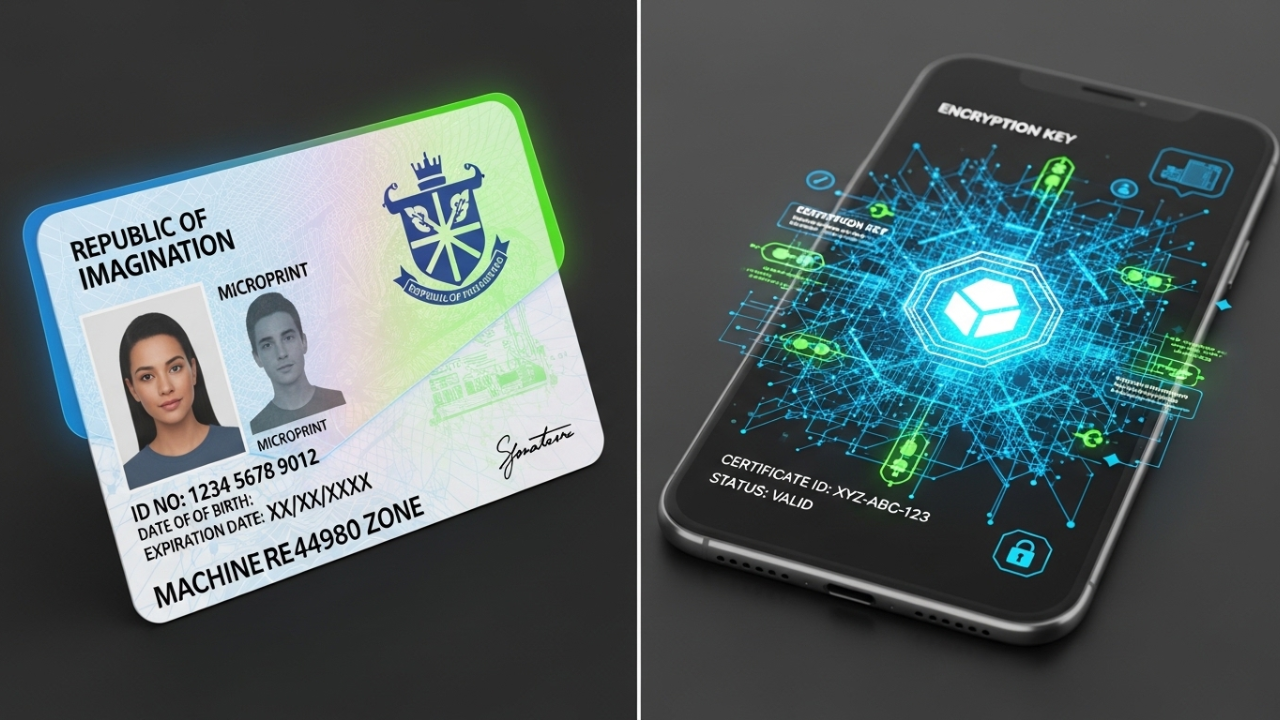
In an era where identity is the new perimeter of security, the concept of “proof” is more fluid than ever. Whether you are a citizen waiting for your permanent ID card, a cloud architect managing server access, or a developer creating secure logins, you will inevitably encounter the need for a temporary identity certificate.
But what exactly is a temporary identity certificate? In simple terms, it is a short-lived credential that serves as a valid stand-in for a permanent form of identification. These certificates exist in two primary realms: the physical (government-issued documents) and the digital (machine and software certificates). Understanding both is crucial in 2026, as the lines between our physical and digital identities continue to blur.
This guide will explore the nuances of temporary identity certificates, from how to obtain one from the authorities to how cutting-edge technology is using them to secure cloud access.
What is a Temporary Identity Certificate? The Physical Reality
In many countries, a temporary identity certificate serves as an official, government-issued document that functions as a proxy for the standard Identity Document (ID) or card. It is usually issued while a permanent ID is being produced or when the original has been lodged with an official department for a specific purpose.
For example, according to the Identification Act of 1997, the Director-General may issue a temporary identity certificate to an individual who has applied for a new identity card or has submitted their existing card for official purposes . This document is legally regarded as the holder’s identity card for the period and conditions specified on the certificate.
These certificates are critical for ensuring continuity. Without them, individuals would be unable to perform essential tasks like opening bank accounts, signing contracts, or verifying their age while waiting for their permanent documentation.
When Do You Need a Physical Temporary Identity Certificate?
-
Lost or Stolen ID: While waiting for a replacement.
-
First-Time Applicants: During the period between applying for a first-time ID and receiving it in the mail.
-
Official Processing: If a government department needs to retain your original ID for administrative processing, they will often provide you with a temporary certificate to use in the interim.
It is important to note that a temporary identity certificate is generally considered an “acceptable identification” in legal and administrative contexts, often listed alongside passports and driving licenses as a valid form of ID .
The Digital Shift: Temporary Identity in the Age of Cloud Computing
While the physical document is about proving who you are to the world, the digital temporary identity certificate is often about proving what a machine or user is allowed to access. This concept is at the heart of modern cybersecurity frameworks like Zero Trust.
In the digital realm, a temporary identity certificate is a cryptographic file that grants permissions for a limited time. This is often referred to as an ephemeral credential or a just-in-time (JIT) access token. The principle is simple: why give a user or a server permanent keys to the kingdom when they only need to clean one room for an hour?
The Belgian eID: A Case Study in Digital Identity
A fascinating example of this convergence is the Belgian electronic ID card (eID). Every Belgian citizen receives an ID card containing a chip that holds digital certificates. As demonstrated by cloud architecture experts, these physical cards can be used to generate temporary credentials for accessing secure cloud environments like Amazon Web Services (AWS) .
Using a smart card reader, a citizen can use their eID to authenticate against a trusted Certificate Authority (CA). The system then issues temporary credentials (valid for a short session) that allow access to specific resources, like an S3 bucket. This is a perfect hybrid model: the physical card provides the root of trust, but the actual access is granted via a temporary, revocable digital certificate .
The Rise of Virtual and Ephemeral Identities
Beyond hardware, we are seeing a surge in purely software-based temporary identities. Inspired by the security of Virtual Credit Cards (VCCs), platforms are now exploring Virtual ID Cards. These are one-time-use tokens designed for accessing sensitive services like healthcare portals or banking apps .
Statistics show a massive demand for this technology:
-
Security Perception: 82% of financial professionals view one-time-use virtual credentials as more secure than static ones .
-
Adoption: 70% of U.S. corporations have already adopted virtual cards for payments, indicating a comfort level with ephemeral financial identities that can easily translate to personal identification .
These temporary digital identities mitigate the risk of credential theft. If a one-time token is intercepted, it is useless for future transactions.
The Hidden Danger: Rogue and Unmanaged Temporary Certificates
However, the digital world’s reliance on temporary certificates comes with a significant caveat: management. While temporary certificates are designed for short-term use, they often become a permanent headache for IT departments.
In the fast-paced world of development, temporary certificates are often deployed for testing purposes. The intention is to replace them before pushing to production. However, due to process slips, these temporary certificates sometimes make their way into the live infrastructure without the knowledge of the security team .
This creates “credential sprawl”—an expansion of the attack surface where unknown or unmanaged certificates live in multi-cloud environments. Because these certificates are often deployed by application owners rather than centralized PKI (Public Key Infrastructure) admins, they frequently lack visibility . When a security team doesn’t know where a certificate lives, when it expires, or what it signs, the organization faces two major risks:
-
Outages: Unexpected application downtime due to an expired temporary certificate.
-
Breaches: Unmanaged certificates serve as easy targets for hackers moving laterally across a network .
Identity Risk Management: Locking Down the Ephemeral
Because temporary identities are, by nature, short-lived, they are a prime target for abuse. In identity risk management, ephemeral accounts are categorized as a form of credential sprawl. They are used everywhere—from banks granting project-based access to hospitals giving rotating staff access to records .
The risk is that attackers can create their own temporary accounts to move undetected through a system. To lock this down, security experts recommend moving away from static temporary accounts and toward Just-in-Time (JIT) privilege elevation .
This means that instead of creating a temporary user account that lasts for two weeks, you grant a verified user elevated permissions for a specific task for 15 minutes. This ensures zero standing privilege, meaning there is no persistent account for a hacker to find.
Physical vs. Digital: Key Differences at a Glance
To fully grasp the concept of a temporary identity certificate, it helps to compare the physical document with its digital counterpart.
| Feature | Physical Temporary Certificate | Digital / Ephemeral Certificate |
|---|---|---|
| Purpose | Stand-in for a lost/missing physical ID. | Secure access to networks, servers, or apps. |
| Issuing Authority | Government (e.g., Department of Home Affairs). | Certificate Authority (CA) or cloud provider (e.g., AWS). |
| Validity | Weeks or months (until permanent ID arrives). | Minutes, hours, or days (session-based). |
| Security Risk | Forgery or expiration leading to service denial. | Credential sprawl, rogue issuance, theft. |
| Example | Document issued while waiting for a new ID card. | AWS credential helper token; Virtual Credit Card number. |
Best Practices for Handling Temporary Identity Certificates
Whether you are a citizen dealing with bureaucracy or a DevOps engineer managing server fleets, these best practices apply universally.
1. Treat Them as Highly Sensitive
Just because a certificate is “temporary” doesn’t mean it is low value. In the digital realm, a 15-minute certificate can be used to exfiltrate terabytes of data. In the physical realm, a temporary certificate can be used to open fraudulent credit accounts. Treat it with the same security as your permanent ID.
2. Ensure Visibility and Tracking
For organizations, it is vital to have a full lifecycle management solution. You need to know where your certificates are, who they belong to, and exactly when they expire. Lack of discovery leads to unplanned outages and security gaps .
3. Automate Deprovisioning
The defining feature of a temporary identity is its expiration. In physical spaces, this means returning the document when your permanent ID arrives. In the digital space, it means automating the destruction of the credential. Relying on manual deletion is a recipe for disaster. Automated deprovisioning ensures that ephemeral accounts don’t linger and become permanent backdoors .
4. Leverage High-Assurance Verification
When issuing a temporary identity, the verification step must be robust. For example, using an eID with a smart card reader (NFC chip) is a higher assurance method than a simple database check . The strength of the temporary credential is directly tied to the strength of the initial identity proofing .
The Future: Reusable Identity and Interoperability
Looking ahead, we are moving toward a model of reusable identity. This doesn’t mean we will go back to permanent, static credentials. Instead, it means that once a user has proven their identity via a high-assurance method (like an eID or biometric check), they can generate temporary, context-specific credentials across multiple platforms without restarting the verification process each time .
This is the “Apple Pay” model for identity. Your actual card number is never shared; instead, a temporary, device-specific token is generated for a single transaction. We are moving toward a world where your identity operates the same way—secure, temporary, and private.
Conclusion
The temporary identity certificate is a fascinating bridge between the old world and the new. In its physical form, it is a piece of paper that protects your rights while the state processes your permanent documents. In its digital form, it is a complex cryptographic key that protects your data from hackers.
As we move further into 2026, the importance of these temporary credentials will only grow. They are the key to balancing security with convenience. Whether you are safeguarding your national identity or your company’s cloud infrastructure, the mantra remains the same: trust nothing, verify everything, and make sure that verification expires on time.