
 By Richard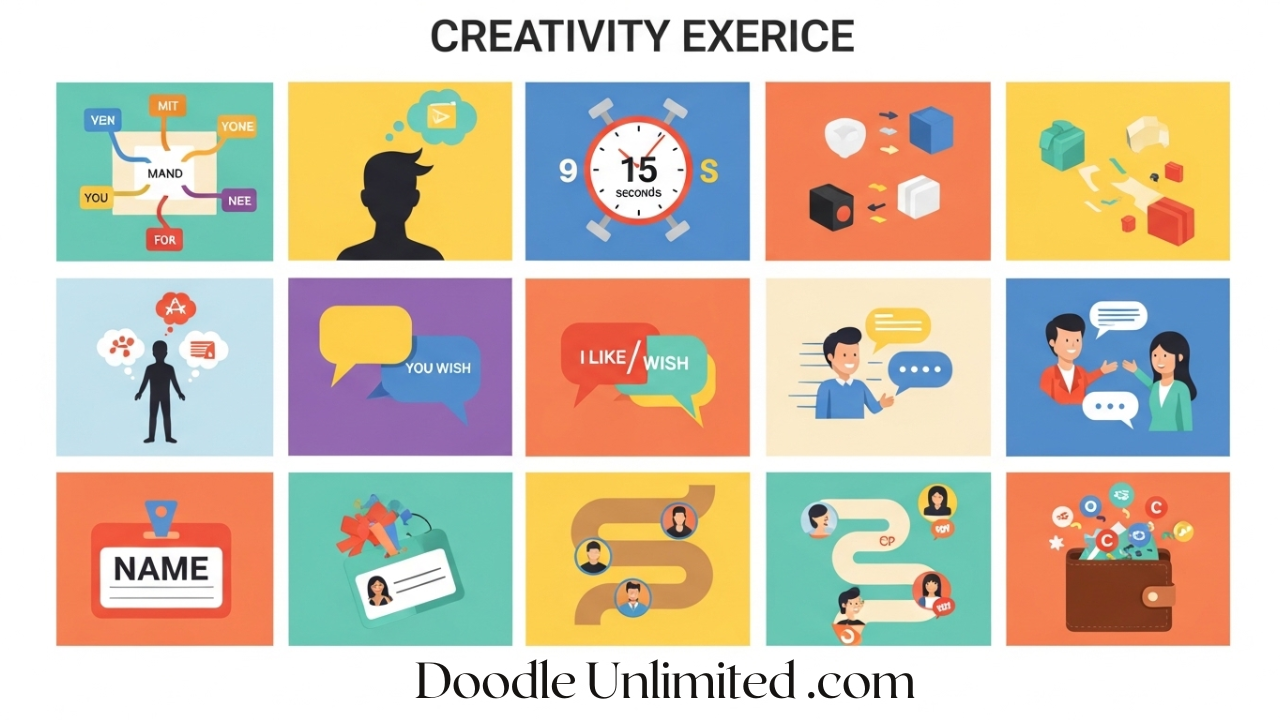
Creativity is the lifeblood of innovation, and visual thinking plays a crucial role in optimizing our creative potential. The ability to visualize concepts helps us understand complex ideas and express them more clearly. Are you looking for ways to enhance your visual thinking skills? You’ve come to the right place!
This blog post will explore 10 daily creativity exercises designed to boost your visual thinking capabilities. These fun and engaging activities can be easily integrated into your routine, igniting your imagination while allowing you to tap into new perspectives. Get ready to unleash your creative power with these exciting techniques!
10 Daily Creativity Exercises to Boost Your Visual Thinking
Engaging in daily creativity exercises can significantly enhance your visual thinking skills. From mind maps to empathy maps, these activities encourage you to explore ideas from multiple angles. They help break free from conventional thought patterns and stimulate innovative solutions.
By incorporating these exercises into your routine, you’ll not only sharpen your ability to visualize concepts but also foster a collaborative environment if you involve others. Whether brainstorming or tackling complex problems, these techniques offer a refreshing approach to enhancing creativity and understanding human behavior more deeply.
1. Mindmaps: Pushing for Divergent and Creative Thinking
Mind mapping is a powerful tool for unleashing creativity. By visually organizing thoughts and ideas, you can explore connections that may otherwise remain hidden. Start with a central concept, then branch out into related themes, allowing your mind to wander freely.
This technique encourages divergent thinking, enabling you to generate multiple solutions rather than settling on the first idea that comes to mind. As you create your map, let go of constraints and embrace the unexpected paths your thoughts might take—this freedom fosters innovation and fresh perspectives in any project or challenge.
2. 15 Seconds of Brilliance: Enhancing Creative Output
Set a timer for 15 seconds and let your mind unleash its creativity. This exercise encourages quick, instinctive thinking that often leads to surprising ideas. Don’t censor yourself; write down whatever comes to mind without hesitation.
After the time is up, review your thoughts. You might discover nuggets of brilliance hidden among the rapid-fire responses. This technique helps you trust your instincts and can ignite fresh perspectives on challenges you’re facing in visual thinking or creative projects. Embrace spontaneity—your best ideas may come when you least expect them!
3. 30 Circles: Initiating Ideation Sessions
The 30 Circles exercise is a powerful tool for sparking creativity during ideation sessions. Participants start with a simple sheet containing 30 empty circles and are challenged to transform them into various recognizable objects within a set time limit. This rapid-fire approach fosters quick thinking, pushing individuals to break free from conventional ideas.
As the clock ticks down, participants often surprise themselves with their creativity. The urgency encourages out-of-the-box solutions that may not surface in traditional brainstorming formats, making it an excellent warm-up activity to kickstart innovative discussions.
4. Empathy Maps: Understanding Human Behavior
Empathy maps are powerful tools for visualizing user experiences. They help you step into your audience’s shoes, exploring their thoughts, feelings, and actions. By mapping out what users say, think, do, and feel, you’re able to grasp their motivations on a deeper level.
Creating an empathy map fosters collaboration among team members. It ignites discussions about user behaviors and needs that might not be immediately obvious. This understanding drives innovative solutions tailored to real-world problems. With empathy at the forefront of design thinking, your projects can resonate more deeply with those you aim to serve.
5. I Like, I Wish: Embracing Constructive Feedback
The “I Like, I Wish” exercise invites participants to share what they appreciate and what could be improved within a project or idea. This structured approach encourages open dialogue while fostering a safe space for honest feedback. By framing critiques positively, it reduces defensiveness and promotes collaboration.
As team members express their likes, they celebrate strengths and successes. When sharing wishes, they can voice aspirations for improvement without judgment. This dual perspective allows everyone to contribute creatively while deepening understanding of diverse viewpoints in the group setting.
6. Speed Dating: Breaking Down Barriers and Warming Up Groups
Speed Dating is an engaging activity that encourages quick exchanges of ideas. Participants pair up and share creative thoughts within a limited time frame, usually just a few minutes. This fast-paced environment fosters spontaneity, helping to break down barriers and reducing any initial awkwardness.
As groups rotate partners, fresh perspectives emerge. Each interaction sparks new insights and collaboration opportunities. By the end of the session, participants often feel more connected and energized to tackle challenges together, paving the way for enhanced creativity in future projects.
7. Nickname Warm-Up: Improving Idea Flow
Start your creative sessions with a fun and engaging nickname warm-up. This exercise invites participants to create quirky nicknames for themselves, reflecting their personalities or current moods. It lightens the atmosphere and encourages everyone to express themselves in a playful way.
As teammates share their nicknames, barriers start to break down. Laughter flows naturally, opening minds to new ideas and fostering collaboration. This simple warm-up can significantly improve idea flow during brainstorming sessions, making it easier for individuals to contribute freely without fear of judgment.
8. Customer Journey Map: Empathizing with End Users
A Customer Journey Map is a visual representation that outlines the steps customers take when interacting with your product or service. This exercise helps you see things from their perspective, highlighting crucial touchpoints and emotions throughout their experience.
By mapping out the journey, you can identify pain points and opportunities for improvement. It encourages empathy, allowing teams to understand user needs better. Engaging in this practice fosters innovative solutions that resonate with customers, ultimately enhancing satisfaction and loyalty.
9. The Dream/Gripe Session: Problem Definition and Ideation
The Dream/Gripe Session is a powerful tool for unlocking creativity. It allows participants to express their aspirations and frustrations around a specific topic or project. By sharing dreams, team members can explore innovative possibilities while grievances reveal underlying issues that need addressing.
This dual approach sparks insightful discussions, fostering an environment where problem definition becomes clearer. Participants feel safe to voice concerns without fear of judgment, leading to genuine ideation sessions. The balance between dreaming big and tackling real challenges creates a fertile ground for breakthrough ideas and solutions in any creative endeavor.
10. The Wallet Exercise: Fostering Innovation Thinking
The Wallet Exercise encourages participants to think creatively about value. Imagine your wallet as a metaphor for resources, ideas, and potential solutions. Participants draw or list items they would keep in their wallets that represent innovation or personal growth. This sparks discussions on what truly matters.
By visualizing these concepts, individuals unlock new perspectives on prioritization and resource allocation. It fosters a sense of ownership over innovative thinking while challenging conventional boundaries. Engage with this exercise regularly to stimulate fresh ideas and drive collaborative creativity among team members.
FAQs
Visual thinking is a cognitive process that involves using imagery to help understand and organize thoughts. It allows you to explore concepts visually, making complex ideas easier to grasp.
Examples of visual thinking include mind maps, diagrams, and sketches that convey information effectively. To teach visual thinking, use creative exercises like those mentioned above. Encouraging hands-on activities can also enhance understanding while allowing individuals to express their thoughts through visuals.
What is meant by visual thinking?
Visual thinking is the process of using imagery to understand and communicate ideas. It combines visual elements with cognitive processes, allowing individuals to see patterns, relationships, and concepts more clearly. By transforming thoughts into visuals like diagrams or sketches, one can enhance comprehension and retention.
This approach taps into our innate ability to think in pictures. Whether through mind maps or doodles, visual thinking aids problem-solving by providing a different perspective. It’s not just for artists; anyone can harness its power for brainstorming and innovation.
What are examples of visual thinking?
Visual thinking encompasses a variety of techniques that help individuals process and express ideas visually. Examples include mind maps, which visually outline concepts; infographics that combine data with engaging graphics; and storyboards used in film to visualize sequences. Sketching or doodling during brainstorming sessions also falls under this umbrella.
Additionally, diagrams like flowcharts simplify complex processes while empathy maps illustrate user experiences through visual representation. Visual note-taking combines words and images for enhanced recall. These examples highlight the diverse ways visual thinking can enhance understanding and communication across various fields.
How to teach visual thinking?
Teaching visual thinking starts with engaging students in hands-on activities. Encourage them to create mind maps or sketches that express their ideas. Visual aids like diagrams and flowcharts can help clarify complex concepts, making learning more accessible.
Incorporate storytelling into lessons as well. Ask students to illustrate narratives through images or graphic organizers. This approach enhances comprehension while fostering creativity. Regular practice is essential; integrate visual exercises into daily routines, allowing learners to develop their skills progressively over time without pressure or constraints on imagination.
How to visualize thinking?
Visualizing thinking involves using various tools and techniques to transform complex ideas into visual representations. Start by sketching out your thoughts, whether through doodles or structured diagrams like flowcharts and infographics. This helps clarify concepts and makes them more tangible.
Incorporate colors, symbols, or images that resonate with your ideas to deepen understanding. Use mind maps to connect different facets of a topic visually. Don’t hesitate to experiment—different approaches will suit different types of thought processes.
By regularly practicing these visualization methods, you’ll enhance both comprehension and retention while making the act of thinking more dynamic and engaging. Embrace this journey as an ongoing exploration rather than a destination.