 By Mubashir Abbasi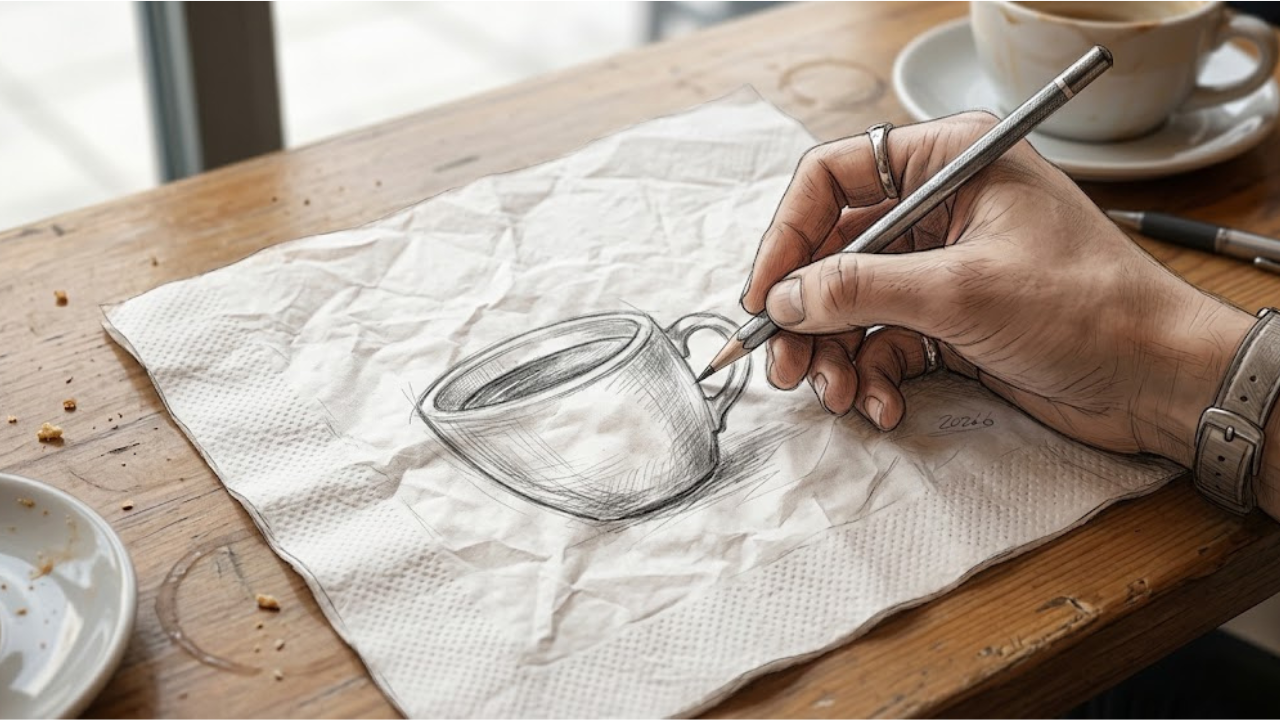
Introduction
Ever been stuck in a café, waiting for your order, with nothing but a pen and a paper napkin? That’s the perfect moment for drawing on a napkin — one of the simplest, most accessible ways to practice art anywhere. Whether you’re a student killing time between classes or just looking for a creative outlet, napkin sketches let you turn boring moments into mini masterpieces.
In this guide, you’ll learn exactly how to start drawing on a napkin with pencil, see easy ideas perfect for beginners, and get a step-by-step method you can use right now. We’ll cover simple drawing on a napkin techniques, share easy drawing on a napkin ideas for kids and teens, and even clear up confusion about sanitary napkin drawing (spoiler: that’s a different topic). By the end, you’ll have everything you need to sketch confidently on any napkin.
Table of Contents
-
What Is Drawing on a Napkin?
-
Why Does Drawing on a Napkin Matter?
-
Drawing on a Napkin — Key Facts & Types
-
How To Start Drawing on a Napkin
-
Common Mistakes & Myths to Avoid
-
Expert Tips for Best Results
-
Frequently Asked Questions
What Is Drawing on a Napkin?
Drawing on a napkin means creating sketches, doodles, or illustrations directly on paper napkins — the kind you find at restaurants, cafés, or lunch tables. It’s spontaneous, portable art that requires zero prep: just grab a pen or pencil and start sketching.
Think of it as visual brainstorming meets casual creativity. Artists, designers, and students use napkin sketches to capture ideas fast, practice shapes, or simply have fun while waiting for food. The small, textured surface forces you to keep things simple and bold, which is perfect for building core drawing skills.
A real-world example: entrepreneurs famously sketch business models on napkins during coffee meetings. The “Napkin Sketch” became so iconic that entire books teach how to turn these rough drawings into pitch decks. For students, it’s the same idea — quick visual thinking that clarifies complex thoughts.
Why Does Drawing on a Napkin Matter?
Napkin drawing isn’t just a party trick — it’s a powerful learning tool with real benefits:
-
Builds observation skills: Sketching what you see (a coffee cup, your hand, the table) trains your eye to notice details others miss.
-
Encourages daily practice: Because napkins are everywhere, you can draw anytime — no special supplies needed.
-
Boosts creativity under constraints: The small size and absorbent texture force you to simplify, which sharpens your design instincts.
-
Reduces stress: Doodling lowers anxiety and improves focus, making it perfect for study breaks.
-
Creates shareable art: Napkin sketches are fun to gift, post online, or trade with friends.
Research shows that visual sketching improves memory retention by up to 50% compared to text-only note-taking. That’s why top universities encourage sketching in lectures — it helps you learn faster.
Drawing on a Napkin — Key Facts & Types
Not all napkin drawings are the same. Here’s how they break down:
Simple Doodles
Quick, playful sketches — faces, stars, hearts, or abstract shapes. These are perfect for drawing on a napkin for kids or warm-up exercises.
Observational Sketches
Drawing real objects from life: your coffee mug, a shoe, a plant on the table. This builds realism and shading skills.
Idea Diagrams
Visual notes that explain concepts — flowcharts, mind maps, or storyboards. Common in design and business classes.
Decorative Napkin Art
Stylized patterns, borders, or themed illustrations (like holiday motifs). Often used for events or parties.
Important note: “Sanitary napkin drawing” refers to educational illustrations about menstrual hygiene products — a completely different topic from artistic napkin sketches. This guide focuses on artistic drawing on paper napkins, not health education diagrams.
How To Start Drawing on a Napkin
Ready to sketch? Follow these five steps for your first drawing on a napkin step by step:
-
Choose the right napkin: Pick a plain white or lightly textured paper napkin. Avoid heavily embossed or patterned ones — they make lines harder to see. Smooth surfaces work best for simple drawing on a napkin.
-
Select your tool: Start with a fine-tip black pen or a sharp pencil. Pens give bold, confident lines; pencils let you erase mistakes. For drawing on a napkin with pencil, use a 2B or HB for good contrast without smudging.
-
Plan your subject: Decide what to draw before you start. Beginners should pick objects with clear silhouettes — a coffee cup, a leaf, your hand resting on the table. Keep it small to fit the napkin’s size.
-
Sketch lightly first: If using pencil, draw faint guidelines to map out shapes. Use basic forms: circles for cups, triangles for folds, rectangles for books. This is your easy drawing on a napkin foundation.
-
Add details and darken lines: Once your basic shapes look right, go over them with darker, confident strokes. Add shadows, textures, or labels. If using pen, commit to each line — no erasing, which builds decision-making skills.
For drawing on a napkin for kids, simplify further: start with smiley faces, animals, or basic shapes. The goal is fun, not perfection.
Common Mistakes & Myths to Avoid
Even experienced sketchers trip over these napkin drawing traps. Here’s what to watch for:
-
Using the wrong napkin: Thick, quilted, or waxy napkins resist ink and pencil. Truth: Choose thin, absorbent paper napkins — they grip marks better and feel more authentic.
-
Overcomplicating the subject: Trying to draw a full landscape on a 6-inch square. Truth: Keep it simple. One object, one idea, one focal point works best for simple drawing on a napkin.
-
Pressing too hard: Crushing the napkin fibers with heavy pencil pressure. Truth: Use light, layered strokes. Let the texture show through — it adds character to your easy drawing on a napkin.
-
Ignoring the edges: Letting your drawing bleed off the napkin or crowd the border. Truth: Leave a small margin. Framed compositions look more intentional and polished
-
Confusing napkin art with sanitary diagrams: Some search for “sanitary napkin drawing” expecting art tutorials. Truth: That term refers to health education illustrations, not creative sketches on paper napkins.
Expert Tips for Best Results
Want pro-level napkin sketches? Try these five tips:
-
Use the ghost technique: Hover your pen over the napkin to practice the motion before committing to the line. This reduces mistakes on the unforgiving surface.
-
Embrace the texture: Let the napkin’s fibers show in your lines — it adds organic charm you can’t get on smooth paper.
-
Work fast: Napkins dry out, crumple, or get stained. Capture the idea quickly, then refine later if needed.
-
Add one pop of color: Use a single colored marker or coffee stain to highlight a focal point. Minimal color goes far on small surfaces.
-
Photograph your work: Napkins don’t last. Snap a photo immediately to preserve your drawing on a napkin for portfolios or social media.
Frequently Asked Questions
What is the easiest thing to draw on a napkin for beginners?
Start with objects that have simple, clear shapes — a coffee cup, a heart, a smiley face, or your own hand. These subjects don’t require complex perspective or shading, making them perfect for easy drawing on a napkin. Practice drawing the same object five times to build muscle memory and confidence.
Can I use markers instead of pencils for napkin drawing?
Yes, markers work great — especially fine-tip ones. They give bold, confident lines that suit the napkin’s texture. Just test on a corner first; some markers bleed through thin napkins. For drawing on a napkin step by step, start with pencil, then trace over with marker for clean, permanent results.
Is “sanitary napkin drawing” the same as artistic napkin sketches?
No. “Sanitary napkin drawing” refers to educational diagrams about menstrual hygiene products, often used in health classes. Artistic drawing on a napkin means sketching on paper napkins for fun, practice, or idea visualization. They’re completely different topics — this guide covers the creative art form, not health education.
Conclusion
Drawing on a napkin is one of the fastest, most accessible ways to build artistic skills — all you need is a napkin and a pen. You now know how to choose the right materials, pick simple subjects, and avoid common pitfalls like overcomplicating or using the wrong surface.
Start today: next time you’re at a café or cafeteria, grab a napkin and sketch what’s in front of you. Even five minutes of practice builds real progress.
What’s the first thing you’ll draw on a napkin — your coffee cup, your hand, or something totally unexpected?