
 By Mubashir Abbasi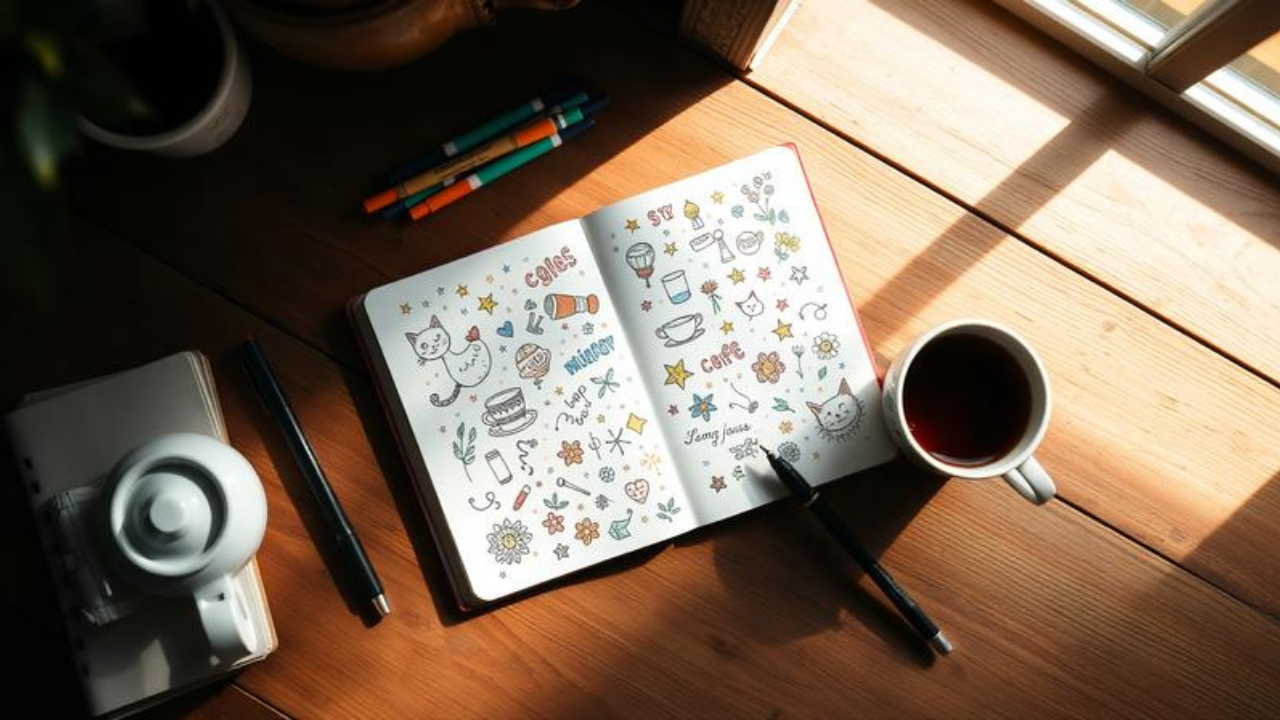
Introduction
You know that feeling—you flip open your sketchbook, pen in hand, ready to create something wonderful, and then… nothing. The blank page stares back at you, and your mind goes just as blank. It happens to every artist, whether you’re a complete beginner or someone who’s been drawing for years. The pressure to produce something “good” can be paralyzing, and suddenly what was supposed to be a relaxing creative session turns into a frustrating standoff with an empty sheet of paper.
But here’s the thing: it doesn’t have to be that way. Doodling is one of the most accessible, forgiving, and genuinely enjoyable forms of creative expression. You don’t need fancy supplies, years of training, or a perfect finished product in mind. All you need is a pen, a sketchbook, and a few simple ideas to get your hand moving.
This article delivers exactly that—over 50 simple doodle ideas organized into easy-to-browse categories, plus practical tips to help you start, techniques to try, and common mistakes to avoid. Whether you’re looking to fill a sketchbook page, overcome creative block, or just enjoy a few minutes of stress-free drawing, you’ll find everything you need right here.
What is Doodling?
At its core, doodling is the making of spontaneous, often aimless marks on paper. It’s been described as “a type of proactive daydreaming”—drawings produced almost on autopilot while your mind is occupied with something else. Unlike formal drawing or illustration, doodling isn’t about creating a polished masterpiece. It’s about letting your hand move freely, following impulses rather than rigid plans.
Doodles can take countless forms: repeating patterns, abstract lines and swirls, tiny figures, or recognizable objects drawn in a loose, playful style. Some doodles are completely abstract—just shapes and lines that don’t resemble anything in particular. Others might be quick sketches of animals, faces, food, or everyday objects. The common thread is that doodling is generally directionless and spontaneous. There’s no right or wrong way to do it, no final product you’re aiming for. It’s creative play in its purest form.
What makes doodling especially appealing is its accessibility. You don’t need special training or expensive materials. A simple pencil and paper are all you need to get started. It’s an activity that welcomes everyone, regardless of skill level, and it’s just as satisfying for experienced artists as it is for complete beginners.
Why Doodling Matters: The Benefits
Beyond being a fun way to pass the time, doodling offers a surprising range of benefits for your mental health, creativity, and even cognitive function.
Stress Relief and Relaxation
One of the most immediate benefits of doodling is its calming effect. Doodles act like “safety valves for releasing negative emotions and feelings,” making them excellent tools for unwinding and relaxation. The rhythmic, repetitive motion of drawing lines and shapes can be almost meditative, helping to quiet a busy mind and reduce anxiety. Research has shown that even low-stakes creative activities like doodling can lower stress and lift your mood. When you’re feeling overwhelmed, a few minutes of doodling can provide a much-needed mental reset.
Improved Focus and Memory
You might think doodling is a sign of distraction, but studies suggest the opposite. Research from the University of Plymouth found that doodling can boost your mind’s ability to notice and remember mundane information by nearly 30 percent. Doodling helps keep the mind grounded in the present moment instead of wandering off completely. It provides just enough stimulation to prevent your brain from checking out entirely, making it easier to stay engaged with whatever you’re listening to or learning.
Emotional Expression and Self-Discovery
When you doodle, you’re giving your subconscious a voice. The act of drawing can help your mind tap into deeply held emotions and bring them to the surface. This makes doodling a useful tool for processing feelings and promoting emotional well-being. Over time, this kind of creative expression can support psychological balance, much in the same way that dream therapy does.
Creativity Boost
Doodling keeps your creative muscles active without the pressure of producing something “important.” It’s a low-stakes way to experiment with shapes, patterns, and ideas. Many artists find that their best creative breakthroughs happen while they’re doodling—when the conscious mind steps aside, the subconscious is free to make unexpected connections. As one source puts it, doodling “can allow us to connect more deeply with ourselves; our creative, imaginative and dreamy self”.
Mindfulness and Presence
Doodling supports mindfulness by anchoring your attention in the present moment. The focus required to draw—even simple lines and shapes—keeps you grounded in the here and now, offering a break from rumination about the past or worry about the future. It’s a form of active meditation that requires nothing more than a pen and paper.
Simple Doodle Ideas for Your Sketchbook
Now for the main event—dozens of simple doodle ideas organized into categories so you can easily find inspiration that appeals to you.
Animal Doodles
Animals are some of the most popular subjects for doodling because they can be as simple or as detailed as you like. The key is to start with basic shapes and add personality through expressions and details.
Cute Cats: Begin with a rounded square for the head and two little triangles on top for ears. Add simple ovals for eyes with tiny circles for pupils, an upside-down triangle for the nose, and a curved line for a smile. Three quick lines on each side become whiskers, and a curved body with a swishy tail completes the look.
Playful Birds: Draw a round body and a smaller circle for the head, connected by a curved neck. Wings shaped like teardrops or semi-circles make perfect canvases for heart patterns or stripes. Big, shiny eyes and a tiny triangle beak add personality.
Minimalist Pandas: Big circles for the head and ears, plus a chubby body, create an instantly recognizable panda. Keep it simple—just a few shapes and you’re done.
Bunnies: Start with a round head, add long floppy ears, and finish with a fluffy little body. Small eyes and sweet blush marks make them extra adorable.
Tigers: An oval head with playful stripes and a cute expression—minimal details for maximum cuteness.
Dolphins: Shape the body and fins, capture that classic dolphin grin, and add ocean waves or playful splashes around it.
Other easy animals: Cows, penguins, piggies, Shiba Inus, octopuses, owls, butterflies, fish, and snails are all beginner-friendly options.
Food and Drink Doodles
Food doodles are fun, fast, and universally appealing. They bring charm to any page and are perfect for beginners.
Coffee or Tea: A simple cup shape with an oval on top and a “U” shape beneath it, plus a handle. Add a smiling face or steam curls for extra personality.
Ice Cream Cone: A triangle for the cone and a scoop or two on top, decorated with sprinkles or a cherry.
Fruit: Apples with leaves, bananas, cherries, strawberries, watermelon slices, lemon wedges, grapes, and pineapples are all easy to draw.
Snack Characters: Pizzas with cheeky faces and bold toppings, or cookies with expressive eyes.
Bubble Tea: A cup with a wide straw, tapioca pearls at the bottom, and maybe a little face on the cup.
Nature and Botanical Doodles
Nature provides endless inspiration for doodling, from tiny leaves to sweeping mountain landscapes.
Flowers: Start with simple circles for the center and add petals around them. Try layered flowers with wiggly outlines, swirling roses created with a spiral technique, or clustered flowers scattered across the page.
Leaves and Vines: Thin curved lines with minimal leaf outlines create elegant, organic designs. Try curly vines with tiny leaves branching off.
Mountains: Geometric peaks or flowing curves—both work beautifully. Sketch playful mountains with layered ridges.
Mushrooms: Rounded caps with dots or stripes, topped with a cheerful grin for extra charm.
Trees: Simple tree silhouettes with interesting branch patterns, or a single leaf shape repeated across the page.
Clouds and Rainbows: Fluffy clouds with expressive faces, sunny scenes, rainbows, and raindrop clusters.
Geometric and Pattern Doodles
Patterns are fantastic for beginners because you can start with super simple shapes and repeat them to create something visually impressive.
Geometric Patterns: Triangles, circles, and squares arranged in rows or clusters create playful, balanced designs.
Abstract Lines and Swirls: Loose, flowing lines and spirals are calming and easy to draw. Experiment with overlapping lines to create unique abstract designs.
Zentangle and Mandala: Draw a small circle in the center of your page, then add radiating petals or patterns. Simple mandalas are both relaxing and creative.
Stripes, Polka Dots, and Scales: Zigzags, swirls, checkerboards, and wavy patterns add playfulness to any page.
Borders and Frames: Decorate the edges of your pages with repeating patterns, zig-zags, or swirls.
Everyday Objects
Look around your room—everyday objects become charming doodles with just a few lines.
Houses and Cabins: A simple house outline with a door, windows, and maybe a chimney with smoke. Tiny cabins nestled in a landscape work beautifully.
Mugs and Cups: Cozy mugs bursting with cuteness, perhaps with steam and a little face.
Lamps and Lightbulbs: Add creative patterns or faces to make them quirky and personalized.
Bookshelves: A mini bookshelf with tiny books—play with different colors and sizes.
Hot Air Balloons: Whimsical designs with patterned balloons floating through your sketchbook sky.
Celestial and Whimsical Doodles
Stars, moons, and magical elements add a dreamy quality to your sketchbook pages.
Stars and Moons: Crescent moons, twinkling stars, and half suns with rays.
Ghosts: Playful, wavy-edged ghosts with expressive faces.
Rockets and Space Ships: Simple shapes with fins and windows, maybe with stars in the background.
Hot Air Balloons: Round balloons with patterned designs, hanging baskets, and wispy clouds.
Character and Face Doodles
Adding faces to almost anything instantly gives it personality.
Smiley Faces: Classic and always cheerful. Add blush marks for extra sweetness.
Sleepy Cloud: A cloud with closed eyes and a peaceful expression.
Blushing Smiley Face and Chubby Stars: Simple cartoon faces with exaggerated features.
Gnomes and Ghosts: Playful character designs perfect for beginners.
Seasonal and Holiday Doodles
Seasonal themes provide endless inspiration throughout the year.
Fall: Mini pumpkins, tiny acorns, wavy scarves, and colorful leaves.
Winter/Christmas: Santa, gingerbread cookies, holiday-themed animals with scarves, and Christmas icons.
Summer: Suns, ice cream, beach elements, and bright colors.
How to Start Doodling: Step-by-Step Tips
If you’re staring at a blank page wondering where to begin, here’s a simple approach to get started.
Step 1: Gather Your Materials
You don’t need fancy supplies. A simple pencil and paper are all you really need. That said, having a few options can make the experience more enjoyable:
-
A sketchbook with smooth paper (HP paper is a favorite because it prevents ink from bleeding)
-
A pencil you find comfortable to hold
-
A pen you enjoy using—black ink pens work great for contrast
-
Optional: a few colored markers or pens for variety
Don’t obsess over having the “perfect” tools. Use what’s at hand and focus on creating.
Step 2: Warm Up
Before you dive into a full page, warm up your hand with some simple exercises:
-
Draw straight lines, wavy lines, dotted lines, dashed lines, and zigzag lines
-
Fill a page with basic shapes—circles, squares, triangles, and squiggles
-
Try scribbles, dots, hatching, or wild zigzag lines
These exercises aren’t about creating anything beautiful—they’re about getting your hand moving and building confidence.
Step 3: Start Small
Choose one simple object from the ideas above—a flower, an animal, a coffee mug. Break it down into basic shapes in your mind: a circle for the mug top, a rectangle for the body, a curve for the handle.
Draw it simply. Don’t worry about perfection—wobbly lines and uneven shapes add character to your doodles.
Step 4: Fill the Page
Once you’ve drawn one thing, keep going. Add more. Fill a corner of your page before moving on. Cluster your doodles together, scatter them across the page, or let them grow organically from one shape into another.
Step 5: Experiment and Have Fun
Try different pen sizes to add variety and depth. Mix up your subjects—animals one day, patterns the next, food doodles after that. The more you experiment, the more you’ll discover what you enjoy drawing most.
Common Mistakes to Avoid
Even experienced doodlers fall into certain traps. Here are the most common mistakes and how to avoid them.
Mistake #1: Trying to Make Everything Perfect
This is perhaps the biggest obstacle for beginners. Many new doodlers think their drawings need to look perfect—they erase lines, get frustrated, or compare their work to others. But doodling isn’t about perfection. It’s about having fun and letting your ideas flow.
How to avoid it: Don’t worry about mistakes. Wobbly lines and uneven shapes add character to your doodles. Try continuous line drawing—draw without lifting your pen. This forces you to accept mistakes and keep going. Even better, doodle in pen first instead of pencil. It helps you commit to each line and stop overthinking.
Mistake #2: Drawing the Same Thing Over and Over
It’s natural to fall back on familiar shapes like hearts, stars, or smiley faces. But if you never try new things, your doodles might start to feel boring.
How to avoid it: Challenge yourself to try something new each time you doodle. Make a doodle challenge—write down 10 random things (like “banana,” “robot,” “cloud with a face”) and try to doodle them all on one page. Look around your room or outside your window for inspiration.
Mistake #3: Thinking You’re “Not Good at Drawing”
Many beginners stop doodling because they believe they’re not talented. But doodling is not about being the best artist—it’s about enjoying the process.
How to avoid it: Remember that everyone starts somewhere. The more you doodle, the more your hand and brain will learn to work together. Instead of focusing on the final result, enjoy the act of creating. Every artist was once a beginner.
Mistake #4: Not Getting Started at All
Procrastination and waiting for “the right moment” can keep you from actually putting pen to paper.
How to avoid it: Just start. Anywhere. With anything. A single line is better than no line. Your sketchbook doesn’t need to be perfect—it’s a place for practice and play.
Mistake #5: Forgetting to Use Solid Blacks and Balance White Space
Some doodles feel flat because they lack contrast or because every inch of the page is filled.
How to avoid it: Incorporate areas of solid black to add contrast and make your designs pop. Leave some areas blank for breathing room—this makes the composition more dynamic.
Mistake #6: Getting Discouraged by Mistakes
Every artist makes mistakes. The key is how you respond to them.
How to avoid it: Treat mistakes as creative opportunities. Turn stray lines into new shapes or patterns. Sketchbooks are safe places to fail—mistakes aren’t flaws to hide, they’re evidence of your process and your growth.
Frequently Asked Questions
1. What if I don’t know what to draw?
Start with basic shapes—circles, lines, dots—and see where they take you. Simple shapes can turn into amazing designs. You can also try drawing things around you: a coffee mug, a plant, a window. Or pick one of the ideas from this article and just go for it. Remember, anything goes.
2. Do I need to be good at drawing to doodle?
Not at all. Doodling is for everyone. You don’t need to be a great artist—it’s all about having fun and letting your ideas come out on paper. Some of the best doodles come from people who claim they “can’t draw.”
3. Is it okay if my doodle looks messy?
Yes! Messy is totally okay. Doodles don’t need to be neat or polished. Wobbly lines, uneven shapes, and “mistakes” are what give doodles their charm and personality.
4. How long should I spend doodling?
As long or as short as you like. Some days you might have five minutes; other days you might lose an hour. Even a few minutes of doodling can be beneficial. The goal isn’t to finish a masterpiece—it’s to enjoy the process.
5. What supplies do I really need?
A simple pencil and paper are all you need to get started. You can add pens, markers, or colored pencils later if you want, but don’t let a lack of supplies stop you from starting. Use what you have.
6. How do I fill a whole sketchbook page?
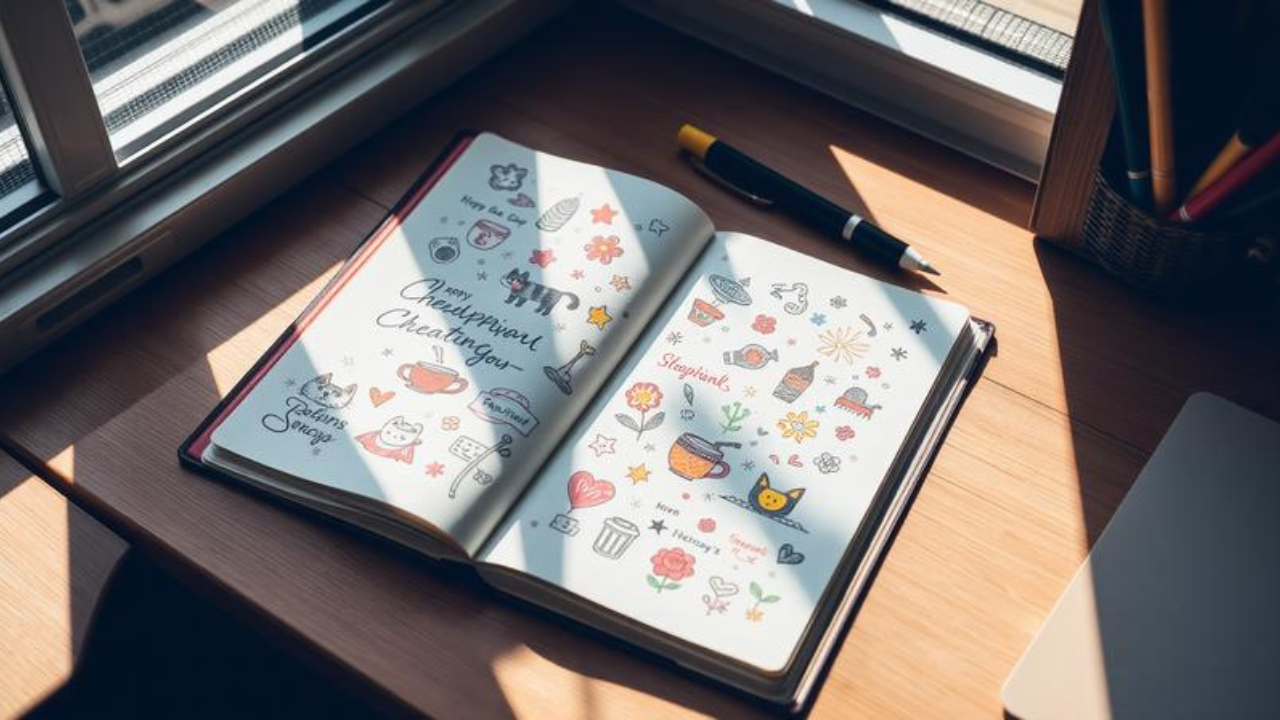
Start with one doodle in the corner, then keep adding. Cluster things together, fill empty spaces with patterns, or let one shape grow into another. You can also try themed pages—all flowers, all patterns, all animals. The key is to keep your pen moving and not overthink it.
7. What if I get bored of doodling?
Mix it up! Try a new subject, experiment with a different style, or challenge yourself to draw something you’ve never drawn before. You can also try seasonal themes, combine doodles with lettering, or add color to your usual black-and-white sketches.
Conclusion
Doodling is one of the simplest and most rewarding creative practices you can adopt. It requires nothing more than a pen and paper, yet it offers so much in return—stress relief, improved focus, emotional expression, and pure, uncomplicated joy. The blank page doesn’t have to be intimidating. With the ideas and tips in this article, you have everything you need to start filling your sketchbook with simple, playful, uniquely yours doodles.
Remember, there’s no wrong way to doodle. very line you draw is practice. Every “mistake” is character. Every page you fill is progress. The more you doodle, the more your confidence will grow—not because you’re getting “better” in a traditional sense, but because you’re learning to enjoy the process without judgment.
So grab your pen, open your sketchbook, and start with one simple shape. See where it takes you. You might be surprised at what shows up on the page.
If you enjoyed this article, check out our guide on creative sketchbook exercises for even more inspiration to keep your pages flowing.