 By Mubashir Abbasi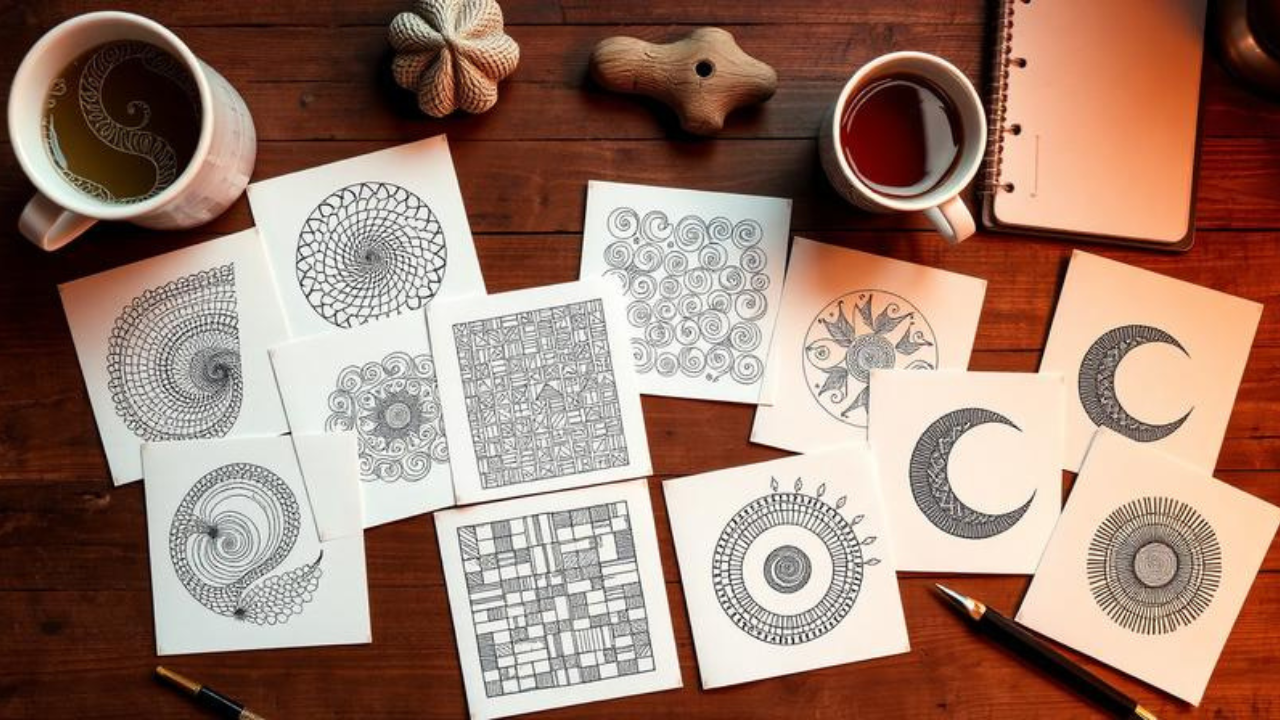
Introduction
Do you ever find yourself mindlessly doodling during a phone call, only to realize you’ve created something surprisingly beautiful? What if you could transform that aimless scribbling into a purposeful, meditative practice that calms your mind and unleashes your creativity?
Many people want to explore art but feel paralyzed by the fear of making mistakes, not knowing where to start, or believing they lack artistic talent. The blank page can feel intimidating, and the pressure to create something “good” often stops us before we even begin.
This article delivers a complete guide to Zentangle doodle art—a structured yet liberating drawing method that requires no previous artistic experience. You’ll learn what Zentangle is, why it works, an 8-step tutorial to create your first tile, essential tips for beginners, common mistakes to avoid, and answers to frequently asked questions. By the end, you’ll have everything you need to start your own Zentangle practice and experience the calming, focused benefits for yourself.
What Is Zentangle Doodle Art?
Zentangle is a structured drawing method designed to help you relax, focus, and enjoy the creative process. Unlike traditional drawing, Zentangle is built around simple, repetitive patterns called “tangles.” By combining these tangles within a small square shape, you can create intricate, abstract designs.
The Zentangle Method was created in the early 2000s by Rick Roberts and Maria Thomas. Roberts, a former monk, and Thomas, a calligraphic artist, discovered that the repetitive strokes of drawing patterns induced a state of focused relaxation—similar to meditation. They formalized this discovery into the Zentangle Method, combining “Zen” (the meditative quality) with “tangle” (the interlocking patterns).
These patterns may look detailed and complex, but they’re made up of basic lines, curves, dots, and shapes that anyone can learn. Each mark is called a “tangle,” and you combine various tangles into patterns to create “tiles”—small square drawings.
Zentangle is sometimes confused with general doodling, but there’s a key difference. Doodling is often unconscious and unfocused, while Zentangle is intentional and mindful. You draw with deliberate strokes, focusing on each mark as you make it. The process is as important as—if not more important than—the finished product.
Core Principles of Zentangle
The Zentangle Method is guided by several core principles:
-
No mistakes: There are no errors in Zentangle—only opportunities. If something doesn’t look as you expected, you can incorporate it into your design or turn it into something new.
-
No erasers: You work in pen, which forces you to embrace each stroke and move forward.
-
Process over product: The focus is on the creative journey, not the final result.
-
No up or down: Zentangle art has no right-side-up. You can rotate your tile in any direction that feels comfortable.
Why It Matters — The Benefits of Zentangle Art
Zentangle isn’t just about creating pretty pictures. It’s a mindfulness-based art therapy that offers profound mental and emotional benefits.
Stress Reduction and Relaxation
The repetitive, meditative patterns of Zentangle help calm the mind and ease stress. Research has shown that mindfulness activities like Zentangle may lower stress hormones and improve mental clarity. The main goal of Zentangle is to help you relax, reduce stress, and achieve a meditative state.
Improved Cognitive Focus
A 2024 study published in the journal Brain and Behavior used EEG technology to measure brain activity during Zentangle practice. Participants reported enhanced cognitive focus and emotional well-being, with EEG data revealing increased theta, alpha, beta, and gamma brainwave bands. These changes align Zentangle with equanimity and tranquility, offering significant mental health benefits.
Emotional Well-Being
Zentangle has been linked to:
-
Reduced anxiety and depression
-
Increased emotional calmness
-
Improved self-confidence
-
Enhanced creativity and problem-solving skills
-
Better sleep and lower blood pressure
Accessible to Everyone
One of the most remarkable things about Zentangle is its accessibility. You don’t need any artistic training, expensive supplies, or a dedicated studio. As long as you can draw a dot, a straight line, and a curve, you can practice Zentangle. It transcends age, gender, and cultural boundaries, making it a truly universal creative practice.
Therapeutic Applications
Zentangle has gained attention in healthcare settings as a complement to therapy. Studies have shown its effectiveness in reducing anxiety in older adults, improving attention span in people with developmental disabilities, and alleviating psychological distress.
Step-by-Step Zentangle Tutorial — How to Create Your First Tile
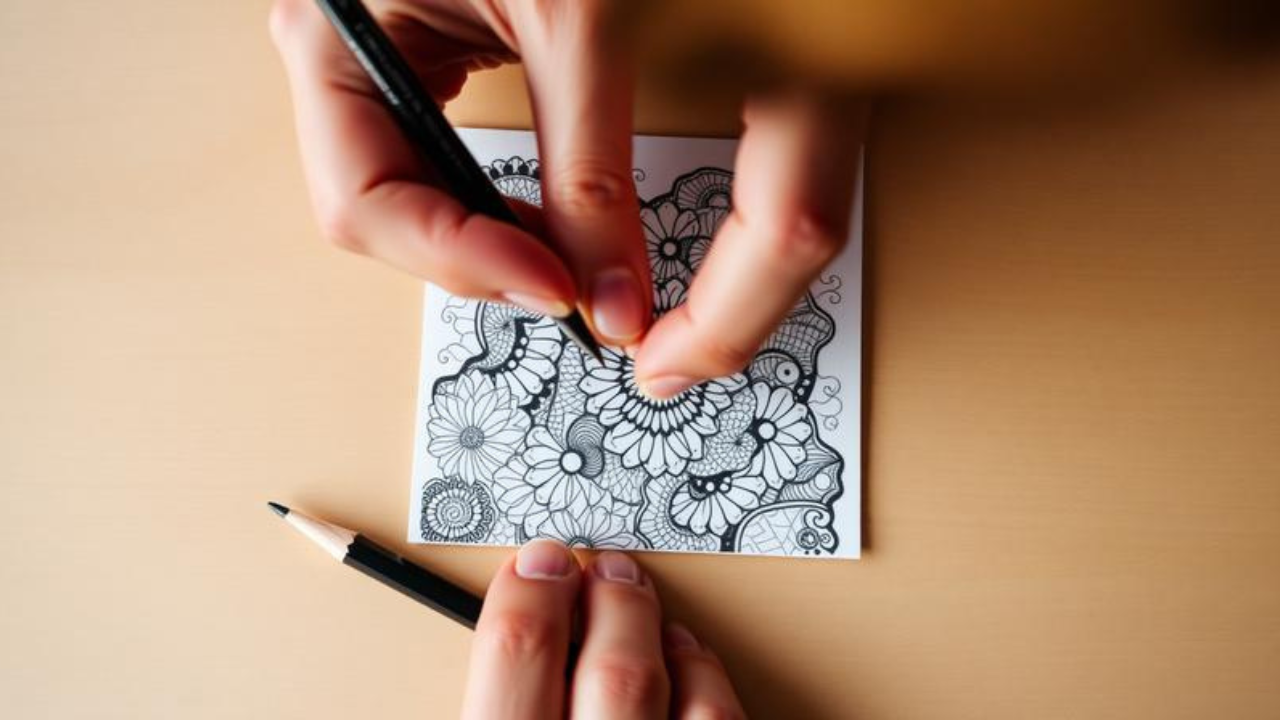
The official Zentangle Method consists of eight steps. Follow these steps to create your first Zentangle tile.
What You’ll Need
Before you begin, gather these simple supplies:
-
A small square of paper (the official size is 3.5 inches or 89 mm square, but any square will do)
-
A fine-tip black pen (micron pens work well)
-
A graphite pencil
-
A blending stump or tortillion (optional)
Step 01 – Gratitude and Appreciation
Get comfortable in a quiet space. Take a few deep breaths. Feel gratitude and appreciation for your materials and for the opportunity to create something beautiful. This step sets the right mindset for your practice.
Step 02 – Corner Dots
Place a light pencil dot in each corner of your square paper, about a pen’s width from the edges. These dots define the boundaries of your drawing area and transform a blank page into a defined space.
Step 03 – Border
Connect the dots with a light pencil line to create a square border. The line can be straight or slightly curved—there are no rules.
Step 04 – String
Inside the border, draw a light pencil line or lines to create what’s called a “string”. A string divides your tile into sections where you’ll draw your tangles. It can be any shape—curvy lines that wander across the page, straight lines that divide the space into geometric sections, or anything in between.
Step 05 – Tangle
Now it’s time to draw your tangles. A tangle is a predefined sequence of simple strokes that make up a pattern. Draw your tangles in pen inside the sections created by your string.
Tips for this step:
-
Don’t worry about what it’s going to look like—just focus on each stroke
-
Trust that you’ll know what to do next when the time comes
-
Rotate your tile in any direction that’s comfortable for your hand
Beginner-Friendly Tangles to Try:
Crescent Moon: Draw gentle curved lines across your tile, then add crescent moon shapes along each curve.
Dots, Lines, Curves, Arcs, and Orbs (ICSO): Every tangle, no matter how advanced, comes from these five basic strokes. Start by practicing each one individually.
Auring: Draw a line that closely follows an existing line while keeping a small, consistent space between them—like creating an echo or ripple. This technique builds muscle memory, improves spacing consistency, and develops smoother curves.
Geometric Patterns: Simple geometric shapes repeated in a grid can create stunning results.
Step 06 – Shade
Add shades of gray with your graphite pencil to bring contrast and dimension to your tile. The black-and-white two-dimensional tangles transform through shading and appear three-dimensional. Use a blending stump to soften and blend the graphite if desired.
Step 07 – Initial and Sign
This is art you created—you should sign it. Put your initials on the front, and on the back, place your name, date, comments, and observations. Many people create a unique monogram or chop for this step.
Step 08 – Appreciate
Hold your tile at arm’s length. Turn it this way and that. Appreciate what you just created. Notice the details, the patterns, the interplay of light and shadow. Celebrate your accomplishment.
Common Mistakes to Avoid
Even though the Zentangle philosophy says there are no mistakes, beginners often encounter challenges that can be frustrating. Here are common pitfalls and how to avoid them.
Mistake 1: Trying to Be Perfect
Many beginners worry about symmetry or “getting it right.” But Zentangle doesn’t care about perfect shapes—it thrives on organic flow. If a line goes wonky, embrace it.
How to fix it: Remember that there are no mistakes in Zentangle. If you perceive an error, view it as an opportunity to make something new or different. Don’t erase—just keep going.
Mistake 2: Drawing Too Fast
Fast lines create uneven spacing and rushed results.
How to fix it: Slow down. Take your time with each stroke. Zentangle is meditative—there’s no rush.
Mistake 3: Pressing Too Hard
Heavy pressure makes correction harder and can damage your paper.
How to fix it: Use a light touch. For pencil strings, allow the pencil to just “tickle” the surface of the tile, leaving only a whisper of graphite.
Mistake 4: Overthinking Every Millimeter
Small imperfections are normal.
How to fix it: Focus on flow rather than perfection. Instead of stopping and correcting every wobble, keep your stroke fluid. Confidence improves consistency.
Mistake 5: Starting with Complex Patterns
It’s easy to fall into the trap of trying to recreate the gorgeous, intricate tangles you see online right from the start. Without a solid foundation, complex tangles can leave you feeling discouraged.
How to fix it: Start by focusing on the five basic Zentangle strokes: dots, straight lines, curves, arcs, and orbs. Every tangle, no matter how advanced, comes from these shapes.
Mistake 6: Trying to Combine Too Many Tangles at Once
Trying to juggle five or six different tangles on a single tile can feel overwhelming.
How to fix it: Simplify your approach by starting with monotangles—one pattern repeated across the whole tile. This reduces decision fatigue and helps you enjoy every stroke. As you become more comfortable, gradually mix tangles.
Mistake 7: Using Too Many Supplies
The art supply rabbit hole is real. Beginners often believe that having the perfect pen or every color will magically make their art better.
How to fix it: Keep your supplies minimal. A fine-tip black pen, a pencil, and paper are all you need to get started.
FAQs
1. Do I need to be good at drawing to do Zentangle?
Absolutely not. Zentangle is designed for people with no artistic experience. The patterns are built from basic strokes—dots, lines, curves, and simple shapes—that anyone can learn. If you can write your name, you can do Zentangle.
2. What supplies do I need to start?
You need just three things: a fine-tip black pen, a graphite pencil, and a small square of paper. The official Zentangle tiles are 3.5-inch squares of museum-grade cotton paper, but you can start with any paper. Many beginners find that using high-quality paper enhances the experience, but it’s not required.
3. How is Zentangle different from regular doodling?
Doodling is often unconscious and unfocused—you draw while your attention is elsewhere. Zentangle is intentional and mindful. You draw with deliberate focus on each stroke, staying present in the moment. The Zentangle Method also follows a specific structure (the eight steps), whereas doodling is free-form.
4. Can I make a mistake in Zentangle?
The short answer is no. The official Zentangle philosophy teaches that there are no mistakes—only opportunities. If a line doesn’t go where you intended, you can incorporate it into your design or turn it into something new. This is one of the most liberating aspects of Zentangle and a key reason why it’s so effective for stress relief.
5. How long does it take to complete a Zentangle tile?
A single tile typically takes 20 to 60 minutes, depending on the complexity of your tangles and how much time you spend on shading. The small size makes it easy to complete in one sitting, which helps beginners feel a sense of accomplishment without feeling overwhelmed.
6. Is Zentangle the same as a mandala?
No, though they are often confused. Mandalas are circular, symmetrical designs with spiritual significance in Buddhist and Hindu traditions. Zentangle tiles are square (though circular “Zendalas” exist), and they don’t require symmetry. Zentangle is more about the meditative process than any specific cultural or spiritual tradition.
Conclusion
Zentangle doodle art is more than just a drawing technique—it’s a pathway to mindfulness, stress relief, and creative self-expression. By following the simple eight-step method, anyone can create beautiful, intricate designs while simultaneously calming the mind and improving focus.
Remember these key takeaways:
-
Anyone can do it—no artistic experience required
-
There are no mistakes—only creative opportunities
-
The process matters more than the product—enjoy each stroke
-
Start simple—master the basic strokes before moving to complex patterns
-
Keep supplies minimal—a pen, pencil, and paper are all you need
Your Zentangle journey begins with a single dot. Pick up a pen, take a deep breath, and start creating. Each stroke is an act of self-care, each pattern a meditation, each completed tile a small victory.
Ready to explore more? Check out our other articles on mindful creativity, including guides to mandala drawing, art journaling, and more creative relaxation techniques. [Subscribe to our newsletter] for weekly inspiration, tips, and tutorials delivered straight to your inbox.