
 By Mubashir Abbasi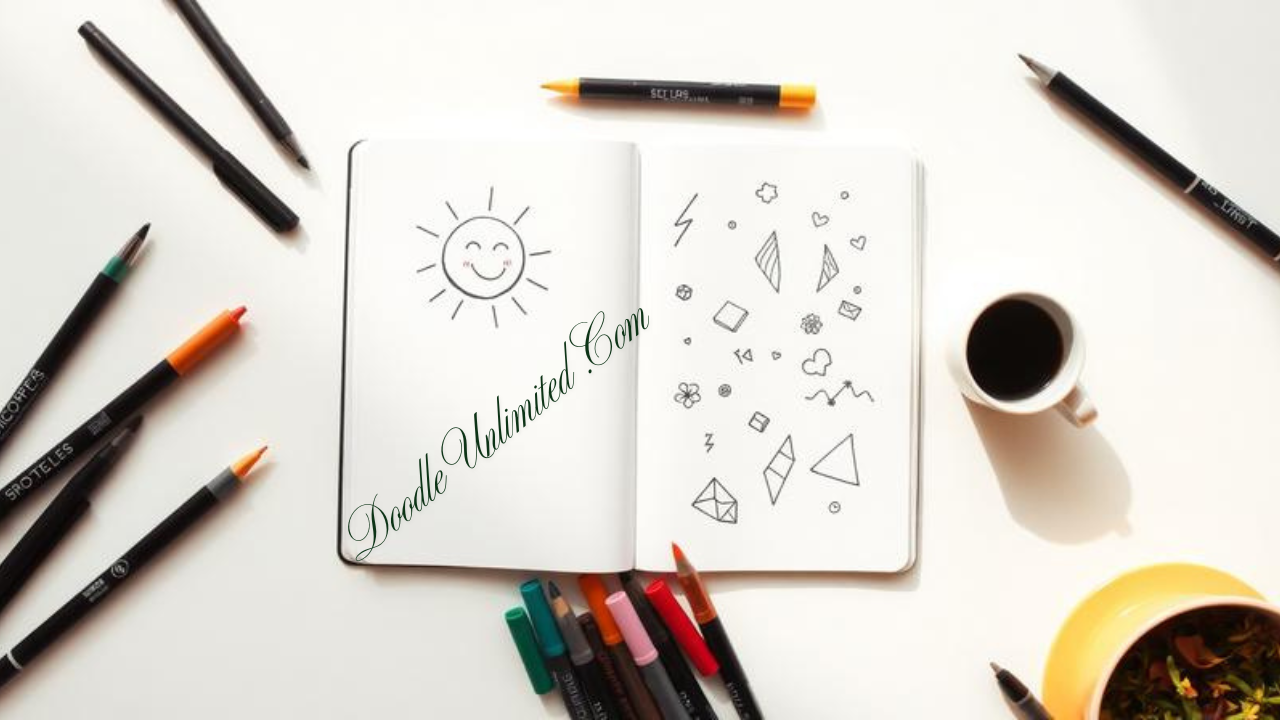
We’ve all done it. You’re sitting in a long meeting, listening to a lecture, or just waiting for a pot of coffee to brew. Without thinking, your pen drifts to the edge of your notebook, and suddenly a series of spirals, overlapping squares, or a tiny animal emerges. Congratulations — you’ve already created doodle art.
But what if you stopped thinking of those absent-minded marks as mere distractions and started seeing them as a legitimate, rewarding form of artistic expression? Whether you are searching for a stress-relieving hobby or want to beautify your journal, this guide covers everything you need to know about doodle art for beginners. We’ll break down the supplies, the techniques, and the surprising mental health benefits, proving that anyone can pick up a pen and create something wonderful.
What is Doodle Art? (And Why It’s for Everyone)
At its core, doodling is the act of making spontaneous marks on a page. You might be drawing while your conscious mind is busy with something else, leading to a mix of random and abstract shapes or lines. But when we talk about “doodle art,” we elevate those scribbles into intentional creative expression.
Unlike painting a portrait or sketching a realistic landscape, doodle art is wonderfully informal and intuitive. It thrives on repetition, simple shapes, and the joy of the process rather than the pressure of perfection. Art is often defined by rules—perspective, anatomy, shading. Doodle art is defined by freedom. You can fill a page with repeated geometric shapes, cartoon characters, swirling vines, or just let the pen guide you into the abstract. There is no “wrong” way to do it.
The Surprising Benefits of Doodling
Before diving into the how-to, it is worth understanding why you should pick up that pen. Doodling isn’t just a way to pass the time; it offers some incredible science-backed benefits for your mind.
-
Stress Relief and Mindfulness: Doodling acts as a form of meditation. The rhythmic, repetitive motions help down-regulate the body’s stress response, allowing you to switch off and relax. Doodles can act as “safety valves” for releasing negative emotions, helping you unwind and mentally reset.
-
Enhanced Focus and Memory: Contrary to the old belief that doodling is a distraction, research suggests it actually helps you concentrate. When you doodle while listening to information, you are engaging your brain just enough to prevent it from entering a daydreaming fog, thereby improving memory retention and concentration.
-
A Boost for Creativity: Doodling helps you connect with your “creative, imaginative and dreamy self”. It allows you to think outside the box and process complex feelings without the pressure of creating a masterpiece.
-
Accessible to All: Perhaps the best benefit is that it requires no prior skill. As long as you can hold a pen, you can start doodling right now. It is a growing form of mindfulness precisely because it is so easy to pick up.
Essential Doodle Art Supplies for Beginners
You might think you need an expensive art studio to get started, but one of the best things about doodling is its minimalism. Here is the simple checklist for your starter kit:
-
A Notebook or Paper: You don’t need special paper to start—printer paper works perfectly to get the feel of things. However, as you progress, a smooth sketchbook or a notebook with heavier-weight paper will prevent ink from bleeding through and make your pen glide better.
-
Pencils: A standard No. 2 pencil is fine for sketching out rough ideas, but a mechanical pencil can be great for fine lines.
-
Fine-Liner Pens: Black fine-liner pens are the doodler’s best friend. Brands like Sakura Pigma Micron or Le Pen offer different nib sizes, allowing you to create bold outlines and intricate details.
-
Markers or Colored Pencils (Optional): If you want to add color, grab a set of markers or colored pencils to make your art pop.
Getting Started: Overcoming the Blank Page
One of the biggest hurdles for any beginner is the fear of the blank page. It can be intimidating to look at a white sheet. The trick is to remember that in doodling, there are no mistakes—only unexpected creative opportunities.
Embrace Imperfection
Doodle art thrives on imperfection. Those wobbly lines and quirky shapes are what give your art personality. Do not aim for Pinterest-worthy perfection on your first try. Give yourself permission to draw “ugly” or “silly” things. Every line you put down chips away at that fear and builds your creative confidence. Compare your doodles only to your own past attempts, and celebrate the small progress.
Warm Up with Basic Shapes
Just like an athlete stretches before a game, you should warm up your hand. Spend five minutes filling a page with simple elements:
-
Circles, triangles, and squares in various sizes.
-
Straight, wavy, and zigzag lines.
-
Dots and spirals.
This builds muscle memory, improves hand control, and gets your creative juices flowing.
A Step-by-Step Guide to Your First Doodle
Once you’ve warmed up, it’s time to create your first cohesive piece of doodle art. Follow this simple formula.
Step 1: Just Make a Mark
Do not wait for inspiration to strike. Put your pen to the paper. It can be a single dot, a random squiggle, or a curve. The hardest part is usually starting.
Step 2: Build Using Simple Shapes
Pick an object—say, a coffee cup. Instead of trying to draw the whole cup at once, break it down:
-
Draw an oval for the rim.
-
Draw a rectangle or a curved U-shape for the body.
-
Draw a small C-shape for the handle.
This breakdown method works for everything: flowers, animals, faces, and buildings.
Step 3: Repeat and Vary
Doodles look great when you repeat elements. Draw a row of those coffee cups. Make one big, one small. Add steam coming out of one. Add hearts on another. Repetition turns a simple sketch into a pattern, which is the hallmark of great doodle art.
Step 4: Outline and Detail
Once you are happy with your pencil sketch, trace over it with a black fine-liner pen. Adding thick outlines makes the image pop off the page. Then, add details like dots for texture, stripes for filling, or cross-hatching for shading.
Step 5: Fill the Page (or Don’t!)
Finally, look at your work. You can choose to fill every white space with patterns and colors, or leave intentional white space for balance. There are no rules.
Easy Doodle Art Ideas to Try
If you are looking for inspiration on what to draw, here are some of the easiest and most rewarding subjects for beginners.
-
Nature Motifs: Leaves, flowers, clouds, and mountains are easy because they are organic—they don’t need to look perfect to be beautiful. Try drawing a “tulip” by starting with a U-shape and adding pointy petals on top.
-
Food and Drink: Cute doodles of ice cream cones, cupcakes, cookies, or mugs are universally charming and fun to draw.
-
Geometric Patterns: Let go of objects entirely and just play with geometric shapes. Stacked cubes, interlocking circles, and repeating triangles create stunning abstract designs.
-
Kawaii Animals: Drawing a “cow” or “bunny” is easy if you make them cartoony. Focus on big heads, tiny bodies, and simple eyes.
Leveling Up: The Art of Zentangle
Once you master basic doodling, you might want to explore Zentangle. This is a specific style of doodle art that is highly structured and meditative. It involves drawing small, repeated patterns (called “tangles”) inside defined spaces. It is incredibly relaxing because the focus is entirely on the stroke, not the final product. Start with a simple pattern like the “Crescent Moon” or a basic checkerboard to see how therapeutic this style can be.
Common Mistakes Beginners Make (And How to Fix Them)
To ensure you enjoy the process, avoid these common pitfalls.
-
Staring at the Page Too Long: Stop planning and just start. Even a random dot is a start.
-
Comparing to Others: That artist you love on Instagram has been doodling for years. Use their work as inspiration, not a measuring stick for your worth.
-
Pressing Too Hard: Loosen your grip! Drawing with a tight fist makes your lines rigid and hurts your hand. Let the pen flow.
-
Erasing Everything: Trying to “fix” a line often makes the drawing tighter and less fun. Embrace the squiggles.
Where to Find Daily Inspiration
To keep your habit alive, you need fuel.
-
Look at Everyday Objects: Look at your stapler, your plant, or your pet. Try to break that object down into simple shapes on the page.
-
Follow Doodle Challenges: Search for “daily doodle challenge” on social media. These provide a word prompt every day, taking the guesswork out of “what to draw.”
-
Use YouTube: Watching a time-lapse of someone creating art is incredibly motivating. Search for “doodle art for beginners” to see how others tackle the page.
Your Doodle Art Journey Starts Now
Doodle art for beginners is not about talent; it is about tenacity and relaxation. is one of the most forgiving art forms in existence. It doesn’t care if you can draw a straight line, and it certainly doesn’t care if your cat looks like a potato. It only asks that you pick up the pen and enjoy the journey.
So, go grab that old notebook from your desk drawer. Turn to the very first blank page. Put your pen in the middle, draw a dot, and see where the line takes you. You might just be surprised by the world you create.
Ready to Unleash Your Inner Artist?
Now that you have the tools and the techniques, it’s time to put them to use. Don’t let this guide just sit in your bookmarks—take action! Grab your notebook, and spend just 10 minutes tonight creating your first doodle page.
We’d love to see what you come up with. Share your beginner doodles in the comments below and tell us what themes or patterns you found easiest to start with. And if you have any specific questions about supplies or a certain technique, drop those in the comments as well. Let’s build a community of doodlers who lift each other up