
 By Richard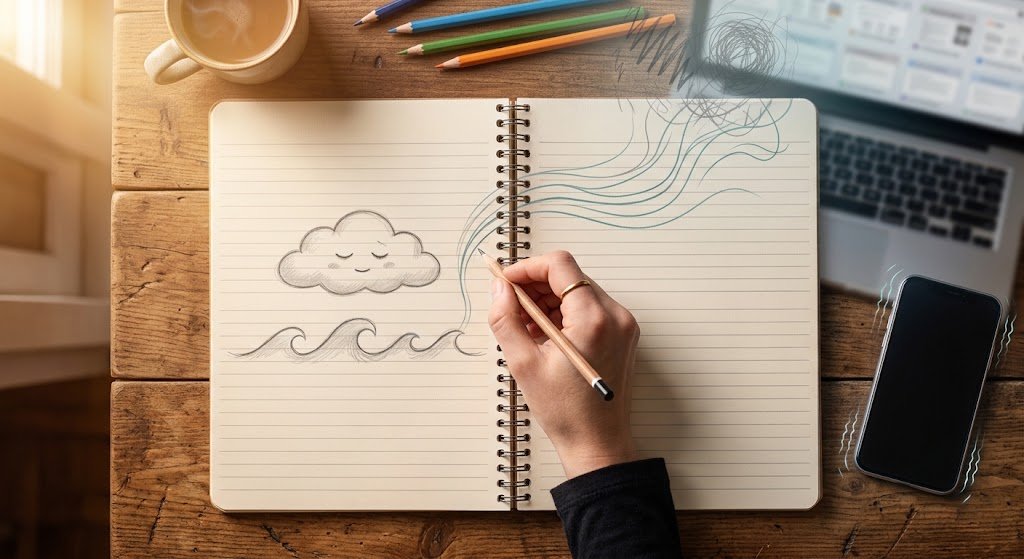
Your shoulders are tight, your phone is buzzing, and your brain has 14 tabs open. What if a pencil and a blank page could close most of them? Drawing calm is the simple habit of making slow, gentle marks on paper to settle your thoughts, and you do not need any art skill to do it.
Think of it as a short break for your mind. You pick an easy subject, like a sleepy cloud or a row of waves, and let your hand set the pace.
In this guide, you will learn what drawing calm really means and why it works. You will see the main styles, including calm drawing easy methods, cartoon, and pencil approaches. You will also get a six-step routine, five common mistakes, and five expert tips. Parents and teachers will find ideas for drawing calm for kids too.
Grab a pencil. Your quiet moment starts below.
Table of Contents
- What Is Drawing Calm?
- Why Does Drawing Calm Matter? Key Benefits
- Drawing Calm: Key Styles and Ideas
- How to Start Drawing Calm Today
- Common Drawing Calm Mistakes and Myths
- Expert Tips for Drawing Calm Success
- Frequently Asked Questions
What Is Drawing Calm?
Drawing calm means using simple, low-pressure drawing to relax your body and quiet your mind. The goal is not a finished masterpiece. The goal is the slow, steady rhythm of your hand moving across the page.
Here is an analogy. Drawing calm is like taking a slow walk instead of racing to a deadline. You still move, but you move without hurry, and you notice small things along the way.
You can draw anything that feels peaceful to you. Popular choices include soft clouds, rolling hills, leaves, moons, tea cups, and repeating patterns. Many people prefer calm drawing ideas with gentle curves, because curved lines feel softer than sharp angles.
You can also focus on the process rather than the picture. Pay attention to the sound of the pencil, the pressure of your fingers, and the shape growing under your hand. That focus is what quiets the noise in your head.
Why Does Drawing Calm Matter? Key Benefits
Quiet drawing sessions can improve your day in several ways:
- Lower stress: Slow, repetitive marks give your mind a gentle task, which helps you unwind after a hard day.
- Better focus: Paying attention to one small line at a time trains you to stay present.
- Easy mood boost: Finishing even a tiny sketch gives you a quick sense of achievement.
- Screen-free rest: Drawing gives your eyes and brain a break from phones and laptops.
- Zero-skill fun: Anyone can start with calm drawing easy shapes like circles, waves, and dots.
Science supports this. A 2016 study in the journal Art Therapy found that 45 minutes of creative art-making lowered stress hormone (cortisol) levels in 75% of participants, regardless of their art experience.
Drawing Calm: Key Styles and Ideas
There is no single right way to practice drawing calm. Pick the style that fits your mood.
Calm Drawing Easy: Simple Shapes
Start with circles, waves, and spirals. These shapes need no planning, so your mind can relax. Fill a page with repeating patterns and you have a finished piece in five minutes.
Drawing Calm Pencil: Soft Shading
A pencil gives you gentle control. Press lightly, shade slowly, and blend with your finger. Soft gray clouds, hills at dusk, and quiet raindrops all work well.
Drawing Calm Cartoon and Cute
Cartoon drawings bring a smile, and cute styles are even better. Draw a sleepy moon with closed eyes, a smiling teacup, or a snail in a tiny hat. Round shapes and big eyes make any subject feel friendly.
Drawing Calm for Kids
Kids enjoy bold, playful subjects: rainbows, bubbles, and sleepy animals. Keep sessions short, around five to ten minutes, and let them choose their own colors.
| Style | Best For | Tools | Time Needed |
|---|---|---|---|
| Simple shapes | Total beginners | Pen or pencil | 5 minutes |
| Pencil shading | Deep relaxation | Soft pencil, eraser | 10–20 minutes |
| Cartoon / cute | Mood boost | Fine pen, markers | 10 minutes |
| Kids’ drawing | Young children | Crayons, markers | 5–10 minutes |
The main idea: choose the style that feels easiest today, and you will actually keep the habit.
How to Start Drawing Calm Today
Follow these six steps to begin your first session.
- Choose a quiet spot. Sit somewhere comfortable and turn off notifications. A calm space helps your brain shift into relaxation mode.
- Gather simple tools. Use a pencil, a plain notebook, and an eraser. Fancy supplies add pressure, so keep your setup basic.
- Take three slow breaths. Breathe in for four counts and out for six. This signals your body to slow down before you draw.
- Pick one easy idea. Choose from a short list of drawing calm ideas, such as a cloud, a leaf, or a wave. Do not browse for an hour, because choosing should take under a minute.
- Draw slowly. Move your hand at half your normal speed. Focus on how each line feels instead of how it looks.
- Finish with a small detail. Add a tiny star, a smile, or a shadow. This gives you a sense of completion and ends the session on a happy note.
[ relaxing doodle prompts on doodleunlimited.com]
Repeat this daily for a week, and you will notice your mind settles faster each time.
Common Drawing Calm Mistakes and Myths
A few false beliefs stop beginners before they begin. Here are the biggest ones.
Mistake 1: Waiting until you feel “artistic.” You do not need talent to start. Drawing calm works for everyone because the benefit comes from the act, not the result.
Mistake 2: Judging your drawing. The page is not a test. If your cloud looks like a potato, you still got the calming effect.
Mistake 3: Drawing too fast. Speed defeats the purpose. Slow your hand down, and your breathing will follow.
Mistake 4: Using complicated subjects. Detailed portraits can raise stress, not lower it. Stay with calm drawing easy subjects until the habit feels natural.
Mistake 5: Skipping the habit. One session helps, but a short daily practice helps more. Five minutes a day beats one long session a month.
Expert Tips for Drawing Calm Success
- Draw at the same time daily. A fixed time, like after dinner, turns drawing into an automatic habit.
- Use soft music or silence. Gentle sounds help your mind settle into the activity.
- Keep a small sketchbook nearby. A book on your desk or bag removes every excuse to skip a session.
- Try cute themes when you feel low. Cute characters like sleepy suns and smiling plants lift your mood fast.
- Do not erase. Leave wobbly lines in place. They keep you focused on calm rather than perfection.
Frequently Asked Questions
What is calm drawing?
Calm drawing is any simple, gentle drawing practice that helps you relax. You draw slowly, choose easy subjects, and care about the feeling instead of the final picture. Typical examples include clouds, waves, patterns, and cute cartoon characters. It works with a pencil, pen, or tablet, and takes as little as five minutes a day.
Does drawing calm your mind?
Yes, for many people it does. Drawing gives your brain one gentle task, which pulls attention away from worries. Slow, repetitive strokes also encourage steady breathing. Research on art-making links short creative sessions to lower stress levels. You do not need skill, and even simple doodles can help you feel more relaxed within minutes.
What are some calming drawing ideas?
Try clouds, ocean waves, mountains at sunset, leaves, moons, teacups, mandala circles, raindrops, and sleepy animals. Gentle curves and repeating patterns work best. For a cute twist, add a small smiling face to any object. Beginners can pick one idea per day, and parents can use the same list for drawing calm for kids.
Conclusion
Here are the three points to remember about drawing calm:
- Drawing calm is a slow, low-pressure habit that quiets your mind.
- Easy subjects like clouds, waves, and cute cartoons work better than complex ones.
- Five minutes a day builds a lasting stress-relief routine.
Start today. Grab a pencil, take three slow breaths, and draw one tiny cloud. You will feel the difference faster than you expect.
So tell us in the comments: what is the first calm thing you will draw?