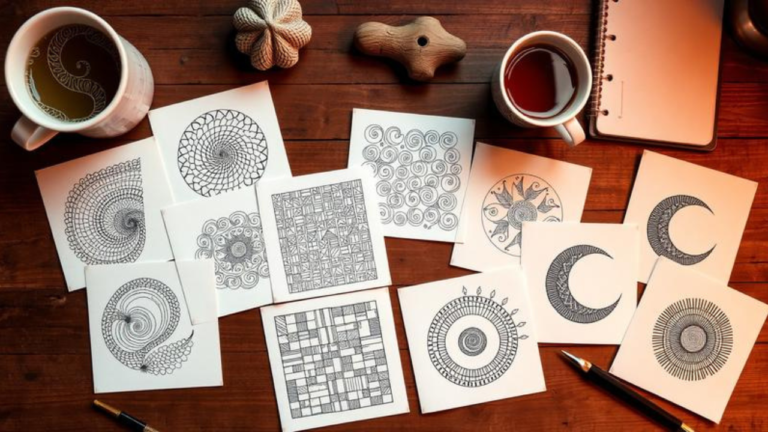
Visual thinking at work means using a few simple drawings to make an idea easier to see and discuss. You need boxes, arrows, stick people and labels, not artistic skill.
Five drawings that cover most work conversations
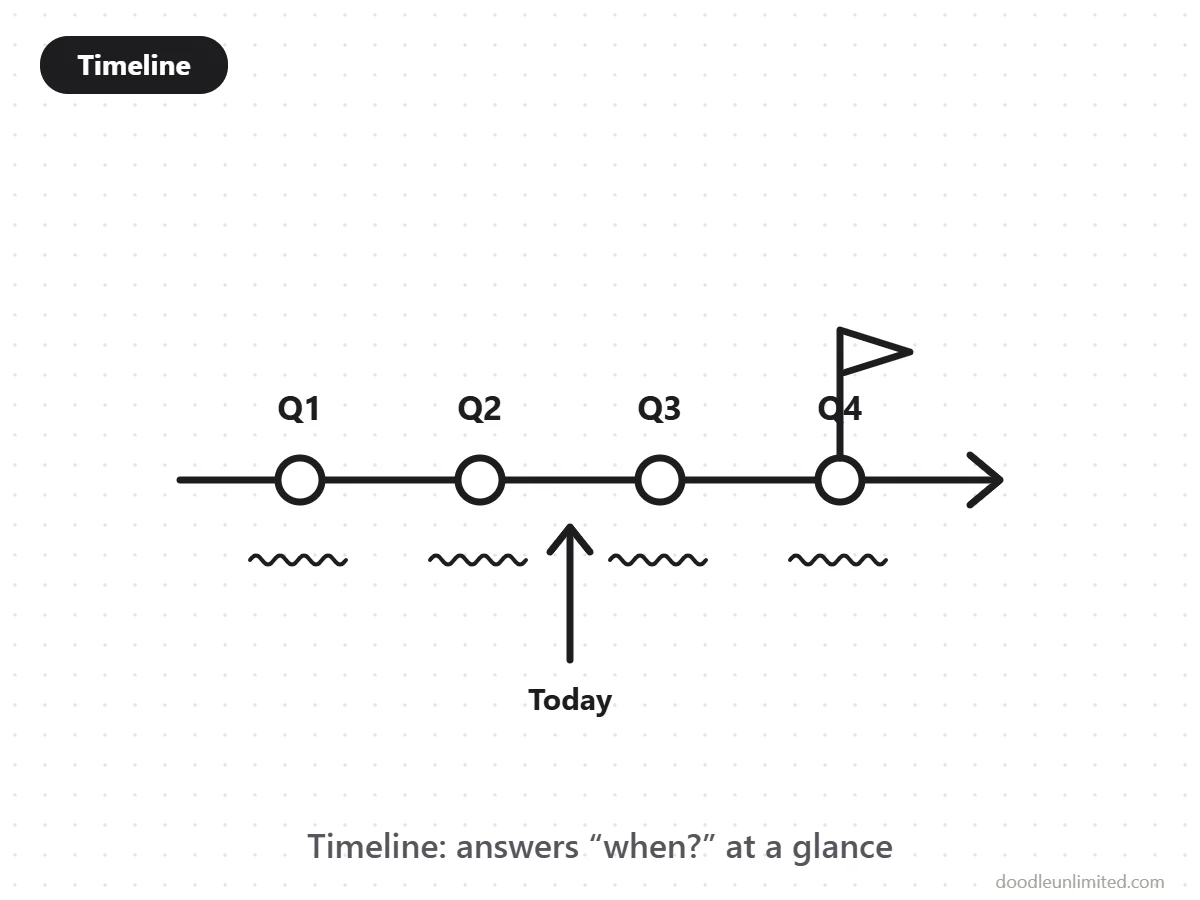
The timeline
A line with milestones answers “when?”. Mark today with an arrow.
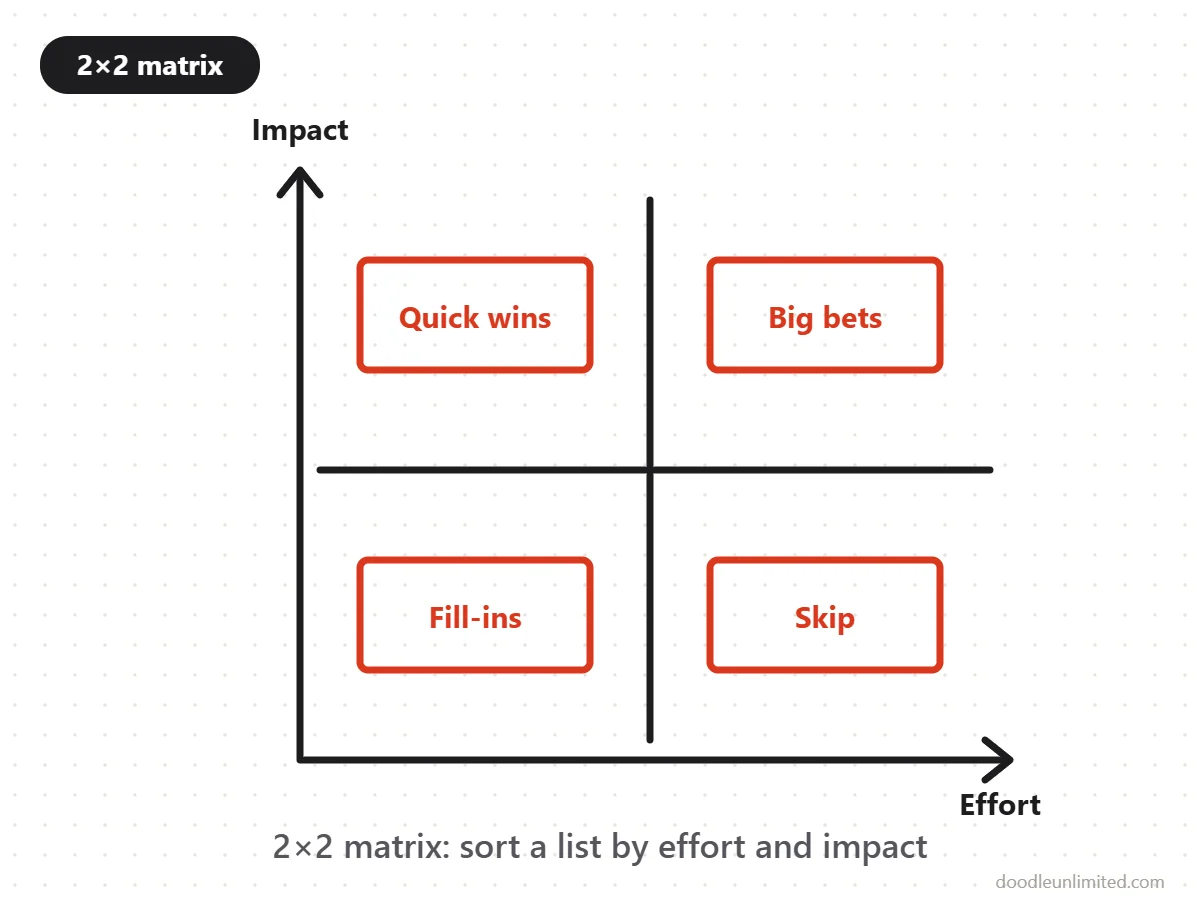
The 2×2 matrix
Two axes (for example effort and impact) sort a messy list in minutes.
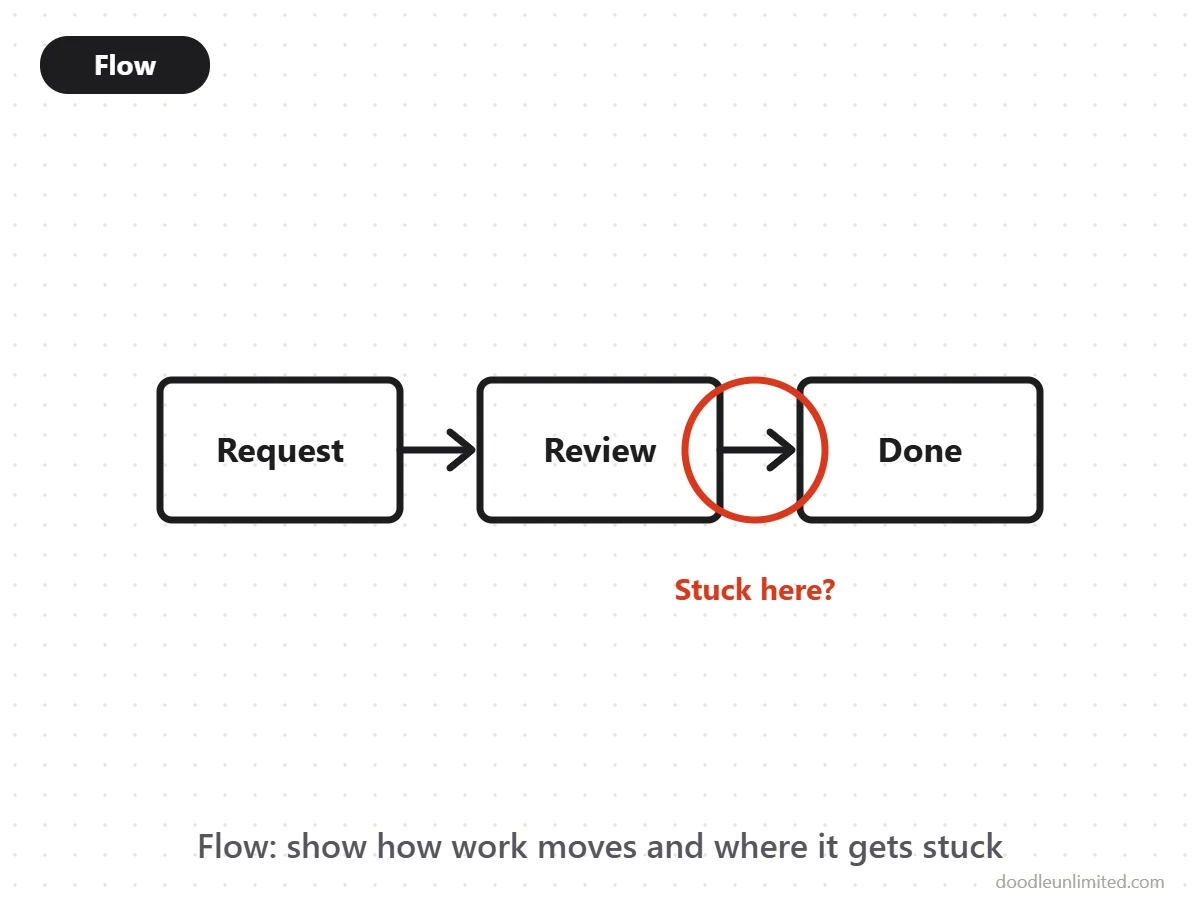
The flow
Boxes and arrows show how work moves from step to step, and where it gets stuck.
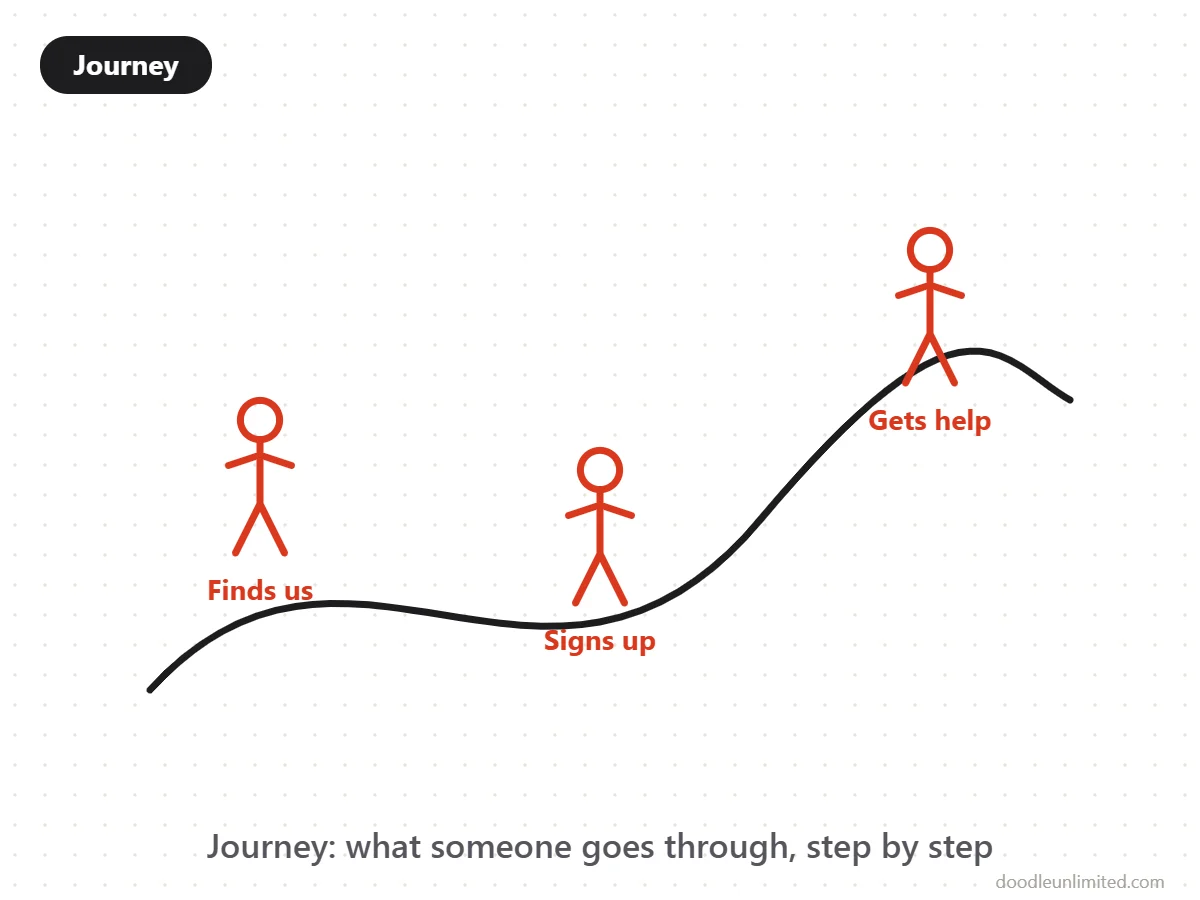
The journey
A path with stick figures shows what a customer or colleague goes through.
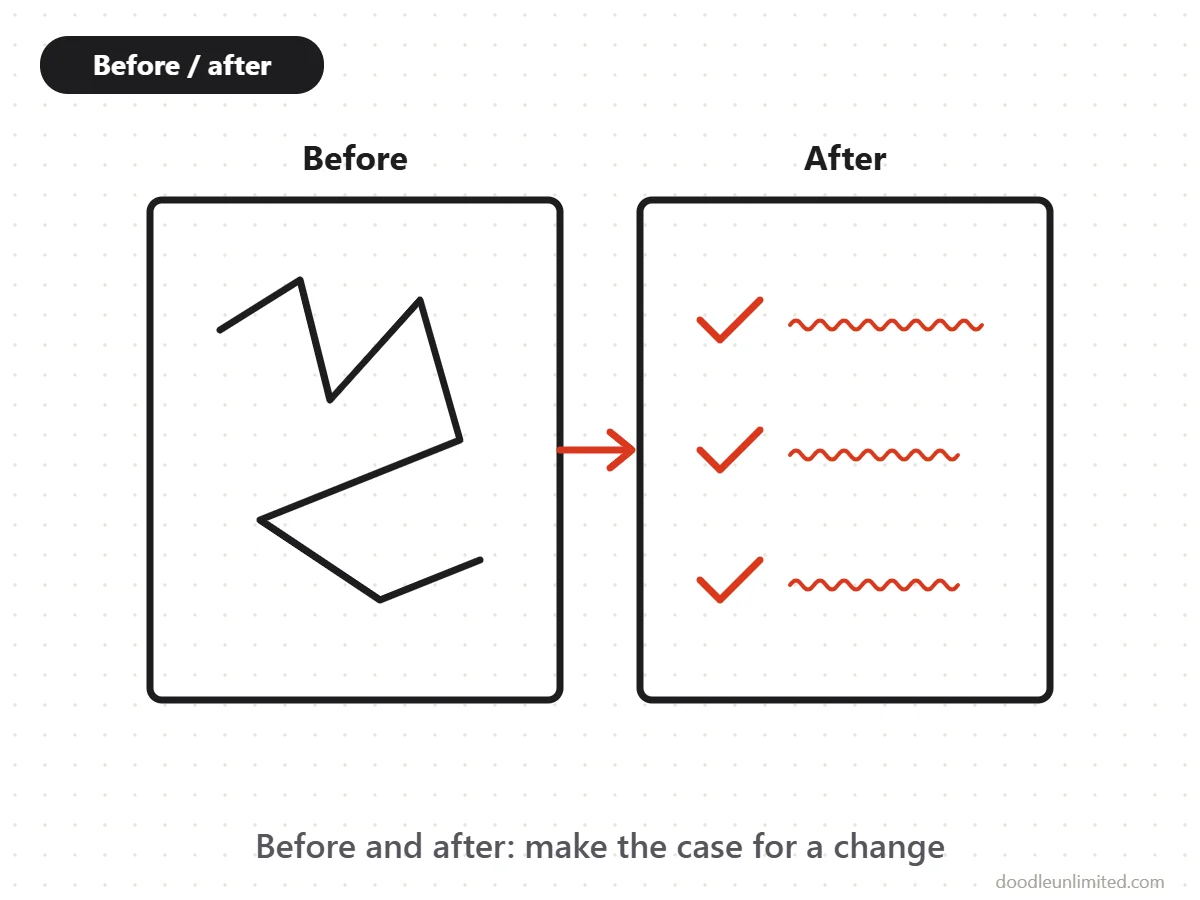
Before and after
Two panels side by side make the case for a change.
How to start in your next meeting
- Pick one drawing that fits the question on the agenda.
- Draw it roughly before the meeting so people react to something.
- Let others add to it, and photograph the result.
More: how to sketchnote a meeting, visual thinking exercises for teams and starting a sketchnoting habit at work.
FAQ
Which drawing should I start with?
The timeline or the 2×2 matrix. Both are quick and fit common questions: “when?” and “what first?”.
Is visual thinking only for creative teams?
No. Planning, operations, sales and support teams use the same five drawings to agree faster.
How do I get others to join in?
Hand someone the marker and ask them to add one thing. A rough drawing invites changes more than a polished slide does.
About this guide: written by Mubashir Abid for Doodle Unlimited. The step illustrations were drawn as simple diagrams for this guide; try each step with your own pen.