 By Richard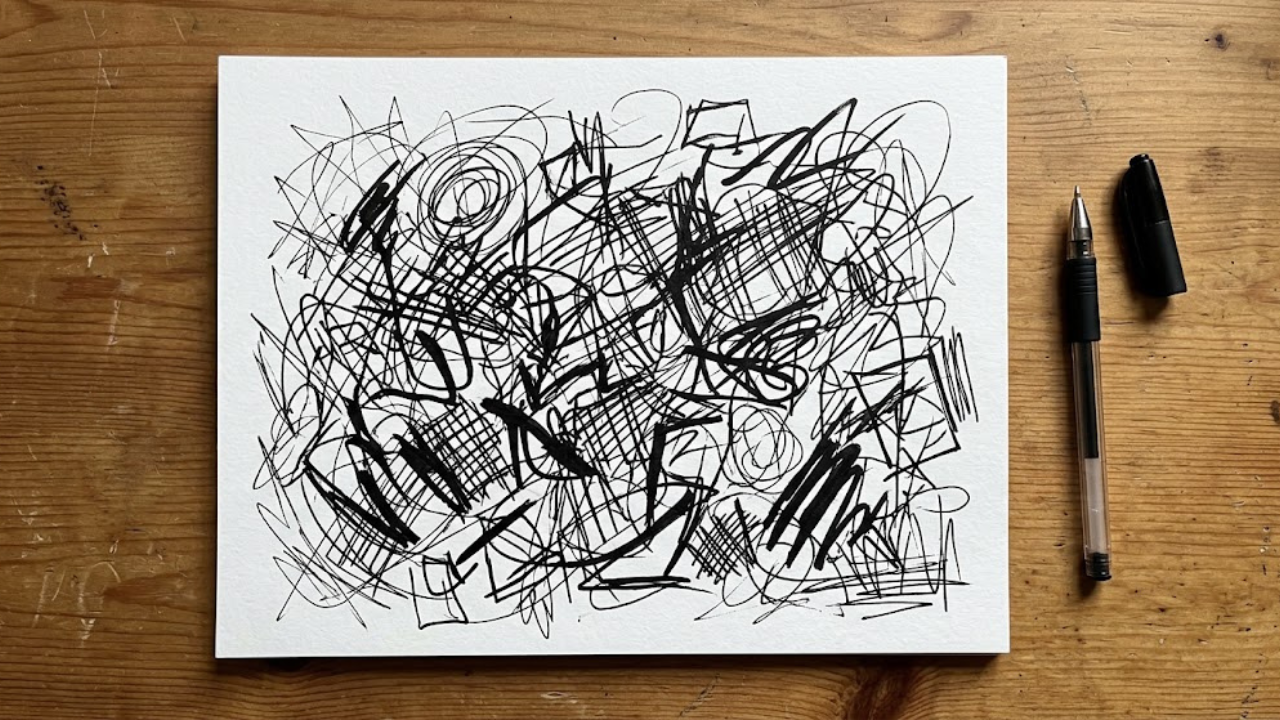
Introduction
Ever looked at a drawing so wild and jumbled it made your brain buzz? That’s likely a cacophony drawing. This art style captures visual “noise” — overlapping lines, shapes, and textures that mimic chaos on paper.
In this guide, you’ll learn the cacophony drawing meaning, why artists and students use this technique, and how to create your own cacophony drawing easy version — even if you’ve never drawn before. You’ll also get expert tips, common mistakes to avoid, and answers to real questions people search on Google.
By the end, you’ll understand exactly how to turn random scribbles into intentional, expressive art.
Table of Contents
- What Is Cacophony Drawing?
- Why Does Cacophony Drawing Matter?
- Cacophony Drawing — Key Facts and Types
- How To Create a Cacophony Drawing
- Common Mistakes to Avoid
- Expert Tips for Best Results
- Frequently Asked Questions
What Is Cacophony Drawing?
The word “cacophony” originally describes a harsh mix of sounds — think of a busy street, a crowded market, or a room full of people talking at once. A cacophony drawing takes that same idea and translates it into visual form.
Instead of chaotic sounds, you get chaotic lines, shapes, and patterns layered together on a page. There’s no single focal point. Your eyes bounce around, taking in overlapping textures, clashing angles, and dense detail.
Think of it like a crowded subway platform during rush hour. Everyone moves in different directions, bags bump into elbows, announcements blur into footsteps. A cacophony drawing captures that same sensory overload, but frozen in ink or pencil.
Students often use this style in art class to practice expressive mark-making without worrying about realism. It’s less about “getting it right” and more about capturing energy and emotion on paper.
Why Does Cacophony Drawing Matter?
Cacophony drawing isn’t just chaotic scribbling — it builds real artistic skill. Here’s why it matters:
- Builds confidence fast — There’s no “wrong” way to draw chaos, so beginners loosen up quickly.
- Improves line control — Repeating lines and shapes trains your hand-eye coordination.
- Reduces stress — Free-form drawing is used in art therapy to lower anxiety, according to the American Art Therapy Association.
- Sparks creativity — Random patterns often lead to unexpected, original ideas.
- Great warm-up exercise — Many illustrators use it to loosen their wrist before detailed work.
- Teaches composition basics — You learn balance by seeing what happens without it.
Cacophony Drawing — Key Facts and Types
Cacophony drawing isn’t one fixed style. It shows up in a few common forms, each with a different feel.
1. Line-Based Cacophony
Made entirely from overlapping scribbled lines. No shapes, no shading — just raw, tangled movement across the page.
2. Shape-Based Cacophony
Built from repeated geometric or organic shapes stacked and overlapped until the page feels crowded and busy.
3. Mixed-Media Cacophony
Combines pen, marker, collage, or paint for extra texture. This version feels the most “loud” visually.
4. Themed Cacophony
Uses a specific subject — like a city street or a crowd — as the base, then layers chaos on top of it.
| Type | Difficulty | Best For | Tools Needed |
|---|---|---|---|
| Line-Based | Easy | Beginners | Pen or pencil |
| Shape-Based | Easy-Medium | Students | Pen, ruler (optional) |
| Mixed-Media | Medium | Hobbyists | Markers, paint, collage |
| Themed | Hard | Advanced artists | Full art kit |
Each type teaches something different, but all of them build the same core skill: comfort with visual chaos.
How To Create a Cacophony Drawing
Ready to try it yourself? Follow these steps for an easy cacophony drawing anyone can complete.
- Grab basic supplies. All you need is paper and a pen or pencil. Avoid overthinking your tools at this stage.
- Pick a starting point. Draw one random shape or line anywhere on the page. This becomes your anchor point.
- Layer without planning. Add lines, shapes, or scribbles on top of and around your first mark. Don’t erase anything.
- Vary your pressure and speed. Mix light, fast strokes with heavy, slow ones to create visual texture and rhythm.
- Fill the page gradually. Keep adding until the entire surface feels dense and busy, with no obvious empty space.
- Step back and review. Look at the drawing from a distance. Notice where your eye naturally travels first.
- Add final accents. Use a darker pen or marker to emphasize a few lines, adding contrast to the chaos.
That’s it — a complete cacophony drawing in under 30 minutes.
Common Mistakes to Avoid
Mistake: Planning too much before you start. The truth is, cacophony drawing works best when it’s spontaneous. Over-planning defeats the purpose.
Mistake: Using only one line weight. Varying your line thickness creates depth. Flat, uniform lines feel boring, not chaotic.
Mistake: Stopping too early. A half-filled page looks unfinished, not intentional. Keep layering until it feels genuinely busy.
Mistake: Erasing “mistakes.” In cacophony drawing, there are no mistakes — every stray line adds to the texture and energy.
Mistake: Ignoring contrast. Without some darker accents or bold lines, the whole piece can look flat and hard to read.
Expert Tips for Best Results
- Use black ink on white paper first — contrast makes chaos read clearly.
- Set a timer for 10 minutes and don’t stop drawing until it ends.
- Rotate your paper as you draw to avoid repeating the same angles.
- Mix curved and straight lines for a more dynamic, “noisy” feel.
- Photograph your progress every few minutes to track how the chaos builds.
Frequently Asked Questions
What does cacophony drawing mean?
It means creating a drawing that visually represents chaos or noise, similar to how the word “cacophony” describes harsh, jumbled sound. Artists use overlapping lines, shapes, and textures to mimic that sensory overload on paper, often without a single clear focal point.
Is cacophony drawing hard for beginners?
No — it’s actually one of the easiest styles to start with. There are no strict rules, no need for realism, and no “wrong” marks, making it ideal for students and first-time artists building confidence.
What supplies do I need for a cacophony drawing?
Just paper and a pen or pencil to start. As you improve, you can add markers, ink, or mixed media for extra texture, but the basic version requires almost no equipment at all.
Conclusion
Cacophony drawing turns everyday chaos into expressive, layered art — and it’s easier to start than most people expect. Remember these three keys: layer without over-planning, vary your line weight, and keep going until the page feels genuinely busy.
Whether you’re a student practicing for class or just curious about the cacophony drawing meaning, this style rewards experimentation over perfection.
Grab a pen right now and try your first cacophony drawing — what’s the wildest chaos scene you could capture on paper?