 By Mubashir Abbasi
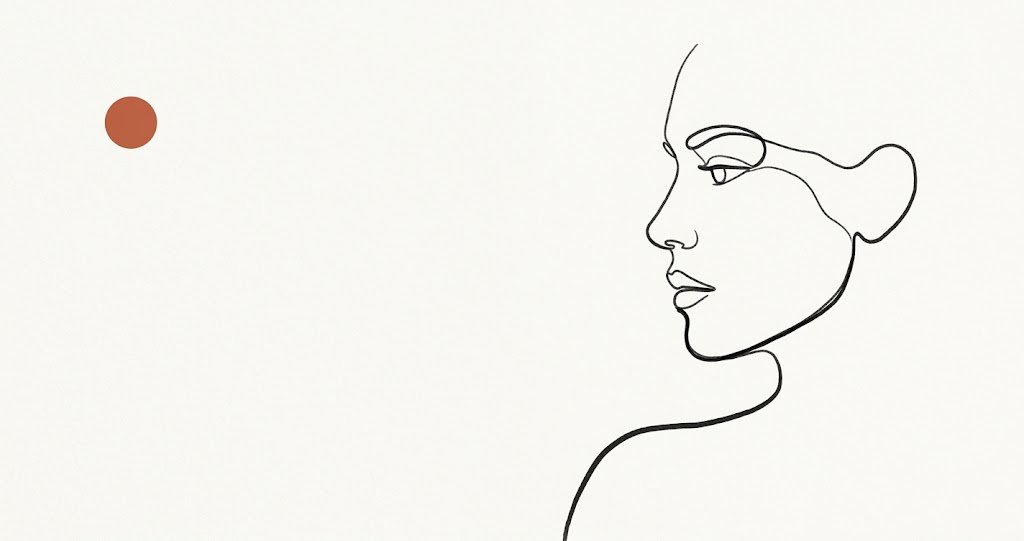
Ever looked at a painting with just a few lines and a single color and wondered how it could feel so powerful? That quiet impact is the heart of minimalism art, a style that proves less can say more. Whether you draw in a notebook or paint on a canvas, this approach can sharpen your work.
Many beginners assume minimalism is easy because it uses so little. In reality, every line and empty space has to earn its place.
This guide walks you through what minimalism art is, why it matters, and the key features that define it. You will see real minimalism art examples, meet the minimalism artists who shaped the movement, and learn a simple process for your own minimalism art drawing. You will also get tips for a minimalism art self portrait and a minimalism art notebook habit.
Table of Contents
- What Is Minimalism Art?
- Why Does Minimalism Art Matter? Key Benefits
- Minimalism Art: Key Features, Examples and Types
- How To Create a Minimalism Art Drawing
- Common Mistakes and Myths About Minimalism Art
- Expert Tips for Minimalism Art Results
- Minimalism Art Frequently Asked Questions
What Is Minimalism Art?
Minimalism art is a style that strips a subject down to its essential forms, colors, and materials. Artists remove detail, decoration, and emotional clutter so that the viewer focuses on shape, space, and simplicity. The movement grew in the United States in the 1960s, when artists questioned the idea that a painting must tell a story.
Think of it like a good road sign. A stop sign uses one red octagon and a single word, yet you understand it instantly. Minimalist artists aim for that same clarity, using only what the work truly needs.
Minimalism art often features simple geometry, limited color palettes, and open negative space. The work invites you to slow down and notice how a single line or block of color affects the whole picture.
Why Does Minimalism Art Matter? Key Benefits
Learning this style gives you more than a clean look. It builds skills that carry into every kind of drawing and painting.
- Sharper focus: Removing extra details trains you to see what matters in a subject.
- Stronger composition: Working with negative space teaches you how to balance a page.
- Faster progress: Fewer elements mean fewer mistakes, so you can finish pieces quickly.
- Clear communication: Simple images are easier for viewers to read and remember.
- Lower material cost: You can create strong work with a few pens, a notebook, and one color.
- Personal expression: Choosing what to leave out reveals your own voice and priorities.
Research into visual processing supports this approach. Studies show that people tend to process simple, uncluttered images more quickly than complex ones, which is why minimal designs feel so direct.
Minimalism Art: Key Features, Examples and Types
Minimalism is not one fixed look. Artists work in several forms, and each one shows the style in a different way. Knowing these categories helps you find the approach that suits your hand.
Geometric Abstraction
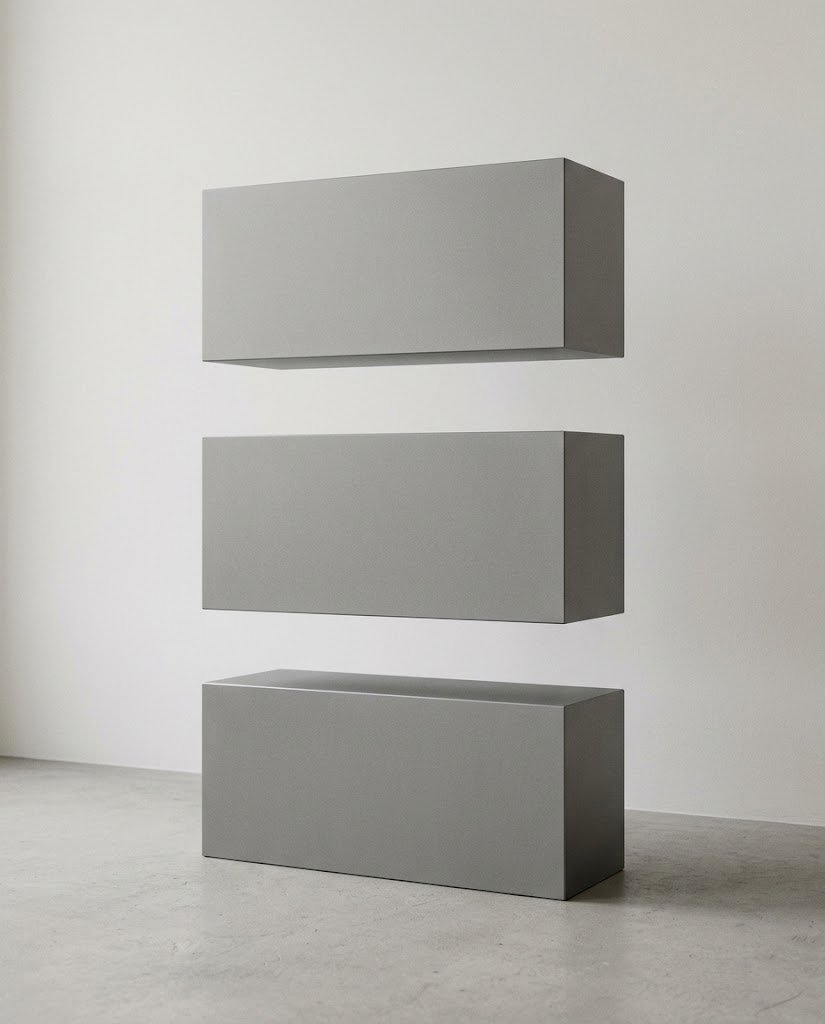
Many minimalist works use basic shapes such as squares, circles, and lines arranged with precision. Donald Judd’s stacked boxes and Frank Stella’s striped canvases are classic examples. You can recreate the idea with a ruler and a few shapes in your notebook.
Monochrome and Limited Color
Some artists work with one color or a tight palette, letting shade and texture carry the piece. Ad Reinhardt’s near-black paintings, for example, reward slow looking. When you choose one color, you learn to build depth through value rather than hue.
Line and Negative Space
Minimal drawings often rely on a few confident lines and generous empty areas. A single contour line can describe a face or a plant. The blank paper becomes part of the image, not just a background.
| Type | Key Feature | Common Materials | Example Approach |
|---|---|---|---|
| Geometric abstraction | Basic shapes in precise order | Paint, metal, wood | Stacked or repeated forms |
| Monochrome | One color, many values | Oil, acrylic, graphite | Tonal gradients |
| Line drawing | Few lines, open space | Ink, pen, pencil | Single continuous contour |
How To Create a Minimalism Art Drawing
Follow these steps to make your own minimal drawing. Start small, and keep each choice intentional.
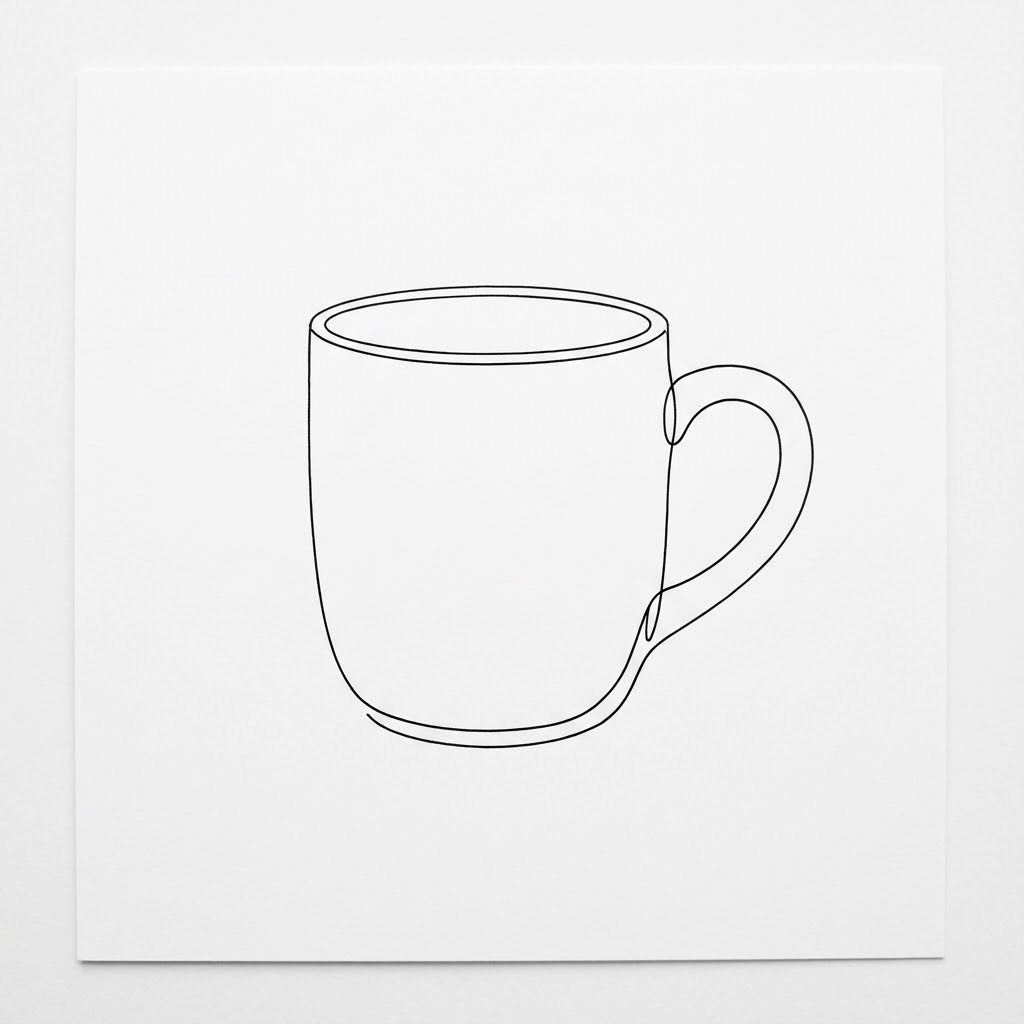
- Choose one simple subject. Pick an object with clear edges, such as a mug, a leaf, or a shoe. Avoid anything with many small parts, since those details will be hard to simplify.
- Study the outline first. Look at your subject for a few minutes without drawing. Notice the main shape and the one or two features that make it recognizable.
- Draw a single continuous line. Try to sketch the outline without lifting your pen. This forces you to commit to the essential contour and removes the urge to add fussy detail.
- Remove everything extra. Look at your sketch and erase or ignore any line that does not describe the subject. Ask yourself whether each mark is truly necessary.
- Leave generous negative space. Keep the empty areas open and balanced around the subject. Let the blank paper breathe, because it gives the drawing its calm.
- Refine and step back. Review your piece from a distance and adjust the weight of your strongest line. Stop when the drawing feels complete, not when it looks busy.
Common Mistakes and Myths About Minimalism Art
Myth: Minimalism is easy because it has little detail. Simple work demands careful decisions about every mark. The truth is that each line must be deliberate, which makes the style challenging to master.
Mistake: Adding too many elements “just in case.” Extra lines and shapes weaken the message. Trust your first clean idea and remove anything that distracts.
Mistake: Ignoring negative space. Filling every corner of the page leaves no room for the subject to stand out. Treat empty areas as an active part of the composition.
Myth: Minimalism means boring art. Restraint can create tension, mood, and surprise. A small change in line weight or spacing can carry a lot of feeling.
Mistake: Choosing a subject that is too complex. Intricate scenes lose their impact when stripped down. Start with objects that have strong, simple silhouettes.
Expert Tips for Minimalism Art Results
- Keep a dedicated minimalism notebook. Date each sketch so you can track how your simplification improves over time.
- Use a fine-tip pen. A consistent line weight makes simple drawings look intentional and polished.
- Practice with blind contour drawing. Sketch while looking only at your subject, which trains you to capture its essential shape.
- Try a self portrait with few lines. Draw your profile in one continuous stroke to explore how little you truly need.
- Study famous minimalist works in person. Museum visits show how scale, material, and space change the impact of a piece.
Minimalism Art Frequently Asked Questions
What defines minimalism art?
Minimalism art is defined by simplicity, restraint, and a focus on basic forms, limited colors, and open space. Artists remove narrative details and decoration so the viewer engages with the work’s pure structure. Key traits include geometric shapes, repetition, and a reduced palette. If you want to recognize it, look for pieces where nothing feels unnecessary. Each element should serve a clear purpose in the composition.
Who is the most famous minimalist?
Donald Judd is widely regarded as one of the most influential minimalist artists. He is known for stacked boxes and modular forms that explore space, material, and repetition. Frank Stella, Agnes Martin, and Dan Flavin are also central figures. Agnes Martin’s soft grid paintings and Dan Flavin’s fluorescent light installations are good starting points if you want to see the range of the movement.
What are the features of minimalism art?
Common features include clean lines, simple geometric shapes, limited color, and generous negative space. Minimalist works often use repetition and symmetry to create calm order. The style also emphasizes honesty about materials, so surfaces and forms are often left unpainted or unadorned. When you create your own work, focus on these features first. They will help your piece look deliberate rather than unfinished.
When did minimalism art start?
Minimalism art emerged in the United States in the early 1960s. Artists such as Donald Judd, Robert Morris, and Sol LeWitt helped define the movement, which challenged traditional ideas about painting and sculpture. Although its roots reach back to earlier modernist work, the 1960s marked its formal recognition. The style quickly spread through galleries and influenced design, architecture, and graphic art in the decades that followed.
Final Thoughts on Minimalism Art
Minimalism art rewards focus. Three ideas matter most. First, simple shapes and limited color give your work clarity. Second, negative space lets your subject breathe. Third, deliberate lines make every mark count.
Start today. Grab a notebook, choose one everyday object, and draw its outline in a single continuous line. Then try a quick minimalism art self portrait using just a few strokes.
Which object would you choose for your first minimalist drawing? Share it in the comments below.