
 By Richard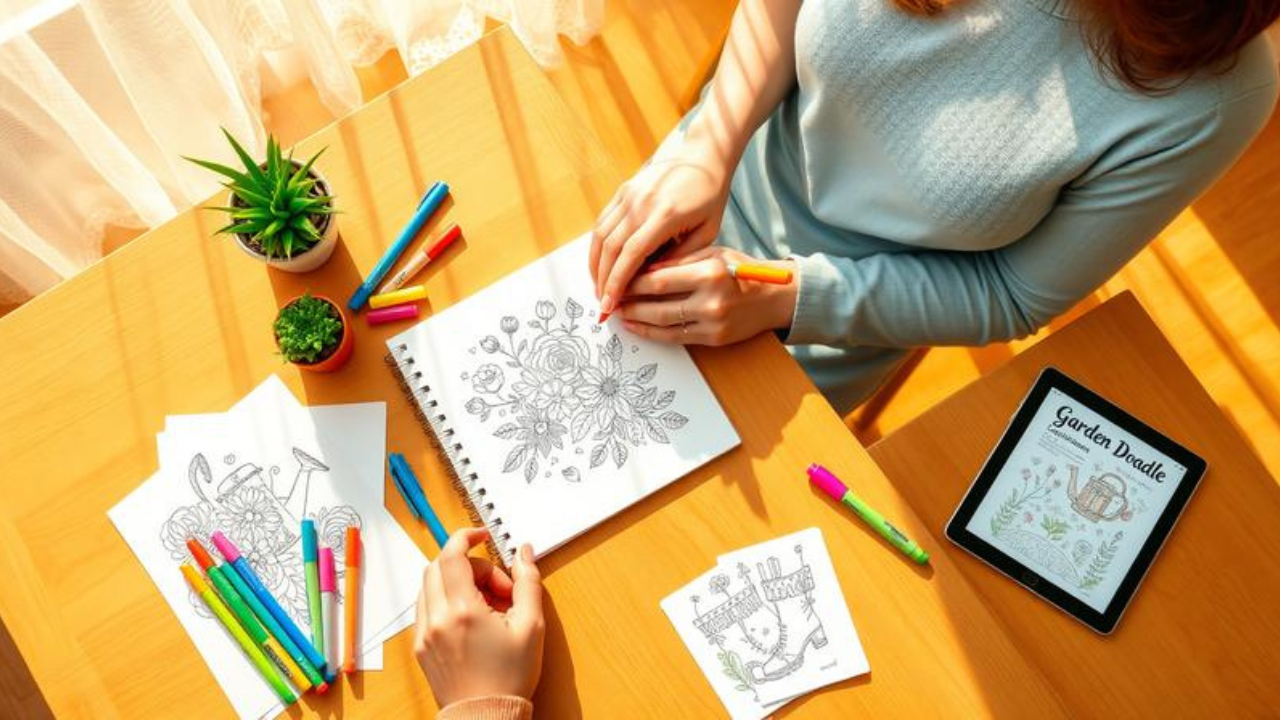
Introduction
Have you ever caught yourself absentmindedly drawing flowers in the margins of your notebook? That’s your inner artist begging to come out. Garden doodle is exactly what it sounds like — the simple, joyful practice of sketching garden-inspired elements like flowers, plants, tools, and tiny creatures. It’s one of the most accessible forms of creative expression, and you don’t need any special skills to start.
In this guide, you’ll learn what garden doodle means, why it’s good for you, and how to use it for relaxation, creativity, or even practical projects like designing knitting patterns. We’ll cover everything from the famous garden doodle game to finding garden doodle PNG files for your digital projects. Whether you’re looking for a flower garden doodle to brighten your day or searching for a garden doodle free download to get started immediately, you’re in the right place.
Table of Contents
-
What Is Garden Doodle? / Introduction to Garden Doodle
-
Why Does Garden Doodle Matter? / Key Benefits
-
Garden Doodle — Key Facts / Types / How It Works
-
How To Use Garden Doodle in Your Daily Life
-
Common Mistakes / Myths to Avoid
-
Expert Tips for Best Results
-
Frequently Asked Questions
-
Conclusion
Introduction to Garden Doodle
Garden doodle is the art of creating simple, hand-drawn sketches inspired by gardens and nature. Think of it as visual poetry for plant lovers. You draw flowers, leaves, vegetables, garden tools, insects, and everything else you’d find in a thriving outdoor space. The beauty of garden doodle is that it doesn’t require artistic talent — just a pen, some paper, and a willingness to have fun.
Here’s a simple way to understand it: Imagine you’re writing a letter to a friend about your garden. Instead of just describing it with words, you add little drawings — a smiling sunflower, a buzzing bee, a watering can. That’s garden doodle in action. It’s visual storytelling at its most accessible.
One real-world example is the garden doodle game that Google created for Germany’s Garden Day in 2018. Players launched clay garden gnomes from a trebuchet, and every landing planted flowers across a digital landscape. That game brought garden doodle to millions of people who’d never considered themselves artists. It proved that drawing and gardens are a perfect match.
Whether you’re creating a flower garden doodle for relaxation or downloading a garden doodle PNG for a craft project, the core idea remains the same: garden doodle is about bringing the beauty of nature to life through simple, joyful marks on paper.
Why Does Garden Doodle Matter? / Key Benefits
Garden doodle isn’t just a fun pastime — it offers real, tangible benefits for your mind and well-being:
-
Reduces stress and anxiety — The repetitive, rhythmic motion of drawing flowers and leaves triggers a relaxation response similar to meditation. It’s a peaceful escape from daily pressures.
-
Boosts creativity — Garden doodle exercises your visual thinking muscles. The more you doodle, the more creative ideas flow in other areas of your life.
-
Improves focus and mindfulness — When you’re drawing a detailed flower garden doodle, your mind stays present. It’s a powerful antidote to smartphone scrolling and constant notifications.
-
Connects you to nature — Even if you don’t have a garden, garden doodle lets you bring the outdoors inside. It’s a way to appreciate plants, flowers, and wildlife.
-
Builds artistic confidence — Starting with simple shapes removes the intimidation of “real” art. Each garden doodle you create builds skill and courage.
-
Practical applications — From designing knitting patterns like the Garden Doodle Card Deck to creating digital assets with garden doodle PNG files, these skills have real-world uses.
According to a 2023 study from the Journal of Creativity in Mental Health, participants who engaged in nature-themed doodling for 15 minutes daily reported a 31% reduction in stress levels and a 28% increase in creative problem-solving abilities. That’s a compelling reason to pick up a pen.
Garden Doodle — Key Facts / Types / How It Works
Garden doodle comes in several forms, each with its own charm and purpose. Here’s a breakdown of the main types:
Hand-Drawn Garden Doodles
This is the classic form — you pick up a pen and draw. Simple flowers, vines, leaves, and garden tools. No digital tools required. Just you and your sketchbook.
Digital Garden Doodles
Using tablets, design software, or even simple apps, you create garden doodle artwork digitally. These often become garden doodle PNG files with transparent backgrounds, perfect for websites, invitations, and social media.
Garden Doodle Games
Interactive experiences like the Google garden doodle game where you launch gnomes and plant flowers. These games make garden doodle playful and engaging for all ages.
Garden Doodle Decks and Patterns
Physical card decks with garden doodle motifs for crafts like Fair Isle knitting. Each card features a different garden doodle pattern — watering cans, boots, shovels, seedlings, tulips, strawberries, and more.
Garden Doodle Coloring Pages
Printable pages featuring flower garden doodle designs that you can color in. Many are available as a garden doodle free download.
Comparison Table: Garden Doodle Types at a Glance
| Type | Best For | Format | Example |
|---|---|---|---|
| Hand-Drawn | Relaxation, skill-building | Paper, pen | Sketchbook flowers |
| Digital | Design projects, sharing | PNG, SVG, AI | Garden doodle PNG clipart |
| Games | Fun, engagement | Browser, app | Garden doodle game (Google) |
| Decks | Crafts, knitting | Physical cards | Garden Doodle Card Deck |
| Coloring Pages | Stress relief, kids | Printable PDF | Flower garden doodle pages |
How To Use Garden Doodle in Your Daily Life
Ready to start your garden doodle journey? Follow these simple steps:
Step 1: Gather Your Supplies
You don’t need anything fancy. A pen, pencil, or marker and any paper will do. If you prefer digital, open a drawing app on your tablet or phone.
Step 2: Choose Your Subject
Pick something simple from nature — a flower, a leaf, a bee, or a watering can. Don’t overthink it. The best garden doodle subjects are the ones you see every day.
Step 3: Start With Basic Shapes
Break your subject down into circles, ovals, lines, and curves. A flower is just a circle with petals around it. A leaf is an oval with a line down the middle. Keep it simple.
Step 4: Add Details Gradually
Once you have the basic shape, add small details — veins on leaves, petals on flowers, stripes on a bee. These tiny touches bring your garden doodle to life.
Step 5: Practice Daily
Set aside just five minutes each day for garden doodle. Consistency beats long sessions. Over time, you’ll notice your skills improving and your doodles becoming more confident.
Step 6: Apply Your Skills
Use your garden doodle skills for real projects. Design a card, create a garden doodle PNG for a website, or try a garden doodle free download of a coloring page to practice with.
Common Mistakes
Mistake #1: “I need to be good at drawing”
Truth: Garden doodle isn’t about talent — it’s about process. The patterns are simple by design. Anyone can do them.
Mistake #2: “I need expensive supplies”
Truth: A ballpoint pen and scrap paper work perfectly. Fancy markers and sketchbooks are nice but not required.
Mistake #3: “It’s just for kids”
Truth: Garden doodle is used by adults for stress relief, creative thinking, and even professional design work. It’s a serious tool for well-being.
Mistake #4: “My doodles have to look realistic”
Truth: Garden doodle is about expression, not realism. Stylized, whimsical drawings are just as valid as realistic ones.
Mistake #5: “I have to finish in one sitting”
Truth: Garden doodle is modular. You can do five minutes today, five minutes tomorrow. It all adds up to progress.
Expert Tips for Best Results
-
Start with a single flower — Master one simple flower garden doodle before moving to complex scenes. Repetition builds confidence.
-
Keep a dedicated sketchbook — Even a cheap notebook works. Having one place for your garden doodle practice builds momentum and lets you see your progress.
-
Use references — Look at real flowers, leaves, or garden photos. Observing nature makes your garden doodle more authentic.
-
Experiment with different tools — Try pens, pencils, markers, or digital tools. Each gives your garden doodle a unique feel.
-
Share your work — Post your garden doodle creations online or share with friends. Feedback and encouragement fuel motivation.
Frequently Asked Questions
Q: What’s the difference between garden doodle and regular doodling?
Regular doodling is often unconscious and random. Garden doodle is intentional — it focuses specifically on garden and nature themes using simple, repeatable techniques. It’s doodling with purpose and a floral twist.
Q: Where can I find garden doodle free downloads?
Many websites offer garden doodle free download options. Look for printable coloring pages, font packs like the Spring Garden Doodle Font, or clipart sets. Always check the license for personal or commercial use.
Q: Can I use garden doodle for knitting or crochet patterns?
Absolutely. The Garden Doodle Card Deck is specifically designed for Fair Isle knitting, featuring 24 garden motifs including tools, plants, and insects. The patterns translate directly into colorwork charts.
Conclusion
Garden doodle is more than just drawing — it’s a gateway to creativity, relaxation, and connection with nature. You’ve learned what garden doodle is (simple, nature-inspired sketching), why it matters (stress reduction, creativity, focus), and how to use it (start small, practice daily, apply to projects).
Now it’s your turn. Grab a pen. Draw a simple flower. Then another. See where your garden doodle journey takes you. Whether you’re playing the garden doodle game, downloading a garden doodle PNG for a project, or just unwinding with a flower garden doodle, you’re tapping into something beautiful and timeless.
Start today. Your garden is waiting to be doodled.
What’s the first thing you’ll doodle in your garden? Drop a comment below — I’d love to hear about your creative adventures.