 By Richard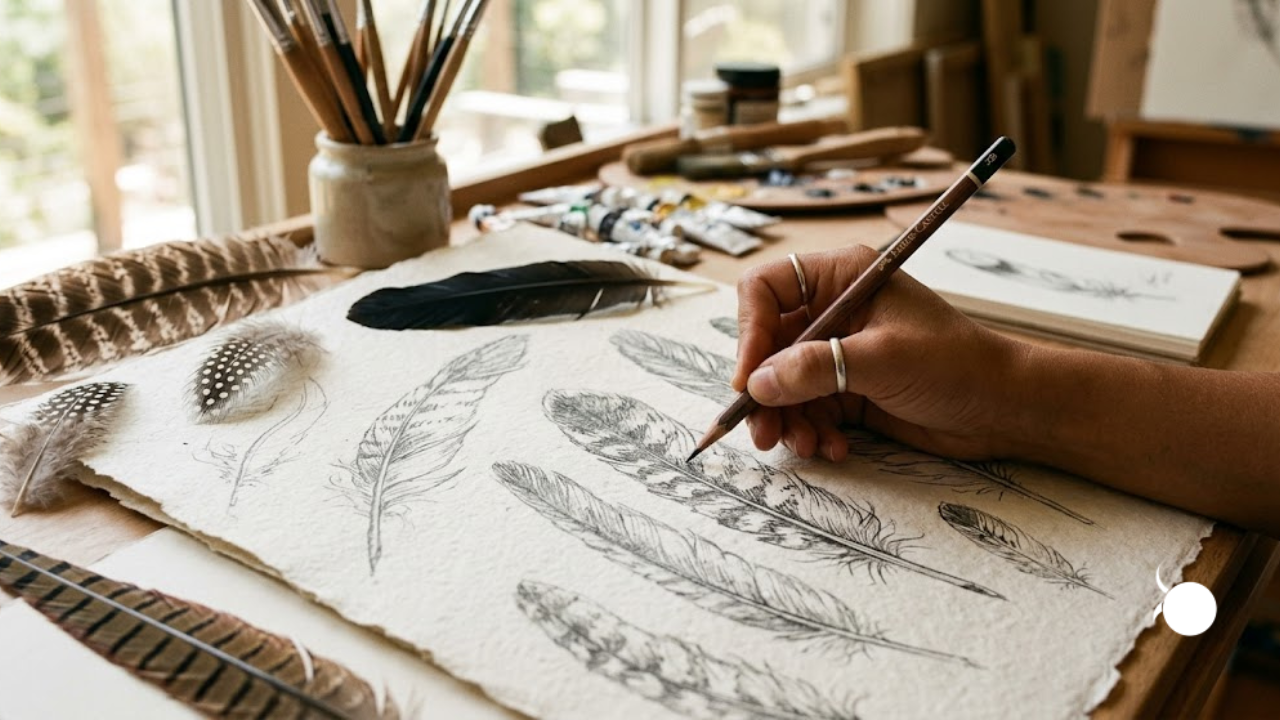
Introduction
Have you ever stopped to admire the intricate patterns of a fallen bird feather and wondered how to capture that beauty on paper? Bird feather artwork has captivated artists for centuries, from ancient Aztec mosaics to contemporary gallery exhibitions. Whether you’re a beginner looking for bird feather artwork easy techniques or an experienced artist seeking fresh feather art ideas, this guide covers everything you need.
You’ll learn what bird feather artwork really is, why it matters for your creative practice, and exactly how to create your own pieces—from simple bird feather drawing easy methods to working with real feather art. We’ll also cover common mistakes to avoid and insider tips that separate amateur sketches from professional-grade work. No fluff, just actionable knowledge you can apply today.
Table of Contents
-
What Is Bird Feather Artwork? / Introduction to Feather Art
-
Why Does Bird Feather Artwork Matter? / Key Benefits
-
Bird Feather Artwork — Key Facts / Types / How It Works
-
How To Create Stunning Bird Feather Artwork
-
Common Mistakes / Myths to Avoid
-
Expert Tips for Best Results
-
Frequently Asked Questions
What Is Bird Feather Artwork? Introduction to Feather Art
Bird feather artwork refers to any artistic creation that features, mimics, or uses bird feathers as a central element. This includes feather art drawing on paper, feather art painting with watercolors or acrylics, and real feather art that uses actual feathers as the canvas or the medium itself.
Think of it like this: just as a sculptor sees potential in a block of marble, a feather artist sees endless possibilities in the delicate structure of a plume. The central shaft (rachis) becomes your guide, the barbs become your texture, and the natural colors become your palette. Bird feather artwork sits at the intersection of nature study and creative expression—part scientific observation, part pure imagination.
The practice spans cultures and centuries. Japanese artists have used virtuosic ink brushwork to represent different feather types since the Heian period (794–1185). In Mexico, the Aztecs developed “amanteca”—feather art so laborious and costly that royal houses maintained special aviaries for exotic birds. Today, artists like Chris Maynard carve intricate scenes from naturally shed feathers, while Lin Taylor paints miniature bird portraits directly on feather canvases.
Bird feather artwork isn’t just one thing—it’s a diverse field that welcomes everyone from doodlers to dedicated professionals.
Why Does Bird Feather Artwork Matter?
Creating bird feather artwork offers benefits that go far beyond producing a pretty picture. Here’s why you should add it to your artistic repertoire:
-
Develops observational skills — Feathers have complex structures: the central shaft, interlocking barbs, and tiny barbules. Drawing or painting them forces you to look closely at nature’s engineering, sharpening your eye for detail in all your art.
-
Builds patience and precision — Whether you’re doing a bird feather drawing easy sketch or a detailed watercolor, feathers demand controlled, deliberate strokes. This discipline carries over into every other medium you work with.
-
Connects you to nature — Working with feathers—whether real or illustrated—creates a tangible link to the natural world. You start noticing birds around you, their colors, and the feathers they leave behind.
-
Versatile and accessible — You don’t need expensive materials. A pencil and paper work for bird feather artwork easy practice. As you progress, you can explore feather art painting with watercolors, acrylics, or even real feather art using found feathers.
-
Meditative and calming — The repetitive motion of drawing feather barbs or applying delicate paint strokes has a therapeutic quality. Many artists describe feather work as a form of moving meditation.
Here’s a stat to consider: The global market for feather-based crafts and art materials is projected to grow from $84.6 million in 2025 to $150 million by 2035. That’s not just hobbyists—that’s serious artistic and commercial interest in feather art. People are buying, selling, and collecting bird feather artwork at increasing rates.
Bird Feather Artwork — Key Facts
Understanding the different forms of bird feather artwork helps you choose your path. Here’s a breakdown of the main approaches:
Drawn Feather Artwork
This is the most accessible entry point. Feather art drawing uses pencils, pens, charcoal, or pastels to create feather illustrations on paper. You’re capturing the feather’s shape, texture, and flow through line and shading. This category includes everything from quick bird feather drawing easy sketches to highly realistic graphite studies.
Painted Feather Artwork
Feather art painting brings color into the equation. Watercolors are particularly popular because their transparency mimics the delicate quality of real feathers. Acrylics offer more opacity and boldness. You can paint feathers as standalone subjects or incorporate them into larger bird illustrations, landscapes, or abstract compositions.
Real Feather Artwork
This is where things get fascinating. Real feather art uses actual bird feathers as either the canvas or the primary material. Artists like Ramon Gamboa create real feather art on canvas by arranging and layering feathers. Lin Taylor paints directly on cleaned feathers, using the feather’s natural shape to guide her composition. Chris Maynard carves scenes into feathers with surgical precision.
Mixed Media Feather Artwork
Many artists combine approaches. You might start with a bird feather drawing easy sketch, then add watercolor washes, and finally incorporate actual feather fragments for texture. The possibilities are endless.
Comparison Table: Which Feather Art Approach Is Right for You?
| Approach | Skill Level | Materials Needed | Best For |
|---|---|---|---|
| Drawn Feathers | Beginner to advanced | Pencils, paper, eraser | Practicing observation, building fundamentals |
| Painted Feathers | Intermediate | Watercolors/acrylics, brushes, paper | Adding color and expression |
| Real Feather Art | Intermediate to advanced | Found feathers, glue, canvas or board | Creating tactile, three-dimensional work |
| Mixed Media | Advanced | Combination of above | Pushing creative boundaries |
How To Create Stunning Bird Feather Artwork
Ready to create your own bird feather artwork? Follow these steps for a bird feather drawing easy approach that works for beginners and intermediates alike.
Step 1: Gather Your Reference Materials
Find a real feather or a high-quality photo reference. If using a real feather, clean it gently with a soft brush. Notice the central shaft (rachis), the hollow base (calamus), and the two sides of the vane. Pay attention to how the barbs flow outward from the shaft.
Step 2: Sketch the Basic Shape
Start with a light pencil outline. Draw a long, gentle curve for the shaft. Then sketch the overall silhouette of the feather—tapered at the tip, wider in the middle, narrowing toward the base. Don’t worry about details yet; just get the proportions right.
Step 3: Add the Shaft and Barb Guidelines
Darken the central shaft slightly. Then, using light pencil strokes, draw curved lines radiating outward from the shaft to represent the major barbs. These guide lines help you maintain symmetry and flow.
Step 4: Build the Barbs and Texture
Now the real work begins. Use short, feathery strokes to fill in the barbs. Work from the shaft outward, varying your pressure to create thin and thick lines. For a bird feather artwork that looks realistic, follow the natural direction of the barbs—they angle upward toward the tip.
Step 5: Add Shading and Depth
Identify your light source. Darken the areas under the barbs and along one side of the shaft to create volume. Use a blending stump or your finger to soften transitions. The goal is to make the feather look three-dimensional, not flat. Step back frequently to check your progress.
Step 6: Refine and Finish
Erase your guide lines. Add any final details—tiny splits in the barbs, subtle texture variations, or a shadow beneath the feather. Sign your work and step away for a few minutes. When you return, you’ll see what needs adjusting.
Common Mistakes / Myths to Avoid
Even experienced artists make these errors. Here’s what to watch out for in your bird feather artwork:
-
Mistake: Drawing every single barb individually. This makes your feather look stiff and overworked. The truth: Suggest texture with grouped strokes and varying pressure. Your eye fills in the details.
-
Mistake: Making the feather perfectly symmetrical. Real feathers aren’t identical on both sides. The truth: Embrace slight asymmetry. It adds authenticity and natural flow.
-
Myth: You need expensive feathers for real feather art. Some beginners think only exotic feathers work. The truth: Pigeon, chicken, and turkey feathers work beautifully. Many artists ethically source naturally shed feathers.
-
Mistake: Ignoring the shaft’s importance. The central shaft is more than a line—it has thickness, shadow, and texture. The truth: Treat the shaft as a structural element with its own form and lighting.
-
Myth: Bird feather artwork is only for advanced artists. Beginners often feel intimidated. The truth: Start with bird feather artwork easy exercises—simple shapes, single feathers, basic shading. Skill builds with practice.
Expert Tips for Best Results
Take your bird feather artwork to the next level with these pro insights:
-
Start with soft pencils (2H or HB) for your initial sketch. Harder pencils make faint lines that are easier to erase and adjust.
-
Work from the shaft outward when adding color or shading. This follows the feather’s natural structure and prevents smudging.
-
Use a kneaded eraser to lift highlights rather than erasing completely. This preserves paper texture while creating luminous areas.
-
Vary your stroke length and pressure to mimic the feather’s natural texture. Short, light strokes create downy areas; longer, firmer strokes suggest stiff flight feathers.
-
Study real feathers under magnification. A simple magnifying glass reveals barbule patterns you’d never notice with the naked eye—and your artwork will show that extra level of detail.
Frequently Asked Questions
Q1: What’s the easiest way to start bird feather artwork?
Begin with a bird feather drawing easy approach: find a single feather, use a soft pencil, and sketch the outline first. Focus on the shaft and basic shape before adding texture. You can find free tutorials online and printable worksheets that walk you through each step. Practice with different feather types to build confidence.
Q2: Can I use real feathers in my artwork?
Yes! Real feather art is a thriving practice. Clean found feathers with mild soap and water, let them dry completely, and spray with a fixative if needed. Ensure you’re using ethically sourced feathers—avoid protected species. You can paint directly on feathers or arrange them in collages and mosaics.
Q3: What’s the best paint for feather art painting?
Watercolors are ideal for feather art painting because their transparency mimics the delicate quality of real feathers. Acrylics work well for bold, opaque pieces. For painting on real feathers, acrylics or oils adhere best—just follow the natural direction of the barbs as you apply paint.
Conclusion
Bird feather artwork is more than a drawing exercise—it’s a way to connect with nature, sharpen your artistic skills, and create pieces that resonate with viewers. The three most important takeaways: start simple with a bird feather drawing easy approach, practice observing real feathers closely, and don’t be afraid to experiment with different materials and techniques.
Your first feather sketch won’t be perfect. Neither was anyone else’s. The key is to begin. Grab a pencil, find a feather, and start today. What feather shape will you draw first?
Explore more drawing guides and artistic inspiration at Doodle Unlimited.