 By Richard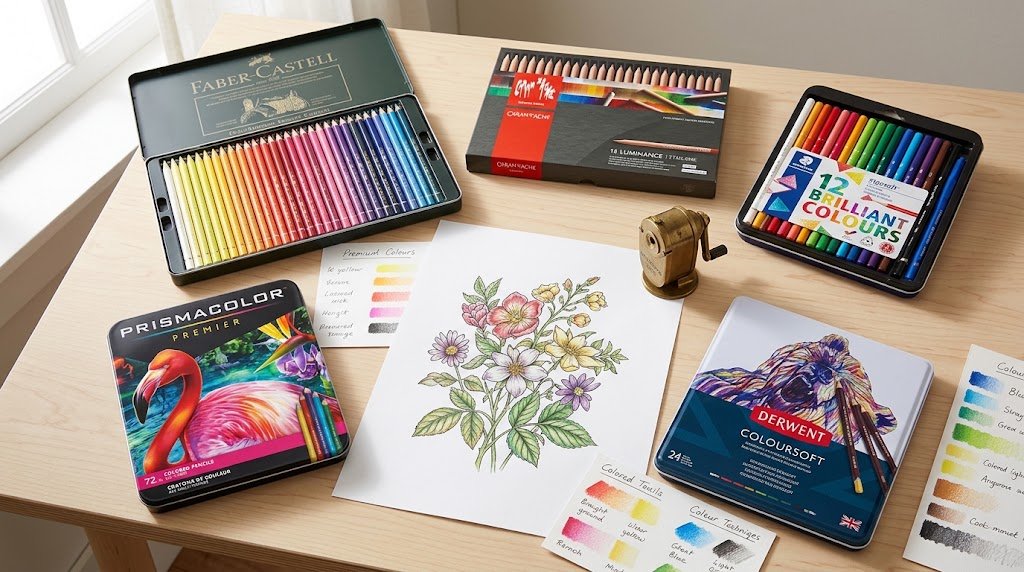
Colored pencils are one of the most forgiving art tools. You can sketch a quick doodle on the bus, build up a detailed portrait over weeks, or fill a coloring page with friends. But walk into any art store and you’ll face dozens of brands, set sizes, and price points, and it’s hard to know what’s worth your money.
This ranking is based on how each pencil performs in everyday use: color richness, how smoothly it lays down, how well it blends, how well it holds a point, and whether it’s worth the price. I’ve organized the picks from the top down, with notes on who each one suits best.
1. Faber-Castell Polychromos
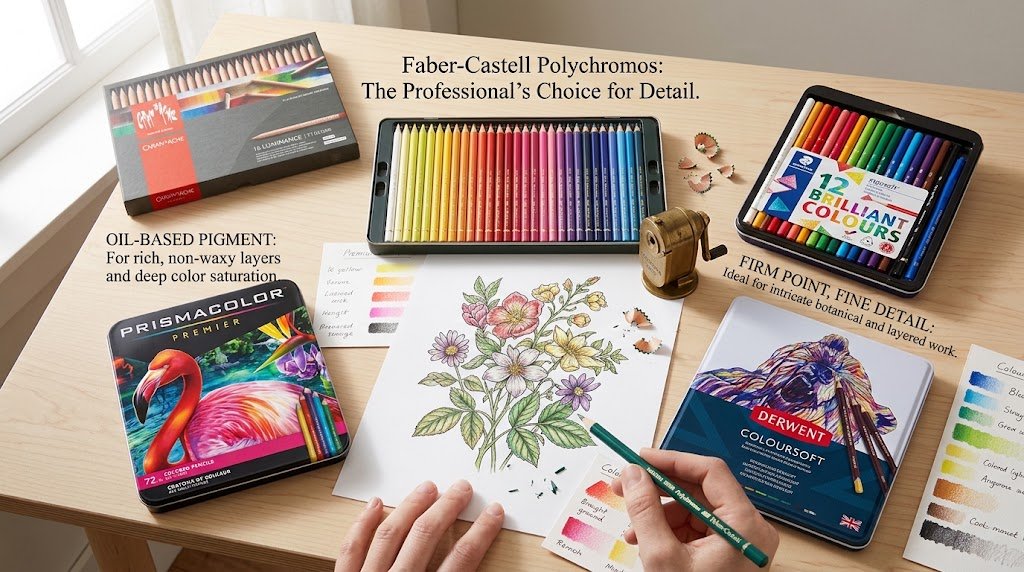
Polychromos are oil-based pencils, and that makes them the go-to choice for many professional illustrators. The pigment is dense, so colors look rich even after a single light pass, and you can layer many times without the surface turning waxy or slick.
They are firm, which means they hold a sharp point for a long time and handle fine detail beautifully. The downside is that they are harder to blend quickly than softer wax pencils, and they cost more per pencil. Their palette leans toward muted, earthy shades, so you may need to add some brighter colors if you work in bold, saturated styles.
Best for: Detailed work, botanical illustration, layered portraiture, and anyone willing to invest in a pencil that rewards patience.
2. Caran d’Ache Luminance 6901
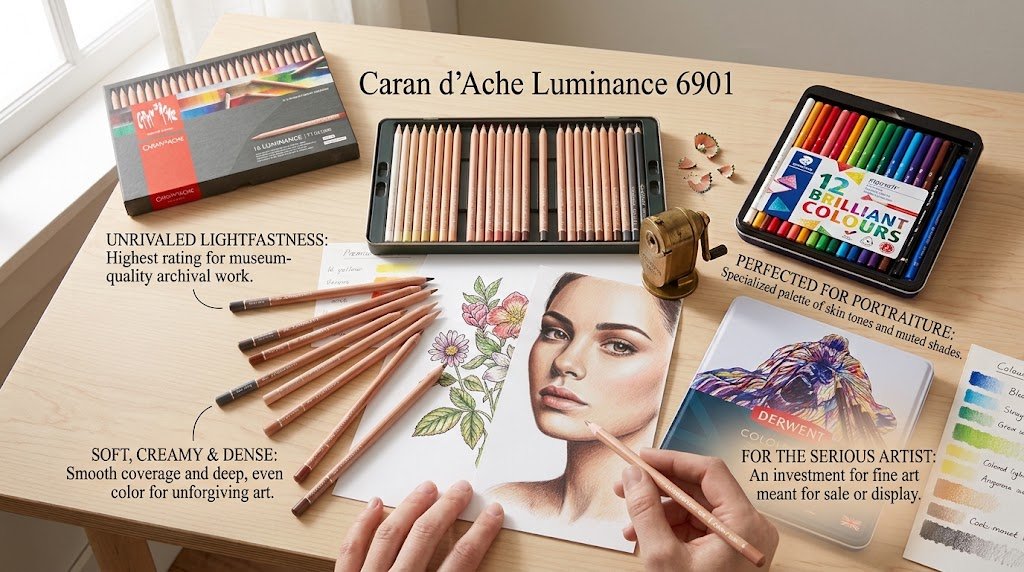
Luminance is the pencil many artists reach for when they want the highest lightfastness rating. It’s a soft, creamy pencil with a dense pigment load, and it covers paper smoothly with a deep, even color.
Its strength is the range of skin tones and muted shades, which makes it a favorite for portraits. It is also very forgiving on the page. The trade-off is price: a full set is an investment, so most people start with a smaller selection of colors and build from there.
Best for: Portraits, fine art pieces meant for sale or display, and artists who want maximum light resistance.
3. Prismacolor Premier
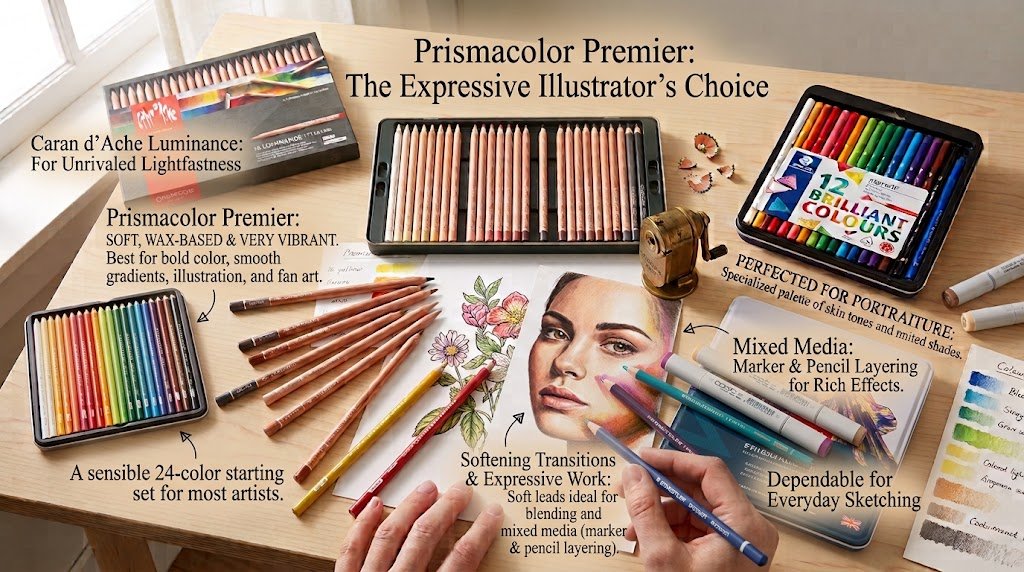
Prismacolor Premier pencils are soft, wax-based, and very vibrant. They shine in work that needs bold color and smooth gradients, especially in fan art, illustration, and mixed media where you layer marker underneath and use the pencils to soften transitions.
They are not the best choice for crisp, technical detail, since the soft lead can break more easily and wears down quickly. But for expressive work and fast, confident strokes, they are hard to beat for the price. A 24-color set is a sensible starting point for most people.
Best for: Illustration, fan art, expressive work, and combining with markers.
4. Derwent Coloursoft
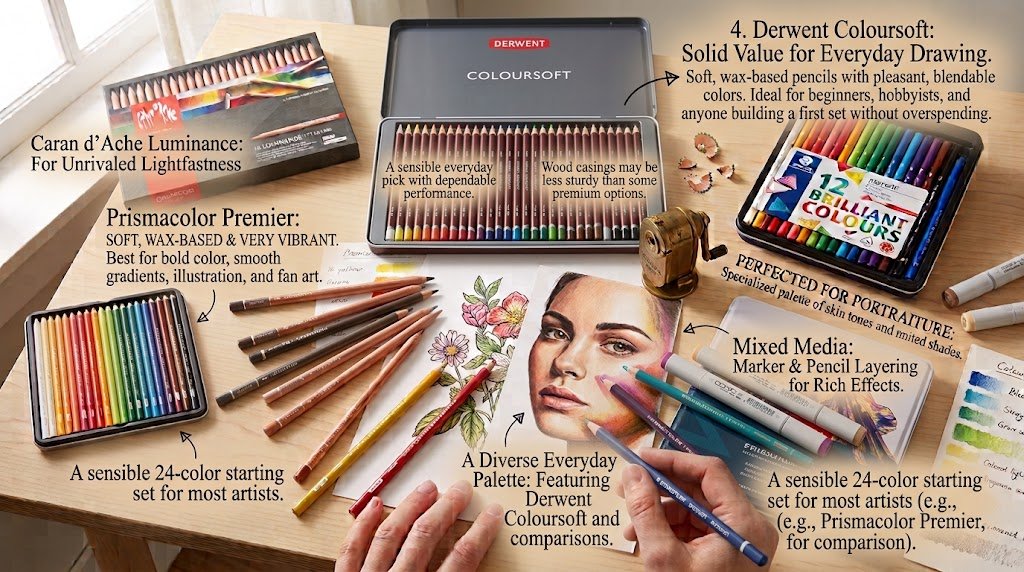
Coloursoft is a soft, wax-based pencil that offers good value for everyday drawing. The colors are pleasant and blend well, and the pencils are comfortable to hold for long sessions.
Some artists find the palette a little muted compared to premium brands, and the wood casings aren’t always as sturdy as the best options. Still, for beginners and hobbyists who want a dependable pencil without a premium price, Coloursoft is a solid, sensible pick.
Best for: Beginners, hobbyists, and anyone building a first set without overspending.
5. Staedtler Ergosoft
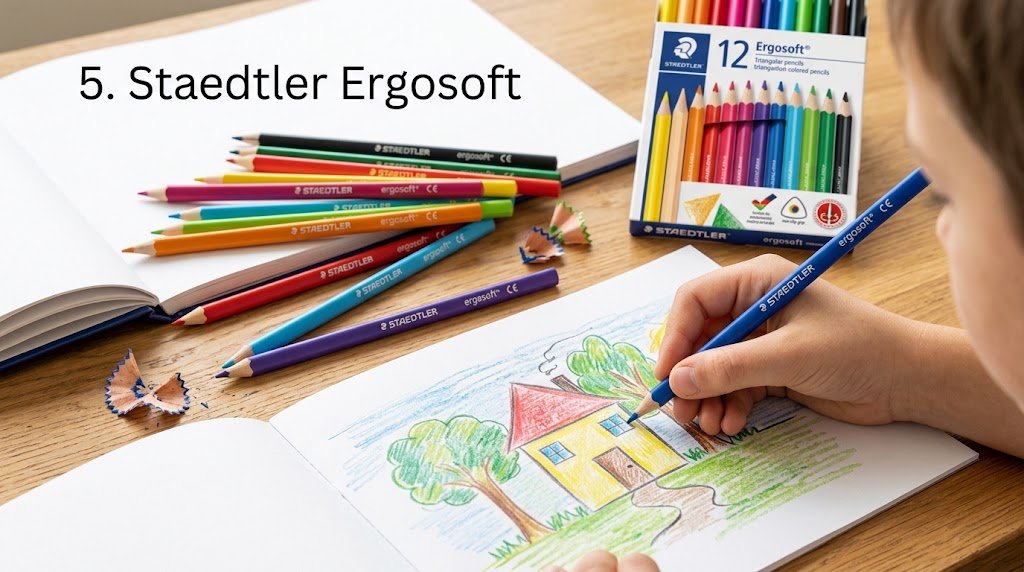
Staedtler Ergosoft is a triangular, wax-based pencil with a comfortable grip and a good balance of color and durability. The triangular shape makes it easy to hold for long periods, and it resists rolling off the table, which is a small but welcome detail.
Ergosoft is pleasant on most papers, and it sharpens cleanly. Its colors are not as intense as Prismacolor or as deep as Polychromos, but it is a dependable everyday pencil. It’s also a good choice for younger artists and classroom use.
Best for: Students, younger artists, everyday sketching, and anyone who wants a comfortable grip.
How to Choose
There is no single best colored pencil. The right one depends on what you make and how you work.
If you want rich, layered color for detailed work, start with Polychromos. If lightfastness matters because you plan to sell originals, look at Luminance or another rated line. If you want vibrant, expressive color at a reasonable price, Prismacolor Premier is a strong choice. For a budget-friendly starter set, Derwent Coloursoft and Staedtler Ergosoft both perform well.
It’s also worth remembering that expensive pencils don’t make better art on their own. Good technique, practice, and paper choice matter just as much. Many artists produce excellent work with affordable pencils, and a mid-range set you enjoy using will do more for your progress than a premium set that sits in its tin.
Final Thoughts
Pick one or two pencils from this list, test them on the same paper, and see which ones feel right in your hand. Colored pencils are a personal tool, and the best one is the one that makes you want to keep drawing.