 By Mubashir Abbasi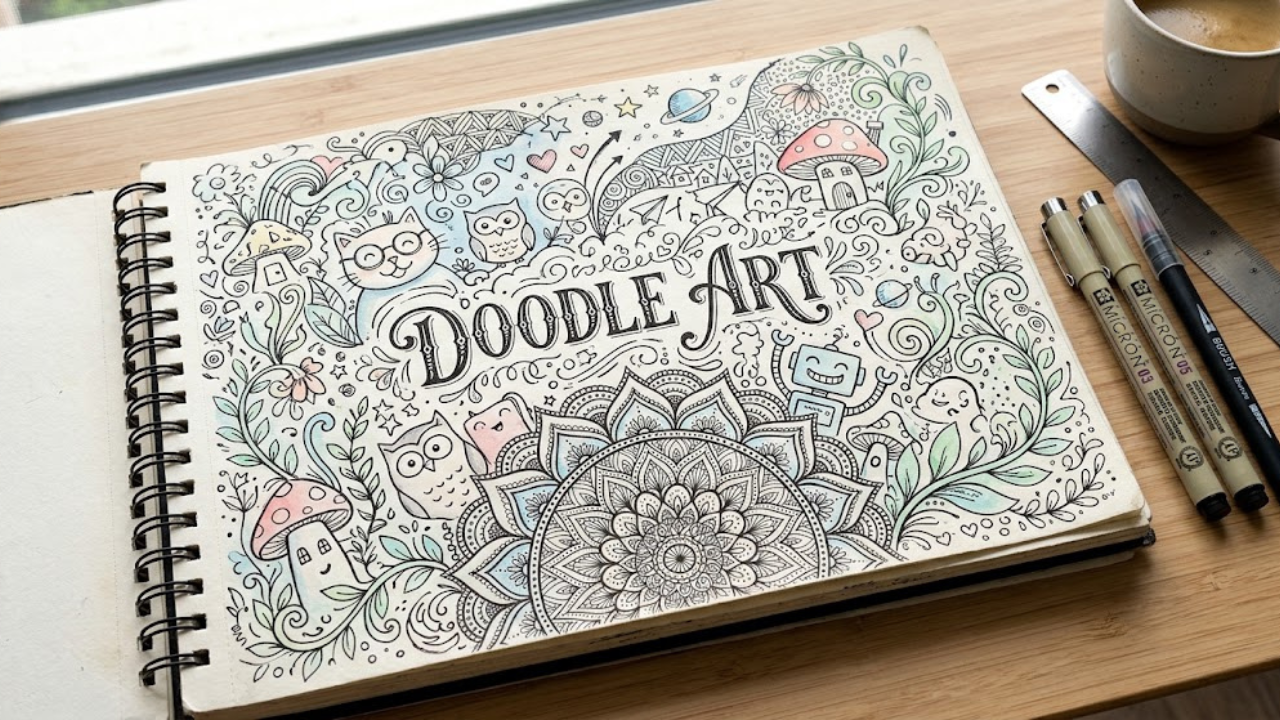
Introduction
Did you know that doodling can actually boost your memory by nearly 29%, according to a widely cited study from the University of Plymouth? Most people think doodling is just idle scribbling you do during a boring meeting or a long phone call. But doodle art is a genuine creative practice that millions of people — from toddlers to professional illustrators — use every single day to relax, focus, and express themselves.
In this guide, you’ll learn exactly what doodle art is, where it came from, and why it has exploded in popularity across social media and classrooms alike. You’ll also discover the different types of doodle art, simple doodle art easy techniques you can try right now, and the best doodle art ideas for both doodle art kids and adults. We’ll walk through how to get started step by step, bust a few common myths, and point you toward the best doodle art online platforms, doodle art game apps, and doodle art maker tools available today.
Whether you’re a parent looking for a screen-friendly creative outlet for your child, a student who wants to doodle smarter notes, or an adult searching for a low-pressure hobby, this article has something for you. By the end, you’ll have everything you need to pick up a pen and start your own doodle art journey — no talent required.
Table of Contents
- What Is Doodle Art?
- The History and Origin of Doodle Art
- Key Features, Types, and Varieties of Doodle Art
- Benefits of Doodle Art — Why It Matters
- How to Start Doodle Art — Step by Step
- Common Myths vs Facts About Doodle Art
- Expert Tips & Best Practices for Doodle Art
- Frequently Asked Questions
- Final Verdict
What Is Doodle Art?
Doodle art is a form of free, spontaneous drawing made up of simple lines, shapes, patterns, and small illustrations, usually created without a fixed plan or formal training. Unlike a structured painting or sketch, a doodle grows organically — one line leads to another, one shape connects to the next, and the final image often surprises even the artist who made it. This is exactly what separates doodle art from other artistic disciplines: it prioritizes process over perfection.
At its core, doodle art is unstructured mark-making. It can be as simple as a swirl in the margin of a notebook or as elaborate as a full-page mandala covered in tiny repeating patterns. The word “doodle” itself comes from an old term meaning to fool around or waste time, which is a bit ironic since research now shows doodling actually sharpens focus rather than wasting it.
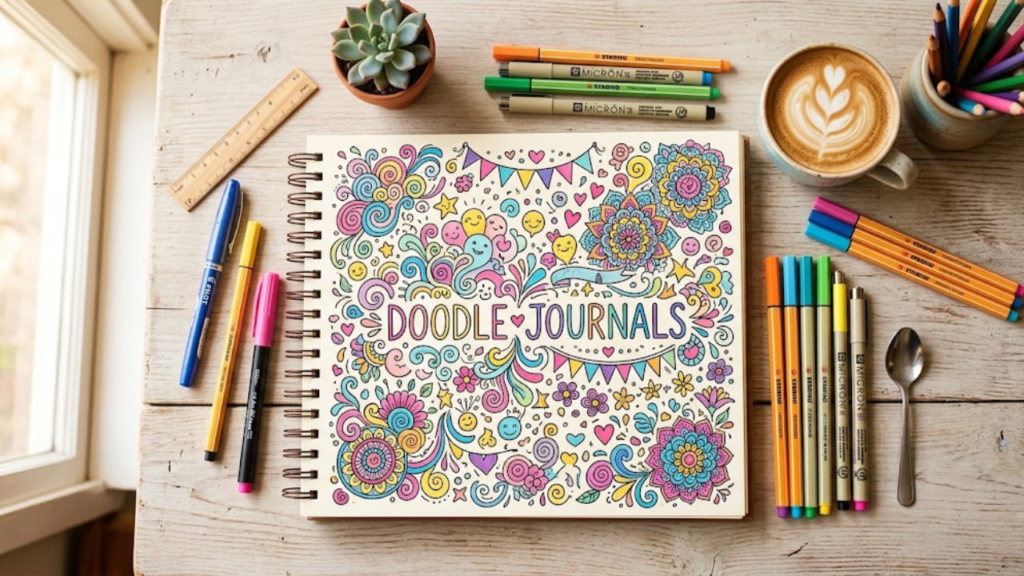
You’ll find doodle art in many forms today. Some people create zentangle patterns, which use repetitive, structured strokes to build meditative designs. Others prefer cartoon doodles, filling pages with quirky characters and faces. Still others turn to doodle art online communities to share their sketches, get feedback, and find inspiration from artists around the world.
What makes doodle art so accessible is that it requires zero special equipment. A ballpoint pen and the back of an envelope are enough to get started. This low barrier to entry is a big reason why doodle art kids projects are so popular in classrooms — teachers don’t need a big art budget to introduce doodling as a creative outlet.
It’s also worth understanding that doodle art isn’t confined to paper anymore. With the rise of tablets and styluses, many artists now create digital doodles using apps, and an entire ecosystem of doodle art maker tools has emerged to support this shift. Whether you’re working with pen and paper or a digital canvas, the spirit of doodle art stays the same: loose, playful, and expressive drawing that doesn’t demand perfection.
[beginner drawing techniques for absolute beginners]
Doodle art sits at an interesting intersection of art therapy, casual hobby, and social media trend. On platforms like Instagram and TikTok, the hashtag #doodleart has been used on tens of millions of posts, showing just how widespread this simple form of creativity has become. It’s not confined to any age group, skill level, or artistic background — which is exactly why it appeals to every type of people, from young children learning to hold a crayon to retirees picking up a sketchbook for the first time.
The History and Origin of Doodle Art
The word “doodle” has been part of the English language since at least the 17th century, though its meaning has shifted quite a bit over the centuries. Back then, a “doodle” referred to a fool or a simpleton — think of the term “Yankee Doodle” from the famous song, which used the word as a mild insult toward colonial Americans. It wasn’t until the early 20th century that “doodle” started being used as a verb to describe absent-minded scribbling.
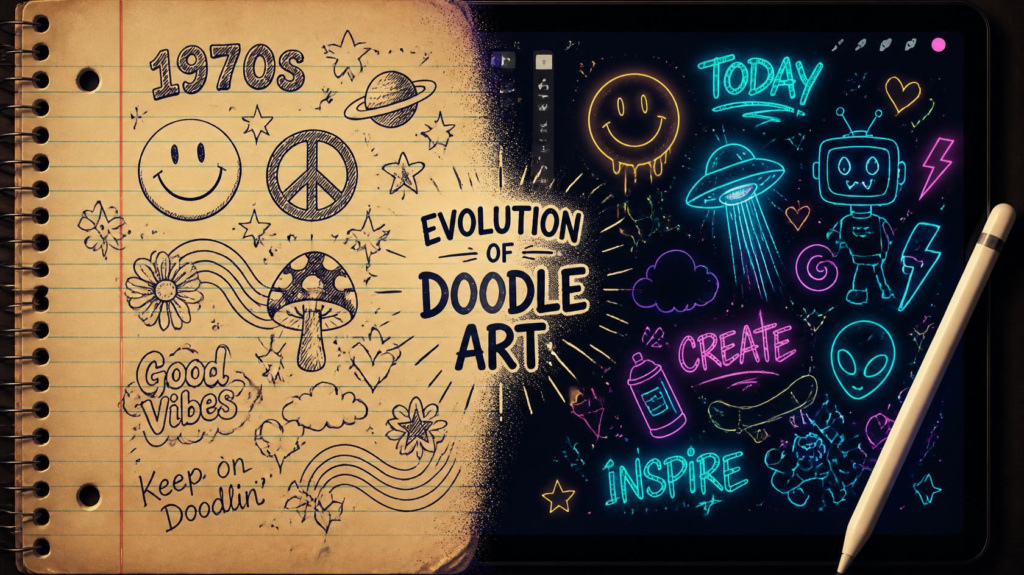
By the 1930s, the term had fully evolved into what we recognize today: the act of drawing shapes and patterns without conscious thought, often while your mind is occupied with something else, like a phone call or a lecture. Psychologists began studying this behavior seriously around this time, curious about why so many people doodled during moments of boredom or concentration.
Doodle art as a recognized art movement didn’t really take shape until much later. In the 1960s and 70s, artists began deliberately incorporating doodle-like elements into their formal work. Keith Haring, one of the most famous street artists of the 20th century, built an entire visual language out of bold, simple line drawings that echoed the spontaneity of a doodle. His subway chalk drawings in New York City brought doodle-style art into mainstream galleries and public consciousness.
Around 2005, a new structured doodling method called Zentangle was created by Rick Roberts and Maria Thomas. This method turned doodling into a meditative practice with specific rules and repeatable patterns, and it quickly built a global following. Zentangle proved that doodle art could be both relaxing and methodical at the same time.
The internet age changed everything for doodle art. With the rise of platforms like Pinterest, Instagram, and YouTube starting around 2010, doodle artists suddenly had a global audience. Tutorials on doodle art ideas and time-lapse videos of intricate doodles racked up millions of views, turning what used to be a private, idle habit into a shared creative culture.
Today, doodle art has fully merged with technology. Google itself has celebrated this art form since 1998 with its famous “Google Doodles” — special, temporary alterations of its homepage logo that celebrate holidays, historical events, and notable figures. According to Google, they’ve published over 5,000 doodles worldwide since the tradition began, making it one of the most visible examples of doodle art in modern life.
This history shows that doodle art has traveled a long road: from a term used to mock lazy scribbling to a respected art form practiced by professional illustrators, therapists, educators, and casual hobbyists alike.
Key Features, Types, and Varieties of Doodle Art
Doodle art isn’t a single, uniform style. It branches into several distinct categories, each with its own techniques, tools, and appeal. Understanding these varieties helps you figure out which style fits your personality and skill level best.
1. Zentangle Doodles
Zentangle is a structured form of doodle art built from repetitive patterns drawn within a small, defined space, usually a 3.5-inch square tile. Each pattern is broken into simple, deliberate strokes, making it easy for beginners to follow along. Because there’s no eraser involved in traditional Zentangle practice, it teaches artists to embrace imperfection — a core doodle art principle.
2. Cartoon and Character Doodles
This is probably the most familiar type of doodle for most people. It includes quick sketches of faces, animals, monsters, and cartoon characters, often drawn in the margins of notebooks. This style is extremely popular for doodle art kids, since children naturally gravitate toward drawing simple, expressive characters.
3. Mandala and Pattern Doodles
Mandala doodles use circular, symmetrical patterns built up layer by layer. These designs are popular in art therapy circles because the repetitive nature of drawing symmetrical shapes has a calming, almost hypnotic effect. Many doodle art online communities feature mandala challenges where artists post their daily progress.
4. Typography Doodles
Typography or “hand-lettering” doodles combine decorative text with small illustrations. Think of bubble letters surrounded by stars, vines, or tiny icons. This style is hugely popular among students who want to make their notes more visually engaging and memorable.
5. Nature and Botanical Doodles
These doodles focus on leaves, flowers, clouds, and other organic shapes. They’re a favorite among journaling communities, especially in bullet journal and planner circles, where botanical doodles add a decorative touch to weekly spreads.
6. Digital Doodles
With the growth of tablets and styluses, digital doodling has become its own category. Using a doodle art maker app, artists can doodle with unlimited colors, undo mistakes instantly, and layer their work in ways that aren’t possible on paper.
Here’s a quick comparison of these popular doodle styles:
| Doodle Style | Skill Level | Best For | Common Tools |
|---|---|---|---|
| Zentangle | Beginner | Relaxation, mindfulness | Pen, small paper tiles |
| Cartoon/Character | Beginner–Intermediate | Kids, storytelling | Pencil, markers |
| Mandala/Pattern | Intermediate | Meditation, art therapy | Fineliner pens, compass |
| Typography | Beginner–Intermediate | Note-taking, journaling | Gel pens, brush pens |
| Nature/Botanical | Beginner | Journaling, planners | Colored pencils, watercolor |
| Digital | All levels | Speed, editing flexibility | Tablet, stylus, apps |
Each of these varieties shares the same DNA — simple lines built up gradually, no strict rules, and total freedom to experiment. The style you choose often depends on your mood, the tools you have on hand, and how much time you want to spend on a single piece.
[ how to start a bullet journal for beginners]
Benefits of Doodle Art — Why It Matters
Doodle art might look like a small, throwaway habit, but its benefits stretch far beyond the page. Research and real-world use both point to doodling as a surprisingly powerful tool for mental and cognitive wellbeing.
First, doodling improves focus and memory retention. A well-known study published in the journal Applied Cognitive Psychology found that participants who doodled while listening to a monotonous phone message recalled 29% more information than those who didn’t doodle at all. This suggests that doodling helps occupy the part of your brain that would otherwise wander off into daydreaming, keeping you more anchored to the task at hand.
Second, doodle art is a proven stress reducer. The repetitive, low-stakes nature of drawing simple shapes activates a relaxation response similar to meditation. Many therapists now recommend doodling or Zentangle-style practices as part of art therapy programs for anxiety and stress management.
Third, it builds fine motor skills, which is a major reason doodle art kids activities are so common in early childhood education. The act of controlling a pen or crayon to make deliberate lines and shapes strengthens hand-eye coordination in young children, laying groundwork for handwriting and other precise motor tasks later on.
Fourth, doodling boosts creative problem-solving. Studies in cognitive psychology suggest that mind-wandering activities like doodling activate the brain’s default mode network, the same network associated with insight and “aha” moments. Many entrepreneurs, engineers, and writers report their best ideas come while doodling absentmindedly rather than staring hard at a blank page.
Fifth, doodle art is genuinely accessible to everyone. You don’t need expensive supplies, formal art classes, or natural talent to enjoy it. This makes it one of the few creative hobbies that truly welcomes every type of people, regardless of age, income, or artistic background.
Finally, doodling can become a social and shareable activity. Thanks to doodle art online communities and doodle challenges on social media, people connect with others who share the same hobby, exchange tips, and build genuine friendships around a shared creative outlet.
How to Start Doodle Art — Step by Step
Getting started with doodle art doesn’t require a big investment or a trip to an art supply store. Follow these steps to build your own doodling habit from scratch.
1. Choose your tools. Start simple. A regular ballpoint pen, a black fineliner, or even a pencil works perfectly fine. If you want to go digital right away, download a doodle art maker app on your phone or tablet — many offer free versions with enough features to get you started.
2. Set aside 5–10 minutes. You don’t need hours of free time to doodle. Block out a short window during your day — right after waking up, during your lunch break, or before bed — and commit to just doodling without judging the result.
3. Start with basic shapes. Draw a circle, a square, a triangle, or a simple wavy line. These basic shapes form the building blocks of almost every doodle style, from Zentangle patterns to cartoon characters.
4. Add repetition and variation. Once you have a basic shape, repeat it several times with small variations. This is the core technique behind Zentangle and mandala doodles — repetition builds visual interest without requiring advanced drawing skill.
5. Don’t erase — keep going. One of the biggest doodle art lessons is learning to embrace mistakes. If a line goes wrong, turn it into a new shape or pattern rather than erasing it. This mindset shift is what makes doodling low-pressure and genuinely relaxing.
6. Explore doodle art ideas for inspiration. When you’re stuck, search for doodle art ideas online or browse a doodle art online gallery. Pinterest boards and dedicated hashtags on Instagram are packed with beginner-friendly prompts you can copy or remix.
7. Try a doodle art game or prompt challenge. Many creators now use a doodle art game format — daily prompts, timed doodle challenges, or drawing games with friends — to keep motivation high. These games remove the pressure of “what should I draw” by giving you a starting point.
8. Experiment with color. Once you’re comfortable with black-and-white line doodles, introduce color using markers, colored pencils, or digital brushes. Color adds depth and can completely transform a simple doodle into a striking piece of art.
9. Save and review your work. Keep a dedicated doodle notebook or a folder on your doodle art maker app. Reviewing old doodles helps you notice your growth over time and can spark new ideas for future sessions.
10. Share your doodles. If you feel comfortable, post your doodles to a doodle art online community or social media platform. Feedback from other doodlers can be encouraging and often leads to new techniques you hadn’t considered.
Following these ten steps consistently — even just for a few minutes a day — is enough to build real skill and confidence over just a few weeks. The key is consistency, not intensity.
[ best digital drawing apps for beginners]
Common Myths vs Facts About Doodle Art
Doodle art carries a surprising number of misconceptions, many left over from the days when doodling was seen as a distraction rather than a skill. Let’s clear a few of these up.
Myth: Doodling means you’re not paying attention. Fact: Research shows the opposite. Doodling while listening or thinking actually helps maintain focus by giving your hands something to do, preventing your mind from drifting into unrelated daydreams.
Myth: You need artistic talent to doodle. Fact: Doodle art specifically rewards simplicity over technical skill. Anyone who can draw a circle or a line can create a doodle — there’s no “wrong” way to do it.
Myth: Doodle art is just for kids. Fact: While doodle art kids activities are common in schools, doodling is widely practiced by adults too, including professionals, therapists, and even CEOs who doodle during meetings to organize their thoughts.
Myth: Digital doodling isn’t “real” art. Fact: Digital doodles created with a doodle art maker app use the same creative principles as traditional pen-and-paper doodling. The medium changes, but the artistic process stays the same.
Myth: You need expensive supplies to start. Fact: A basic pen and paper — or a free app — is genuinely all you need. Many professional doodle artists still use nothing more than a $2 fineliner pen.
Expert Tips & Best Practices for Doodle Art
If you want to level up your doodling beyond the basics, these expert-backed tips will help you build a more consistent, enjoyable practice.
Keep a dedicated doodle notebook. Having one place for all your doodles — rather than scattered scraps of paper — helps you track progress and builds a habit loop that’s easy to stick with.
Doodle during “in-between” moments. Waiting rooms, commutes, and phone calls are perfect low-stakes opportunities to practice. These moments require zero extra planning and turn dead time into creative time.
Use prompts when you’re stuck. A quick search for doodle art ideas or joining a doodle art game challenge on social media can instantly solve the “blank page” problem that stops many beginners.
Limit your color palette. When you’re just starting, pick two or three colors instead of using every marker in the box. Limited palettes actually make doodles look more intentional and cohesive.
Study patterns from nature and architecture. Honeycombs, tree bark, and tile work all offer endless inspiration for repeating doodle patterns you can adapt into your own style.
Don’t chase perfection. Doodle art thrives on imperfection. The moment you start erasing every “mistake,” you lose the relaxed, exploratory quality that makes doodling enjoyable in the first place.
Mix traditional and digital tools. Sketch loosely on paper first, then refine or color your favorite doodles digitally using a doodle art maker app. This hybrid approach combines the tactile feel of pen and paper with the flexibility of digital editing.
Set a timer for focused sessions. A 10-minute timer creates gentle pressure that pushes you to finish a doodle rather than overthinking it. Many artists find their best work comes from these quick, timed sessions.
Join a community for accountability. Whether it’s a doodle art online forum, a Discord server, or a local art meetup, sharing your work with others keeps you motivated and exposes you to new techniques.
Revisit old doodles for new ideas. Flip back through your notebook every few weeks. You’ll often find small, forgotten shapes or patterns worth expanding into a full new piece.
Following even three or four of these tips consistently can noticeably improve both your enjoyment of doodling and the quality of your finished pieces over time.
Frequently Asked Questions
1. What is the easiest way to start doodle art for beginners? The easiest way to start doodle art easy style is with basic shapes like circles, dots, and wavy lines using just a pen and paper. Set a timer for five minutes and let your hand move freely without planning the outcome. Beginners often find it helpful to copy simple patterns from online tutorials before creating their own designs. The goal at this stage isn’t to make something impressive — it’s simply to build comfort with the process of doodling without judgment.
2. What are some good doodle art ideas for kids? Great doodle art kids ideas include drawing simple animal faces, funny monsters, weather symbols like suns and clouds, and repeating patterns like stars or hearts. Kids also enjoy “add-on” doodle games, where one shape is drawn and then turned into something completely different, like transforming a circle into a pizza or a face. These activities build fine motor skills while keeping the experience playful and pressure-free. Teachers often use doodle prompts as a warm-up activity before more structured art lessons.
3. Are there good doodle art online communities to join? Yes, platforms like Instagram, Pinterest, and Reddit host large doodle art online communities where artists share daily doodles, prompts, and tutorials. Many of these communities run weekly or monthly doodle challenges with specific themes, which is a great way to stay motivated. Joining a community also gives beginners access to constructive feedback and a sense of belonging within a much larger creative network. Some platforms even let you filter content specifically by style, such as Zentangle or cartoon doodles.
4. What is the best doodle art maker app for beginners? The best doodle art maker app for beginners depends on your device and budget, but popular free and beginner-friendly options include Procreate Pocket, Ibis Paint X, and Autodesk Sketchbook. These apps typically offer simple brush tools, undo functions, and layering options without overwhelming new users with advanced features. Many also include built-in doodle art game modes or daily prompts to help spark ideas. It’s worth trying two or three free apps before committing to a paid one, since interface preference varies a lot from person to person.
5. Can a doodle art game actually improve my drawing skills? Yes, a doodle art game format — such as timed challenges, prompt-based drawing games, or collaborative doodle games with friends — genuinely helps build drawing skills through repetition and low-pressure practice. Games remove the anxiety of a blank page by giving you a clear starting point or constraint to work within. Over time, playing these games regularly exposes you to a wider range of shapes, themes, and techniques than you might attempt on your own. Many art teachers actually incorporate doodle games into lesson plans for exactly this reason.
6. Is doodle art considered a real art form? Absolutely. Doodle art has influenced major art movements and famous artists, including street art icon Keith Haring, whose entire visual style grew out of simple, doodle-like line drawings. Museums and galleries have exhibited doodle-inspired work, and structured methods like Zentangle have built global followings with certified instructors. While doodles are often informal and unplanned, the artistic techniques behind them — line work, pattern building, composition — are the same principles used in more “formal” art disciplines.
7. How long does it take to get good at doodle art? Most people notice a visible improvement in their doodling within just two to four weeks of practicing for even five to ten minutes a day. Because doodle art rewards repetition and pattern-building rather than complex technical skill, progress tends to feel faster and more encouraging than with other art forms like realistic painting. The key factor isn’t talent — it’s consistency. Doodling a little bit every day will get you further than doing one long session once a month.
Final Verdict
Doodle art proves that creativity doesn’t need to be complicated, expensive, or reserved for “talented” people. It’s one of the rare hobbies that genuinely welcomes every type of people — from a five-year-old scribbling animal faces in a coloring book to a busy professional sketching patterns during a conference call. The evidence is clear: doodling sharpens focus, reduces stress, and builds real cognitive and motor skills, all while requiring nothing more than a pen, some paper, or a free app.
Whether you’re drawn to doodle art easy techniques for a quick creative outlet, looking for doodle art ideas to share with your children, or ready to explore a full doodle art online community and try out a doodle art maker app, this hobby meets you exactly where you are. There’s no wrong way to start, and no gatekeeping around who gets to call themselves a doodle artist.
The best part is that doodle art rewards you almost immediately. Unlike many skills that take months to show visible progress, a single doodling session can leave you feeling calmer, more focused, and genuinely proud of what your hand created in just a few minutes. Give yourself permission to make a mess, ignore the eraser, and let your pen wander — that’s really all doodle art has ever asked of anyone.
Call to Action
Ready to pick up a pen and try it yourself? Grab any notebook you have nearby, set a five-minute timer, and doodle whatever comes to mind — no planning required. We’d genuinely love to see what you create, so drop a comment below sharing your first doodle idea or the style you’re most excited to try.
If this guide helped you, share it with a friend, a fellow parent, or anyone who could use a low-pressure creative outlet. And don’t stop here — check out our related posts on [ easy drawing ideas for beginners] and [ best art therapy activities for stress relief] to keep building your creative toolkit.