
 By Richard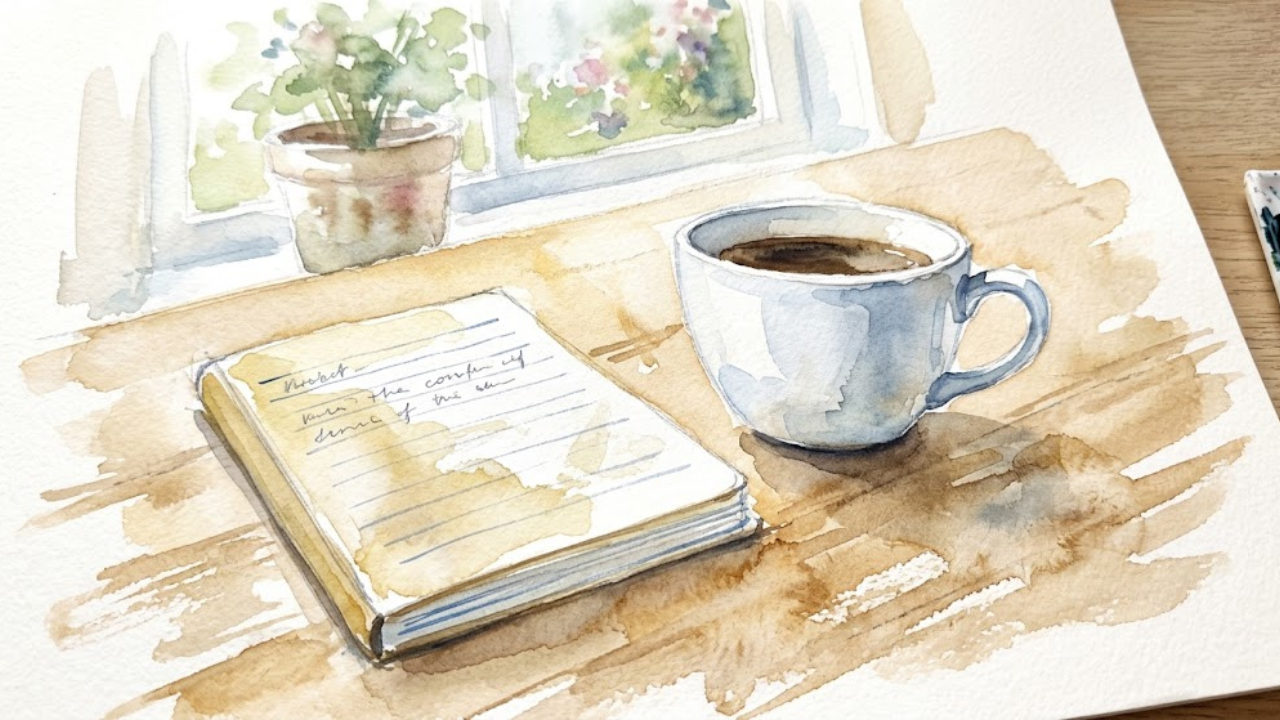
INTRODUCTION
Did you know that watercolor sketching is one of the fastest-growing art forms in 2026, with millions of beginners picking up brushes for the first time? Whether you’re drawn to the fluid beauty of translucent washes or the freedom of loose, expressive lines, a watercolor sketch offers the perfect blend of control and spontaneity.
In this guide, you’ll discover exactly what makes watercolor sketching so special, why it matters for your creative growth, and how to start creating your own stunning pieces today. From essential techniques to expert tips that prevent frustrating mistakes, you’ll get everything you need to build confidence with every brushstroke.
By the end, you’ll understand the core principles behind successful watercolor sketches and have a clear roadmap to improve your skills fast.
TABLE OF CONTENTS
-
What Is a Watercolor Sketch?
-
Why Does Watercolor Sketching Matter?
-
Watercolor Sketch: Key Facts and Types
-
How To Create a Watercolor Sketch
-
Common Mistakes and Myths to Avoid
-
Expert Tips for Best Results
-
Frequently Asked Questions
What Is a Watercolor Sketch?
A watercolor sketch is a quick, loose painting created with water-based pigments on paper, typically done in a sketchbook or on portable surfaces. Unlike detailed watercolor paintings that take hours or days, sketches focus on capturing the essence of a subject in minutes using fluid washes, bold strokes, and minimal detail.
Think of it like visual note-taking: instead of writing down your thoughts, you’re painting them. The watercolor sketch emphasizes speed, intuition, and expression over perfection. You might sketch a coffee cup on your table, a street scene during your commute, or a flower from your garden—all in under 20 minutes.
The magic lies in watercolor’s unique behavior. When wet pigment meets damp paper, colors bloom and blend in unpredictable ways, creating soft edges and organic textures that feel alive. This unpredictability is what makes watercolor sketching both challenging and deeply rewarding. You learn to work with the medium, not against it.
For example, imagine you’re sitting in a park and want to capture a tree. Instead of drawing every leaf, you’d block in the trunk with a dark wash, suggest foliage with loose green dabs, and let the paper’s white show through as highlights. The result feels fresh, energetic, and authentically yours.
Why Does Watercolor Sketching Matter?
Watercolor sketch practice offers benefits that extend far beyond creating pretty pictures. Here’s why you should make it part of your routine:
-
Builds observational skills: Sketching forces you to study light, shadow, and form closely, training your eye to see like an artist.
-
Boosts creativity: The fluid nature of watercolor encourages experimentation and helps you break free from rigid thinking patterns.
-
Reduces stress: Research shows that just 30 minutes of creative activity can lower cortisol levels and improve mood significantly.
-
Improves hand-eye coordination: Regular practice strengthens the connection between what you see and how your hand moves.
-
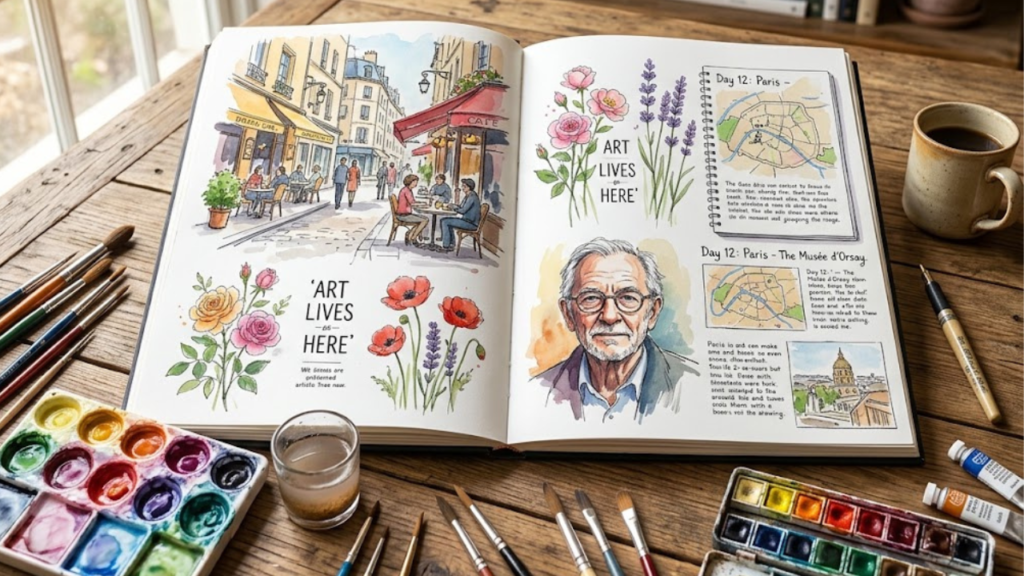
Creates a visual journal: Your sketchbook becomes a personal record of places, moments, and ideas worth remembering.
-
Accessible to all skill levels: You don’t need expensive supplies or years of training—just paper, paint, and willingness to try.
The beauty of watercolor sketching is that it meets you where you are. Whether you’re five years old or fifty, a complete beginner or returning artist, the medium welcomes you without judgment.
Watercolor Sketch: Key Facts and Types
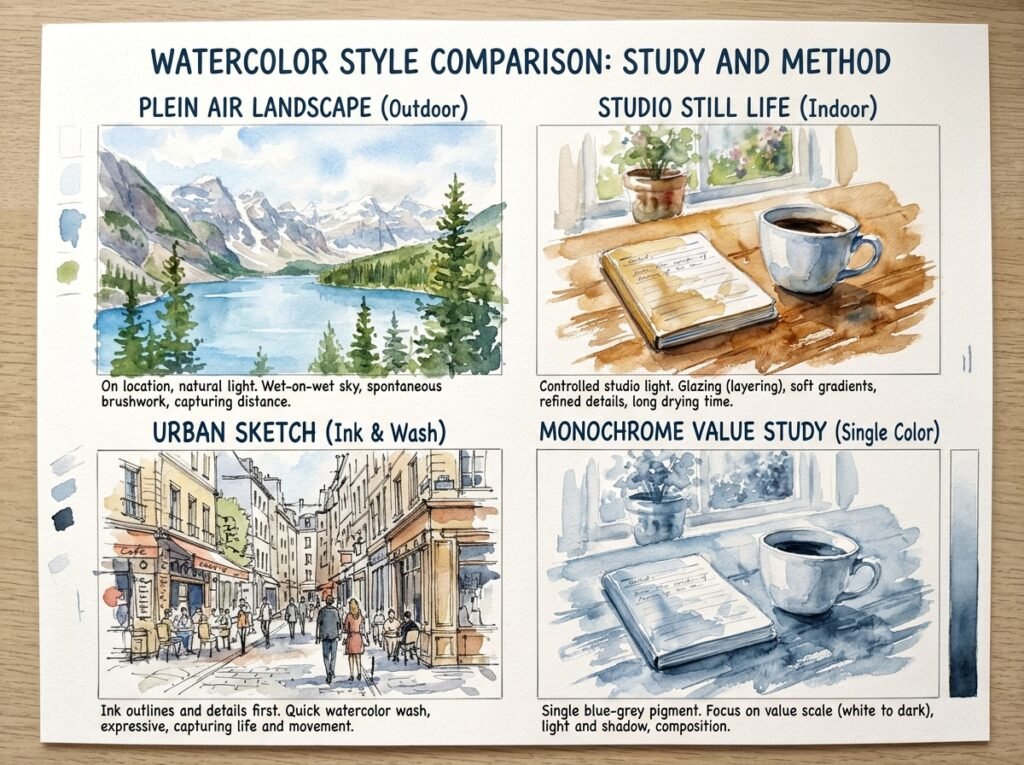
Understanding the different approaches to watercolor sketch helps you choose the right technique for your subject and goals. Let’s break down the main types you’ll encounter.
Plein Air Sketching
Plein air means “outdoor air” in French. This style involves sketching directly from life outside—streets, landscapes, buildings, or nature. Artists carry portable kits and work quickly to capture changing light and atmosphere. The results feel spontaneous and full of energy.
Studio Sketching
Done indoors from reference photos, objects, or imagination. Studio watercolor sketches allow more time for experimentation and layering. You control the environment completely, making this ideal for learning techniques without weather or time pressure.
Mixed Media Sketching
Combines watercolor with ink, pencil, markers, or collage. Ink lines add definition and structure, while watercolor provides color and mood. This hybrid approach is popular for travel journals and urban sketching because it balances detail with speed.
Monochrome Sketching
Uses only one color (plus water) to create value studies. This technique teaches you to see light and shadow without the distraction of multiple hues. It’s excellent for beginners learning composition and form.
Each type of watercolor sketch builds different skills, so try mixing them as you grow.
How To Create a Watercolor Sketch
Follow these steps to create your first confident watercolor sketch:
-
Gather your supplies: You need watercolor paper (300gsm minimum), 2-3 brushes (round sizes 6 and 10), watercolor paints (pan or tube), a palette, water jar, and pencil. Quality paper prevents warping and keeps colors vibrant.
-
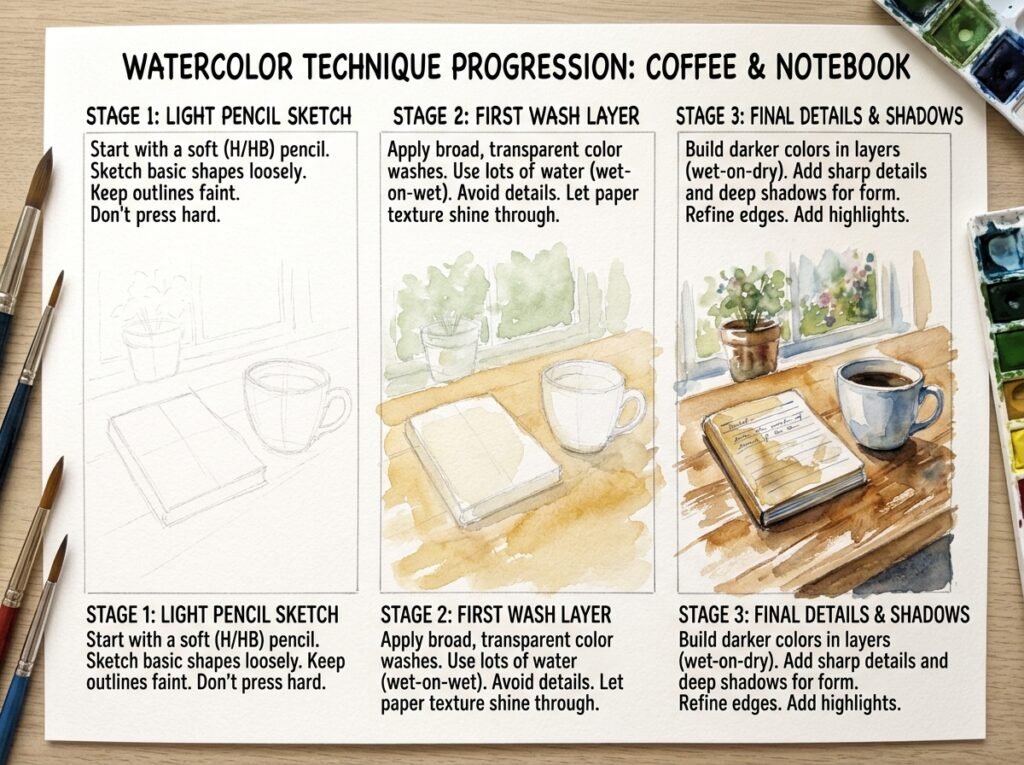
Plan your composition: Lightly sketch the main shapes with pencil. Focus on placing large elements first, then add medium and small details. Keep lines loose—you’re building a guide, not a finished drawing.
-
Mix your colors: Squeeze or activate paints on your palette. Add water gradually until you reach a creamy consistency. Test colors on scrap paper to see how they’ll look when dry.
-
Apply the first wash: Start with the lightest, largest areas. Use a wet-on-wet technique (wet paper, wet paint) for soft blends, or wet-on-dry for sharper edges. Work quickly and confidently—hesitation shows in stiff strokes.
-
Build layers gradually: Let the first layer dry completely before adding darker values or details. This prevents muddy colors and paper damage. Add shadows, textures, and accents in 2-3 thin layers rather than one thick application.
-
Add finishing touches: Use a smaller brush for fine lines, highlights, or small details. Step back frequently to assess balance. Know when to stop—overworking kills the freshness that makes watercolor sketches special.
Practice these steps regularly, and you’ll develop muscle memory and intuition for the medium.
Common Mistakes and Myths to Avoid
Even experienced artists hit roadblocks. Here are the most common watercolor sketch mistakes and how to fix them:
-
Using too much water: Flooding paper causes warping, loss of control, and diluted colors. Truth: Your brush should hold enough water to flow smoothly, not drip. Test on scrap paper first.
-
Layering before paint dries: Adding wet paint over damp layers creates muddy blooms and lifted pigment. Truth: Touch the paper with your knuckle—if it feels cool, it’s still wet. Wait until completely dry.
-
Choosing the wrong paper: Thin sketchbook paper (under 200gsm) buckles and tears under washes. Truth: Use 300gsm cold-press watercolor paper for best results. It handles water without warping.
-
Overmixing colors on the page: Blending too many hues directly on paper creates muddy grays. Truth: Mix colors on your palette first, then apply. Limit each wash to 2-3 colors maximum.
-
Sketching too tightly: Detailed pencil underdrawings restrict the freedom that makes watercolor special. Truth: Keep initial sketches light and simple. Let paint define edges and details.
Avoiding these pitfalls accelerates your progress and keeps frustration low.
Expert Tips for Best Results
Level up your watercolor sketch game with these actionable tips:
-
Start small: Work in a 5×7 inch sketchbook to reduce pressure and finish pieces faster. Small studies build confidence without demanding perfection.
-
Use a limited palette: Stick to 3-5 colors per sketch for harmony and easier color mixing. This prevents overwhelming choices and muddy results.
-
Embrace white space: Let the paper show through as your brightest highlights. Watercolor is transparent—you can’t paint white over dark.
-
Practice value studies: Sketch in one color first to master light and shadow before adding full color complexity.
-
Carry a travel kit: Keep a compact watercolor set with you always. Inspiration strikes unexpectedly, and quick sketches build consistent habits.
These small adjustments create big improvements in your work over time.
Frequently Asked Questions
What’s the best watercolor sketch paper for beginners?
Choose 300gsm cold-press watercolor paper in a sketchbook format. This weight prevents warping under wet washes, while cold-press texture holds pigment well without being too rough. Brands like Strathmore, Canson, and Arches offer quality options at different price points. Avoid regular drawing paper—it’s too thin and will buckle immediately.
How long should I wait between watercolor layers?
Wait until each layer is completely dry to the touch—usually 5-15 minutes depending on humidity and paint thickness. Test by lightly touching the paper with your knuckle (not fingertip). If it feels cool or damp, wait longer. Rushing causes colors to lift and blend into muddy patches. Using a hairdryer on low heat speeds drying without damaging paper.
Can I use watercolor pencils for sketching?
Absolutely. Watercolor pencils let you draw precise lines, then activate with water for painterly effects. They’re perfect for travel, detailed work, and mixed media sketches. Use them alone or combine with traditional watercolor paints for added texture and control. Just ensure your paper can handle water activation without pilling.
CONCLUSION
Watercolor sketching combines observation, creativity, and relaxation in one powerful practice. You’ve learned what makes a watercolor sketch unique, why it benefits your mind and skills, and how to avoid the mistakes that frustrate beginners.
Start today with simple subjects around you—a mug, a plant, a window view. Grab your supplies, follow the steps, and let each sketch teach you something new. Progress comes from doing, not waiting for perfect conditions.
What subject will you sketch first? Share your plans or questions in the comments below!