 By Richard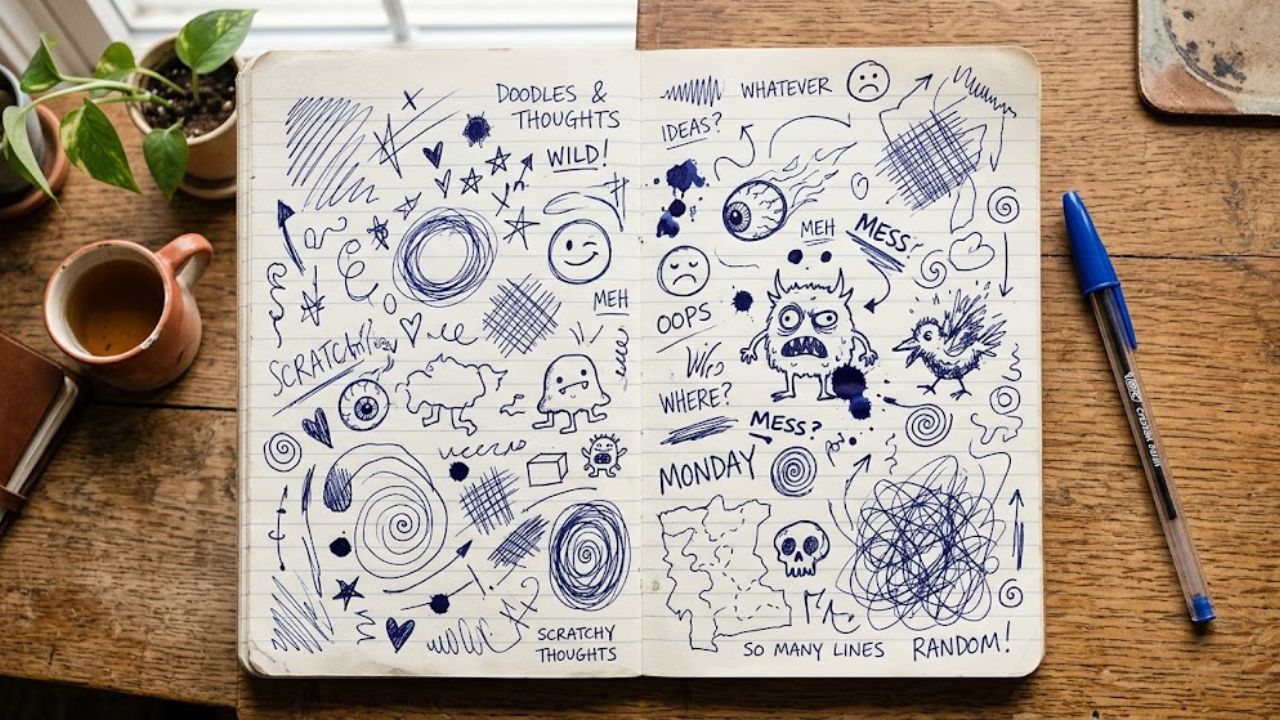
Introduction
Ever scribbled something on the corner of your notebook that made zero sense — and somehow felt amazing to draw? That’s the world of vile meaningless doodles. It’s a growing art trend built entirely around chaotic, purposeless mark-making.
In this guide, you’ll learn the true vile meaningless doodles meaning, where to find vile meaningless doodles online, and exactly how to make your own without any artistic training. You’ll also get common mistakes, expert tips, and quick answers to real questions people search on Google.
By the end, you’ll see why “meaningless” doesn’t mean worthless — it means freedom from rules.
Table of Contents
- What Are Vile Meaningless Doodles?
- Why Do Vile Meaningless Doodles Matter?
- Vile Meaningless Doodles — Key Facts and Types
- How To Create Vile Meaningless Doodles
- Common Mistakes to Avoid
- Expert Tips for Best Results
- Frequently Asked Questions
What Are Vile Meaningless Doodles?
Vile meaningless doodles are exactly what they sound like: rough, unplanned sketches with no clear subject, no message, and no artistic “point.” The word “vile” here isn’t literal — it’s playful slang for messy, gross-looking, or intentionally unpolished art.
Think of them as the visual version of humming a random tune. You’re not trying to write a song. You’re just letting sound (or ink) happen without judging it.
A real-world example: imagine sitting through a boring lecture and covering your notebook margin with squiggles, weird faces, and blobs that connect to nothing. That’s a vile meaningless doodle in its purest form.
Students often create these during class, calls, or waiting rooms. They’re low-pressure, require zero skill, and exist purely for the act of drawing itself.
beginner doodle prompts for students
Why Do Vile Meaningless Doodles Matter?
Even “meaningless” art carries real benefits. Here’s why this trend has stuck around:
- Relieves stress — Doodling lowers anxiety by giving your hands something automatic to do.
- Improves focus — A Plymouth University study found doodling can boost memory retention by up to 29% during boring tasks.
- Builds creative confidence — There’s no way to “fail” at meaningless art.
- Costs nothing — All you need is paper and a pen.
- Works as a mental reset — Short doodle breaks help clear mental clutter between tasks.
- Encourages self-expression — Without rules, your true instincts show up on the page.
Vile Meaningless Doodles — Key Facts and Types
Not all chaotic doodles look the same. Here are the most common styles people create and share.
1. Blob Doodles
Simple, rounded shapes with no defined form — just organic blobs filling space.
2. Squiggle Doodles
Made from continuous looping lines that never lift the pen off the paper.
3. Creature Doodles
Odd, imaginary characters with mismatched eyes, limbs, or textures — intentionally “ugly.”
4. Pattern Doodles
Repetitive shapes or marks stacked together, similar to chaotic tiling.
| Type | Skill Needed | Time to Make | Best Tool |
|---|---|---|---|
| Blob Doodles | None | 1-2 min | Pen |
| Squiggle Doodles | None | 2-5 min | Pen |
| Creature Doodles | Beginner | 5-10 min | Pencil |
| Pattern Doodles | Beginner | 5-15 min | Marker |
You’ll find thousands of examples of vile meaningless doodles online, especially on art-sharing platforms and doodle communities where users post daily sketches with zero explanation attached.
How To Create Vile Meaningless Doodles
Ready to try it? Follow these simple steps to make your own vile meaningless doodles today.
- Grab any paper and pen. Don’t overthink your materials — a napkin or notebook margin works fine.
- Set a short timer. Give yourself 2 to 5 minutes, so your brain doesn’t have time to “plan” anything.
- Start with one random mark. Draw a dot, line, or scribble anywhere on the page without deciding what it means.
- Keep your hand moving. Add more marks around or on top of the first one, letting shapes form naturally.
- Avoid naming it. Don’t stop to decide what it “is.” The moment it becomes something, the exercise loses its point.
- Repeat daily. Do a fresh doodle each day to build a loose, low-pressure creative habit.
- Share if you want. Post your favorites in vile meaningless doodles online communities for fun, not feedback.
That’s the entire process — no talent required.
Common Mistakes to Avoid
Mistake: Trying to make it “good.” The truth is, quality isn’t the goal here — freedom from judgment is the entire point.
Mistake: Overplanning before starting. Sketching an outline first defeats the purpose. Just start moving your pen.
Mistake: Erasing constantly. Erasing turns a meaningless doodle into a controlled drawing. Let the “mistakes” stay.
Mistake: Comparing your doodles to others. These sketches aren’t meant to be ranked or judged — they’re personal, private, and disposable.
Mistake: Assuming it has to mean something. Some people search endlessly for hidden meaning. Often, there genuinely isn’t one — and that’s fine.
Expert Tips for Best Results
- Keep a small notebook dedicated only to messy doodles, separate from “real” art.
- Use a cheap pen, so you’re not precious about wasting good materials.
- Doodle during boring moments — calls, lectures, or waiting rooms work best.
- Don’t title your doodles. Naming them adds meaning you’re trying to avoid.
- Set a weekly goal, like five doodles, instead of aiming for “quality.”
Frequently Asked Questions
What is the meaning behind vile meaningless doodles?
There isn’t one — that’s the entire concept. The term describes unplanned, purposeless sketches made purely for the physical act of drawing, without any symbolic or artistic intent behind the marks.
Where can I find vile meaningless doodles online?
You can find them on art-sharing platforms, doodle communities, and social media hashtags dedicated to messy or chaotic sketch art. Many creators post daily doodles without captions or explanations.
Do vile meaningless doodles have any real benefit?
Yes — they help reduce stress and improve focus during repetitive tasks. Studies show simple doodling can boost concentration and memory, even when the drawings themselves have no clear subject or purpose.
Conclusion
Vile meaningless doodles prove that art doesn’t need a purpose to have value. Remember these three points: skip the planning, let your hand move freely, and never judge the result. This is one of the easiest creative habits you can start today, with zero cost and zero pressure.
Grab a pen right now and make your first meaningless doodle — what’s the strangest shape your hand creates when you stop thinking?